


At the bottom: how to check your own Vermont voter registration, including if you told the DMV not to register you, and when your November ballot should arrive.
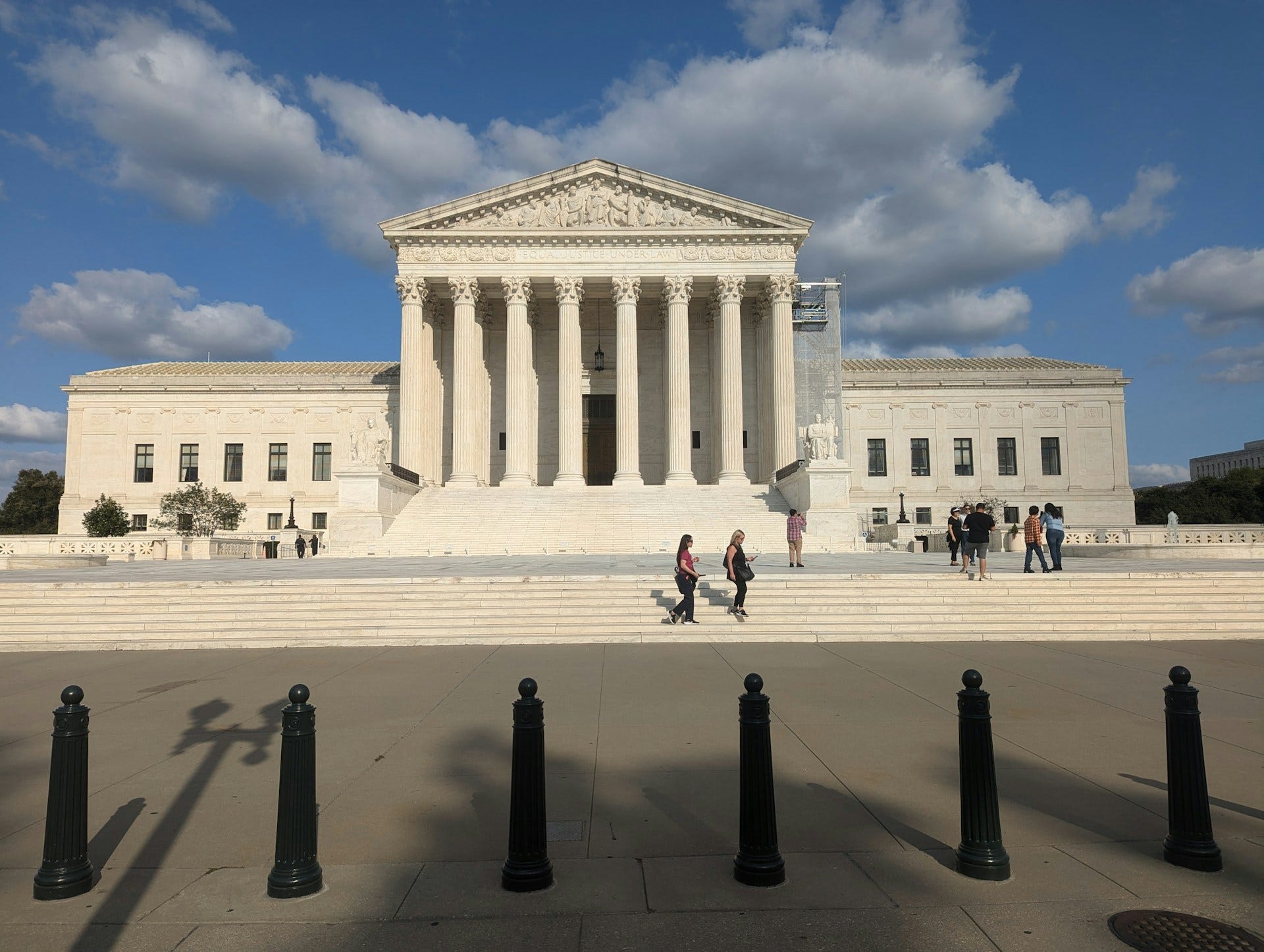
The U.S. Supreme Court on Friday let the Trump administration restart an expanded federal system for checking whether registered voters are U.S. citizens.
For Vermont voters, the immediate effect is likely to be small.
The court did not order Vermont to hand over its voter list. It did not require Vermont to use the federal system. And it did not touch a Vermont law that bars state and local officials from giving the full voter list to a federal agency so it can be matched against other government records.
What the court did
In a 6-3 unsigned order, the justices paused a June ruling by a federal judge in Washington. That ruling had shut the system down for violating federal privacy laws. The majority said a 1996 law gave the Department of Homeland Security authority to request and receive citizenship information from other federal agencies. Justices Sonia Sotomayor, Elena Kagan and Ketanji Brown Jackson dissented, saying the majority misread the law.
The order is not a final ruling. It lets the government use the system while the case continues, and that will run past the Nov. 3 election.
The system is called SAVE, short for Systematic Alien Verification for Entitlements. U.S. Citizenship and Immigration Services has run SAVE since 1987, mostly to check whether immigrants qualify for government benefits. Over the past year and a half, the administration merged SAVE with Social Security records covering nearly all Americans. The overhaul also added bulk searches, allowing states to submit large numbers of voter records at once rather than checking voters individually.
Since May 2025, the expanded SAVE system has checked more than 65 million voters in 26 states and flagged 28,635 as possible noncitizens, according to the administration’s filing. The administration says SAVE does not declare anyone ineligible to vote. It only reports that a person’s citizenship couldn’t be confirmed.
Why little changes in Vermont
States choose whether to use it. Nothing in Friday’s order makes any state run its voters through SAVE.
Vermont law bars the bulk upload. Under 17 V.S.A. § 2154, no state or local agency may knowingly give a federal agency the full statewide voter checklist, or a town’s portion of it, for the purpose of comparing voters’ information against other federal or state databases. The voter checklist is Vermont’s term for its official list of registered voters. Uploading the whole list to SAVE is exactly that kind of comparison.
Vermont’s top election official opposes the expanded system. Secretary of State Sarah Copeland Hanzas was one of 12 secretaries of state who formally objected to the SAVE overhaul last December. In a column this month, she wrote that Vermont “will not comply with any unlawful demand for personal voter data.”
Mass removals before November face a federal limit. Federal law generally restricts systematic removals from voter lists within 90 days of a federal election, a limit the court noted. Whether that rule also protects people alleged never to have been eligible to register is now before the Supreme Court. Individual eligibility reviews can still happen.
Washington doesn’t have Vermont’s list. This is a separate case. On Sept. 17, U.S. District Judge Mary Kay Lanthier dismissed the Justice Department’s lawsuit seeking Vermont’s full voter list. She ruled that the federal law the department relied on didn’t give it that power. In states that did hand their lists to the Justice Department, the department has an agreement with DHS to run them through SAVE.
Friday’s ruling did not newly protect Vermont voter data, and it did not newly expose it. Vermont’s restrictions were already in state law, and they are still there.
Why “little” and not “nothing”
The federal side of SAVE includes Vermonters, too. The Social Security records DHS merged into the system cover people in every state, and Friday’s order lets DHS use them. What Vermont controls is whether its voter checklist gets run against those records.
Vermont’s law also covers only the full list or a town’s list. It does not appear to bar an election official from checking a single voter. The case isn’t over, and the Legislature could change the law.
The question Vermont hasn’t settled
The same Vermont statute that bars handing over the list also directs the Secretary of State to make reasonable efforts to compare it against federal and state databases “where possible.”
That matters because of this summer’s DMV audit. The state estimated that roughly 20,000 people who had told the DMV not to register them had been sent into the voter registration system anyway over the years, as Compass reported in August. Fewer than 900 were removed in the August cleanup. Many of the remaining records had other evidence supporting registration, such as a past vote. The state said it could not say how many of the removed records belonged to people who weren’t eligible to vote.
The two sides read the ruling differently. DHS General Counsel James Percival called Friday’s decision “a victory for election integrity.” The voting-rights groups that brought the case called it “profoundly disappointing,” arguing the system wrongly flags eligible citizens. DHS itself has acknowledged SAVE’s results are not always accurate.
The Supreme Court’s decision on the 90-day question will come this coming term, after November.
Check your own registration
Look yourself up at the state’s voter portal: vote.vermont.gov/public/dashboard.
If you told the DMV not to register you and want to see whether you’re on the list anyway, the portal will show it. Your town clerk can help you correct it.
Your November ballot goes to every registered voter by mail. The Secretary of State’s office has said ballots will go out by Oct. 1. If yours hasn’t arrived by mid-October, call your town clerk.
The problem with mail-in balloting is that every registration generates a ballot. People don't have to vote fraudulently as individuals in order for their ballots to be marked and counted fraudulently.
20,000 excess registrations creates a potential slush fund of ballots.
This is why none other than Jimmy Carter was against mass voting by mail (the Carter-Baker report warned: “Absentee ballots remain the largest source of potential voter fraud.”).
If you're looking to get involved with fixing the Vermont voter rolls, the Vermont Election Integrity Network is looking for volunteers. Despite what the secretary of state says was only less than a thousand issues they've identified, they've identified well over 63,000
https://www.vtintegrity.vote/