


ANALYSIS
Seattle Mayor Katie Wilson, a democratic socialist who took office in January, has proposed a budget that funds 66 additional police officer positions, cuts nearly $50 million a year in general fund spending, raises no new taxes and shrinks her signature promise of 4,000 shelter units to nearly 1,000 new beds by the end of 2027. The Wall Street Journal called it a “small-c conservative” proposal.
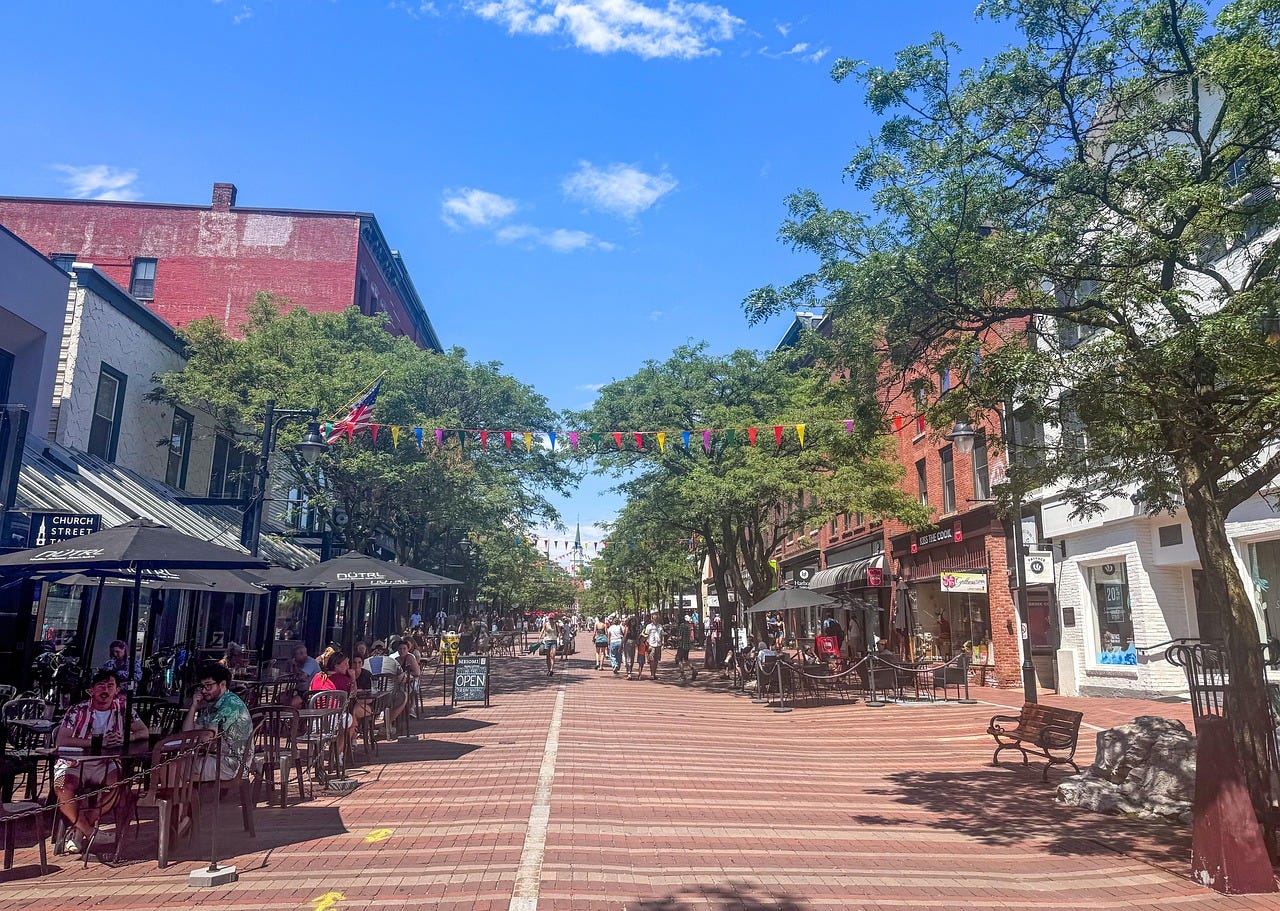
Burlington has been arguing about the same things all year. Like Wilson, Mayor Emma Mulvaney-Stanak is a progressive asking taxpayers to pay for more police while defending alternatives to policing. The difference is where the push to go further is coming from. In Seattle, the mayor herself is making the turn. In Burlington, the push for harder-line enforcement has come mostly from the Democratic majority on the City Council, often over the mayor’s objection.
The two cities have been paired before. In July, a new article in The Atlantic used Seattle and Burlington as its case studies of cities that embraced harm reduction (the public-health approach of reducing overdose deaths and disease without first requiring people to stop using) and cast Burlington as the city that wouldn’t reconsider. Compass reported at the time that Burlington’s council majority had moved to change course six days before the article appeared.
Here is how the two mayors compare, and what the numbers show.
Police: More Money, Not More Officers
Wilson’s budget funds 1,250 sworn officer positions, 66 more than this year, while keeping more than $100 million a year for violence prevention, alternative emergency response and similar programs. Alternative response means sending trained civilians instead of armed officers to some calls, such as a person in a mental health crisis. Seattle has about 1.31 sworn officers per 1,000 residents, according to federal data cited by the Journal.
Mulvaney-Stanak made her own police-funding pitch last winter. She asked voters to raise the city’s police and fire tax by 5 cents, describing community safety as the city’s top priority as it rebuilds the police department. About 70% of voters approved it on Town Meeting Day, according to unofficial results. The tax is expected to raise about $3 million for police and fire. The budget the council passed in June added 10 police officer positions and raised signing bonuses by up to $20,000.
Funding positions isn’t the same as filling them. Burlington had 92 officers before the council voted in 2020 to shrink the force, and 66 when Mulvaney-Stanak took office in April 2024. On Sept. 14, Interim Chief Shawn Burke told the council the department had 55 sworn officers, 44 of them available for assignment.
That works out to about 1.2 officers per 1,000 residents, slightly fewer per resident than Seattle. The national average for cities Burlington’s size was 1.7 in 2024, according to FBI data.
Seattle has the same shortage. Early in her term, Wilson’s office asked for round-the-clock police in Little Saigon, a neighborhood with a long-running open-air drug market, and was told there weren’t enough officers, the Journal reported.
The biggest symbolic police vote of Mulvaney-Stanak’s tenure was not hers. In January 2025, the council’s Democrats removed the department’s 87-officer cap by one vote. The mayor called the move premature, saying the department couldn’t fill the positions it already had, and signed the resolution “with reservation.”
Drugs: The Clearest Difference
Burlington is still planning an overdose prevention center, a supervised site where people can use drugs with staff on hand to reverse overdoses. The Legislature authorized a state pilot in 2024 over Gov. Phil Scott’s veto, and the city accepted the state grant in 2025. The center still has no site. Mulvaney-Stanak told the council Aug. 3 that she “will not support a resolution” that would use zoning to keep public health services out of areas where they are needed most.
Seattle has no such site. Seattle and King County approved and funded two supervised consumption sites in 2016, and the effort fizzled. There’s no sign Wilson has revived it.
Instead, in June, Wilson declared that open-air drug use and dealing would no longer be tolerated in Little Saigon. She promised more police and said people caught using or dealing there would be jailed or sent to a diversion program, along with $1.1 million in one-time money for outreach and mobile overdose-prevention teams.
Burlington’s drug numbers are hard to read:
Nonfatal overdoses reported to Burlington police climbed from 58 in 2019 to 585 in 2024, according to a BPD presentation. That is not a count of all overdoses.
Burlington’s ambulance service logged 313 overdose calls in 2024, according to a state evaluation. The police and ambulance counts measure different things, and neither is a complete tally.
Statewide, overdose deaths fell for a third straight year in 2025, to 170, which is 37% below the 2022 peak.
None of those trends can be credited to or blamed on the overdose prevention center, which isn’t open.
Shelter: Seattle’s Promise Shrank. Burlington’s Isn’t the City’s to Make.
Wilson promised 4,000 shelter units by the end of her term, a figure some campaign advisers warned was unrealistic, according to the Journal. Her budget funds nearly 1,000 new beds by the end of 2027, about a quarter of the pledge. She has said the larger number was meant to show the scale of the crisis.
In Vermont, emergency housing is largely a state program. That’s why Burlington’s council, with the mayor’s support, asked Scott in August for more shelter capacity, mental health help and state police support.
Budgets: The Same Squeeze
Seattle’s deficit, $175 million, is about 9% of its $2 billion general fund, the flexible money that pays for police, parks and most basic city services.
Burlington’s gap is about the same share. Officials’ estimates over the past year have ranged from $10 million to $12 million. The mayor’s May budget plan put it at $11 million, roughly a tenth of the general fund.
Both mayors are cutting jobs. Wilson’s budget eliminates 128 positions, 15 of them filled. Burlington cut 18 positions last year and this year is cutting or delaying 27 vacant ones.
The difference is taxes. Wilson declined to raise Seattle’s payroll tax on large employers this year, though she says she still wants a local capital gains tax once state rules allow it. Burlington raised taxes with Mulvaney-Stanak’s support: the voter-approved police and fire increase this year, on top of a higher municipal tax rate the year before.
Who Is Driving the Change
Seattle’s turn has been driven by events. Two high school students were shot and killed at a bus stop in February. In July, a shooting at the Bite of Seattle festival left three people dead and exposed a five-hour communication breakdown between the mayor’s office and police. The police chief resigned days later. Wilson, who opposed expanding surveillance cameras as a candidate, has since switched some on and ordered a privacy audit before deciding on the rest.
She is drawing criticism from both directions. Council member Bob Kettle, the centrist chair of the public safety committee, told the Journal she isn’t governing like a democratic socialist because the job forces a mayor to deal with reality. Organizer Cliff Cawthon, who supported her campaign, said she shouldn’t back away from her promise to reject mass surveillance.
Burlington’s pressure has come from inside City Hall. In July the council’s Democrats unveiled a plan they call Burlington Forward, asking for more police downtown, more cameras, the clearing of encampments, and a public zoning review before any needle exchange or overdose prevention center opens. Council President Ben Traverse said “enough is enough.” The mayor said it moved Burlington away from its values.
On Aug. 3 the council sent it to four committees on a 7-5 vote, over her objection. The committees reported back Sept. 14 with substantial changes, including more due-process and civil-rights protections and safeguards around encampments. As of Oct. 5, the revised plan has not come back for a final vote. The council’s seven Democrats are one vote short of the eight needed to override a mayoral veto.
What the Numbers Show
The record doesn’t hand either side a clean win:
Burlington is spending more to rebuild its police department and has fewer officers than when the mayor took office.
Aggravated assaults fell from 48 to 26 in the first half of 2026 compared with the same period of 2025, a 46% drop, even as a fatal stabbing downtown in August renewed the debate.
Nonfatal overdoses reported to police rose tenfold in five years, while statewide overdose deaths have fallen three years running.
Both cities face budget gaps of roughly a tenth of their general funds. Both mayors cut jobs; only Burlington raised taxes as part of closing the gap.
Both mayors have kept their alternatives to policing.
Seattle’s council is expected to vote on Wilson’s budget in late November. As of Monday, Burlington’s council had not scheduled a final vote on Burlington Forward.
We put the facts in context so you can put the news in perspective. If you value that work, please consider a paid subscription to Compass Vermont.