


ANALYSIS
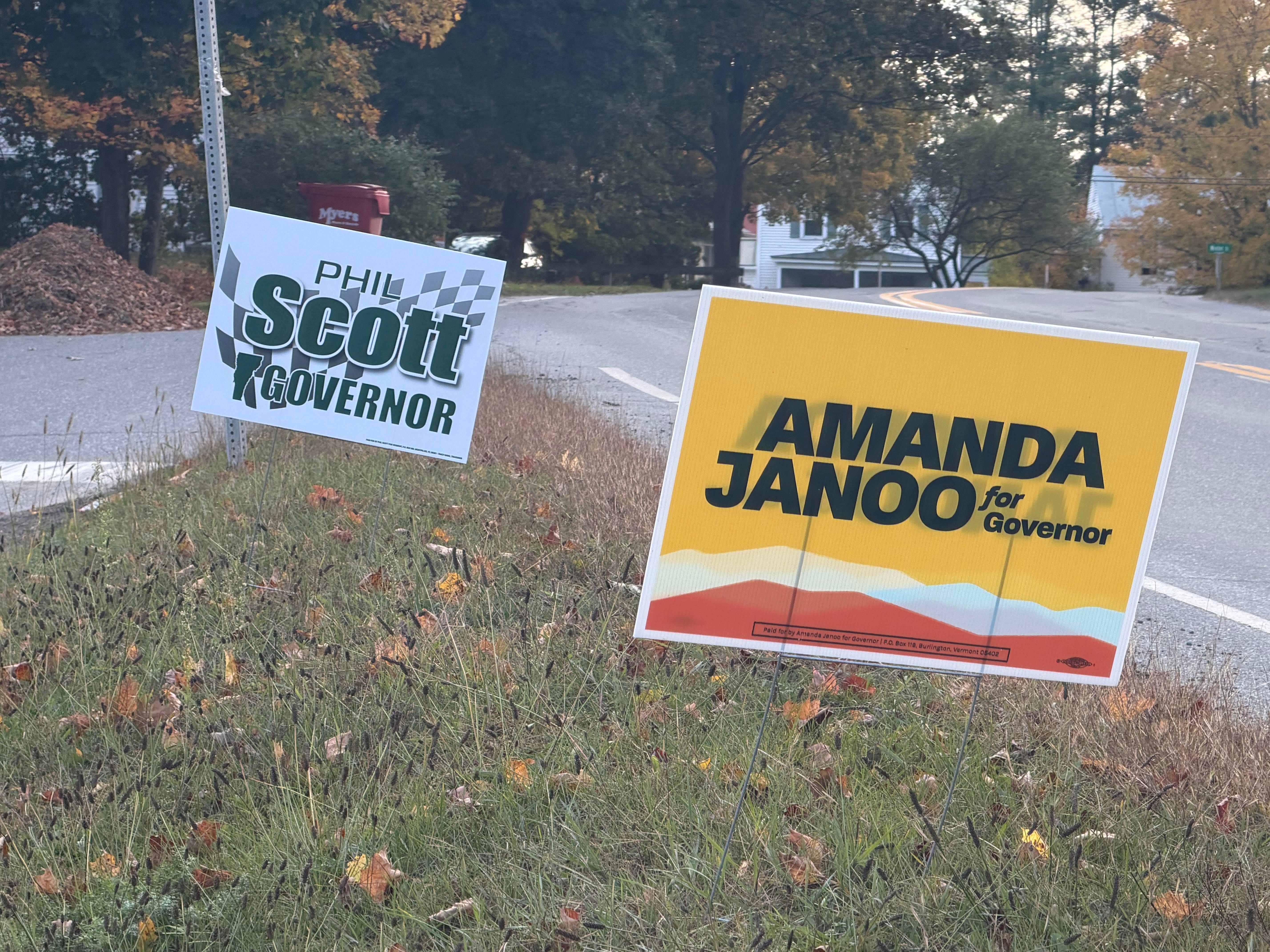
Amanda Janoo enters the final month of the governor’s race with nearly as much money available as Gov. Phil Scott, a five-term incumbent.
Janoo raised about $291,000 in September to Scott’s $223,000. For the cycle, she has raised $706,000 to his $414,000, according to filings reported by Seven Days. Scott also carried about $219,000 over from earlier campaigns. After spending, Janoo has about $280,000 left and Scott has about $296,000.
That money pays for the final month’s advertising. Scott spent about $137,000 on TV ads in September. Janoo bought her first TV time on Sept. 29.
How much does the fundraising lead tell us about who will win?
Vermont Has Seen This Before
In 2020, Lt. Gov. David Zuckerman also outraised Scott. By the October filing deadline he had raised $568,000 to Scott’s $337,000. Scott beat him 68.5% to 27.4%.
At roughly the same stage of their campaigns, both challengers had raised about $1.70 for every dollar Scott raised. The month-to-month pattern was different: Scott outraised Zuckerman in September 2020, while Janoo outraised Scott this September.
The 2020 race shows that a fundraising lead can go hand in hand with a lopsided loss. It doesn’t show that Janoo will lose the same way.
This Year's Polls Look Different
In September 2020, a VPR–Vermont PBS poll had Scott ahead of Zuckerman 55% to 24%, a 31-point lead, with a 68% approval rating.
This year, as Compass reported Sept. 29, the polls show a much closer race:
Vermont Public: Scott leads Janoo 44% to 34% among likely voters.
University of New Hampshire: Janoo leads 49% to 43%. UNH describes the race as a statistical tie.
State Navigate: In preliminary results reported Oct. 2, Scott leads 48% to 42%. The results won’t be final until Oct. 6.
Vermont Public also found Scott’s job approval at 45%, down from 60% in 2022. Among Democrats, his approval has fallen 31 points since 2022. The poll doesn’t say why, or whether those Democrats will vote differently than they have before.
Similar Politics, Different Plans
Janoo and Zuckerman share a political direction. Both are progressives backed by the Progressive Party, both would raise taxes on high earners to pay for new programs, and Zuckerman has endorsed Janoo.
Their proposals and backgrounds differ:
Zuckerman’s 2020 proposal called for higher taxes on Vermont’s wealthiest residents, aimed at those who benefited from the 2017 federal tax cuts. The money would have paid for broadband expansion and climate work, including home weatherization, according to PolitiFact.
Janoo proposes funding universal primary care through what her campaign calls a “Fair Share Tax Proposal.” Her platform says the wealthiest Vermonters would contribute an amount equal to their tax cuts under the 2025 federal tax law commonly called the One Big Beautiful Bill Act. It does not specify rates or income thresholds.
Experience: Zuckerman had more than 20 years in the Legislature and as lieutenant governor. Janoo is an economist making her first run for state office.
Senate Minority Leader Scott Beck has called Janoo’s platform the left edge of the Democratic Party. Treasurer Mike Pieciak argues that a clear contrast with Scott helps Democrats.
Janoo’s fundraising gives her the resources to reach voters and make her case. Zuckerman’s 2020 run shows why a fundraising lead can’t settle the race. This year’s polls show why his defeat can’t settle it either.