


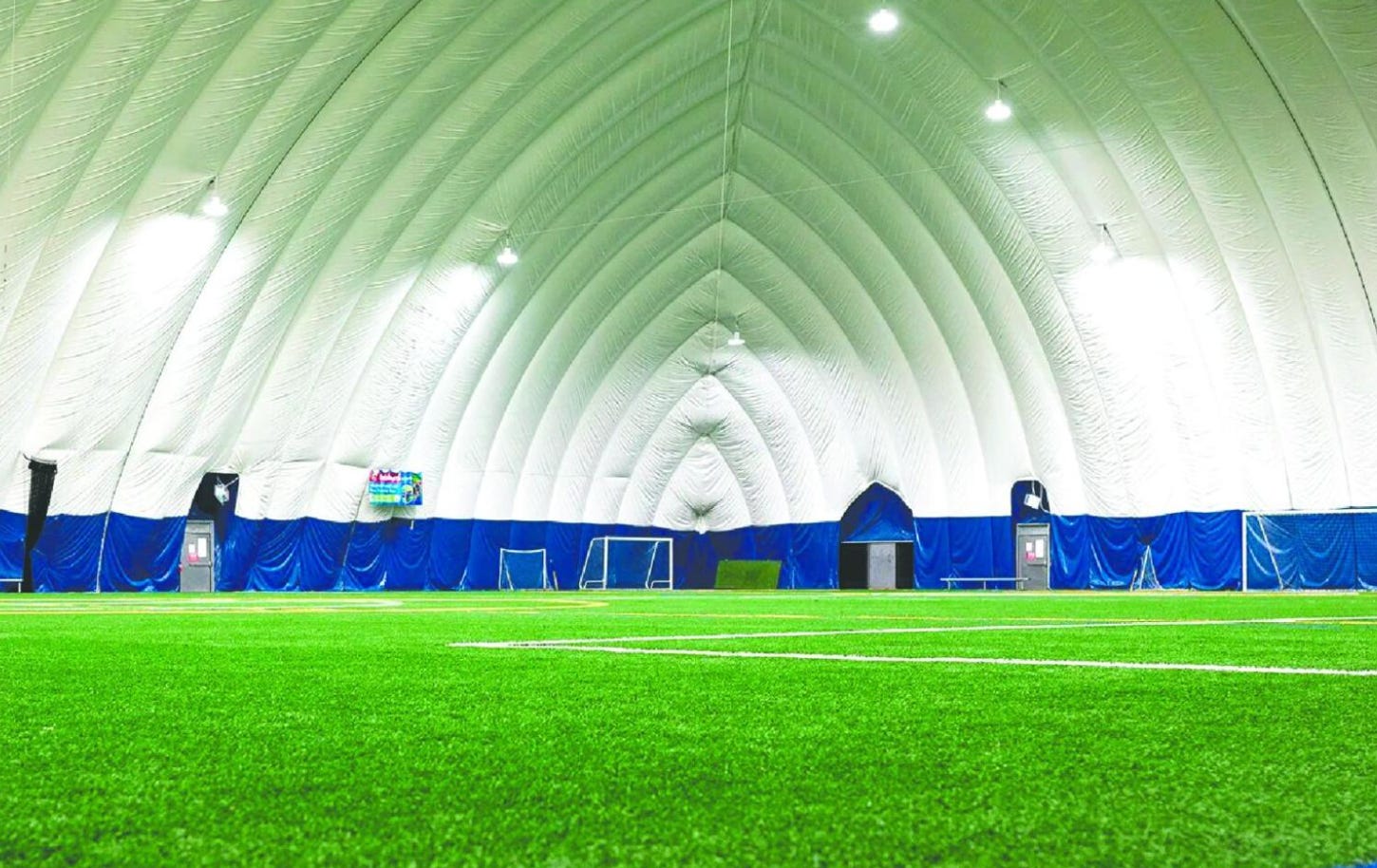
As reported in the Williston Observer, Adam Hergenrother Companies, a Vermont-based development firm, is exploring plans for an indoor fieldhouse in Williston. While specific details about the project remain limited, the proposal has generated discussion about how such a facility would fit within the town’s planning framework and address the region’s well-documented shortage of indoor recreational space.
The proposal sits at the intersection of two realities that don’t easily align: strong demand for winter sports facilities across Chittenden County and Williston’s strict land-use regulations designed to encourage walkable, mixed-use development rather than single-purpose commercial buildings.
Who Is Behind the Project?
Adam Hergenrother leads a group of companies that includes real estate brokerage, construction, leadership training, and investment operations. His firm, which operates KW Vermont (a Keller Williams franchise), has been recognized among the state’s top employers. The company also operates BlackRock Construction and maintains significant property holdings in Stowe.
Hergenrother has built a public profile around what he calls the “200% Life” philosophy, which emphasizes integrating personal growth with professional success. His website describes his approach as “fearless and purposeful” and “unconventional and systematic.”
The developer’s track record includes some legal and regulatory disputes worth noting for context. A Vermont Department of Labor case involving BlackRock Construction addressed questions about worker classification—a common issue in the construction industry. Separately, Shelburne News reported on efforts by Hergenrother and a partner to modify an agricultural easement on a property, which raised questions from conservation advocates.
These instances don’t predict how the Williston project would proceed, but they provide background on the developer’s approach to regulatory matters.
The Housing Question
Williston, like much of Chittenden County, faces a housing shortage. The town’s Growth Center designation comes with state expectations for increased density, and the Planning Commission has consistently prioritized housing in its decisions.
Planning Director Matt Boulanger has described his role as “making sure what is needed is allowed,” with a focus on implementing the town’s comprehensive plan. Commissioner Chapin Kaynor has been a consistent advocate for connectivity, recreational paths, and affordable housing in new developments.
A single-story fieldhouse represents what planners call “low-density” development—it consumes substantial land area for a single purpose. On a parcel zoned for mixed-use development, approving such a facility means forgoing potential housing units. Williston’s inclusionary zoning goals call for 15% affordable housing in new developments; a commercial sports facility contributes nothing toward that target.
This creates a fundamental tension: the same land that could host a fieldhouse could alternatively support dozens of housing units the region desperately needs.
Is There Actually Demand for This Facility?
The short answer is yes. Evidence of recreational space scarcity across Chittenden County is substantial.
Essex Junction Recreation and Parks operates programs that regularly reach capacity with waitlists. The Town of Shelburne’s economic development report noted that the existing Shelburne Fieldhouse fills up during winter months and that capacity constraints limit economic opportunities.
Local youth sports clubs routinely report difficulty securing practice time, with teams often traveling 45 minutes or more or practicing at inconvenient hours to find available turf.
Youth sports represents a substantial economic sector. Parents in communities like Williston—where household incomes tend to be higher, though housing costs are also significant—consistently prioritize spending on children’s activities. Facilities can command premium hourly rates for field time.
The developer’s claim that the community needs indoor recreational space appears well-supported by available evidence. The more contested question is whether this specific proposal, at this specific location, represents the right solution.
Traffic Concerns: The Harvest Lane Factor
While specific site plans haven’t been confirmed, references to J.L. Davis Realty and the Harvest Lane corridor suggest this area as a likely location.
Harvest Lane connects Route 2 and Marshall Avenue through a heavily developed commercial zone including big-box retail, hotels, and offices. Regional transportation studies have identified this corridor as a congestion problem area.
Sports facilities create what traffic engineers call “pulse” traffic—unlike a grocery store with steady customer flow throughout the day, a fieldhouse releases hundreds of vehicles simultaneously when practice sessions or games end. These pulses often coincide with evening commuter traffic and peak retail hours.
Any major facility in this location would likely require traffic mitigation measures such as new turn lanes or signal timing adjustments. The question of who pays for such improvements—the developer or the town—typically becomes a significant point of negotiation.
Environmental and Technical Considerations
Vermont maintains strict energy codes, and indoor fieldhouses present particular challenges in this regard. Air-supported dome structures have relatively low insulation values, making them energy-intensive to heat during Vermont winters. Meeting state energy requirements with such a structure can be technically difficult and expensive.
The town also sits within the Lake Champlain watershed, where stormwater management and phosphorus runoff are ongoing concerns. A large fieldhouse with substantial parking would create significant impervious surface area requiring treatment systems to handle runoff—an expensive but often underappreciated project cost.
Three Possible Paths Forward
Based on the regulatory landscape and stakeholder positions, this project could follow several trajectories.
The first possibility involves the developer proposing a standard fieldhouse and arguing that community need should override zoning requirements. This approach would likely face denial from the Planning Commission and could lead to lengthy appeals through Vermont’s Environmental Court.
A second path involves compromise—designing a mixed-use project with housing or retail facing the street and the sports facility set behind this compliant frontage. This approach addresses planners’ priorities but significantly increases construction costs.
A third option would relocate the project to an industrial zone where large, single-use buildings face fewer restrictions. This simplifies zoning compliance but sacrifices visibility and may not align with the developer’s vision.
What Happens Next
The project remains in early stages, and formal applications through Williston’s development review process would be required before any construction could proceed. Such applications would undergo review by the Planning Commission, with opportunities for public comment.
Key questions that will shape the outcome include whether the project includes any housing component, what traffic mitigation the developer commits to, and how the facility would meet Vermont’s energy and stormwater standards.
Residents interested in following this proposal can monitor Planning Commission agendas and attend public hearings when applications are filed. The conversation ahead will ultimately determine whether Williston’s documented need for recreational space can be met in a way that aligns with the town’s broader planning goals.
NOTE: This article formerly identified the property in question to be in the zoning area that required form-based code restrictions. It has been clarified to point out that the land is not in that district.
Please cover the toxic runoff from such a facility, and research on the off-gassing of artificial turf that is a danger to youth. There are many causes for increased youth cancer rates in the U.S. and artificial turf is a serious one.
The lot Mr. Hergenrother identified is not in Williston’s Form Based Code District. I’m happy offer this and other clarifications if somebody would like to give me a call at my office on Monday.