


At the bottom: how to tell whether you’re likely in Valcour, which personal details legally require a breach notice, and where those notices get posted. If you find that useful, a paid subscription is the best way to support us.
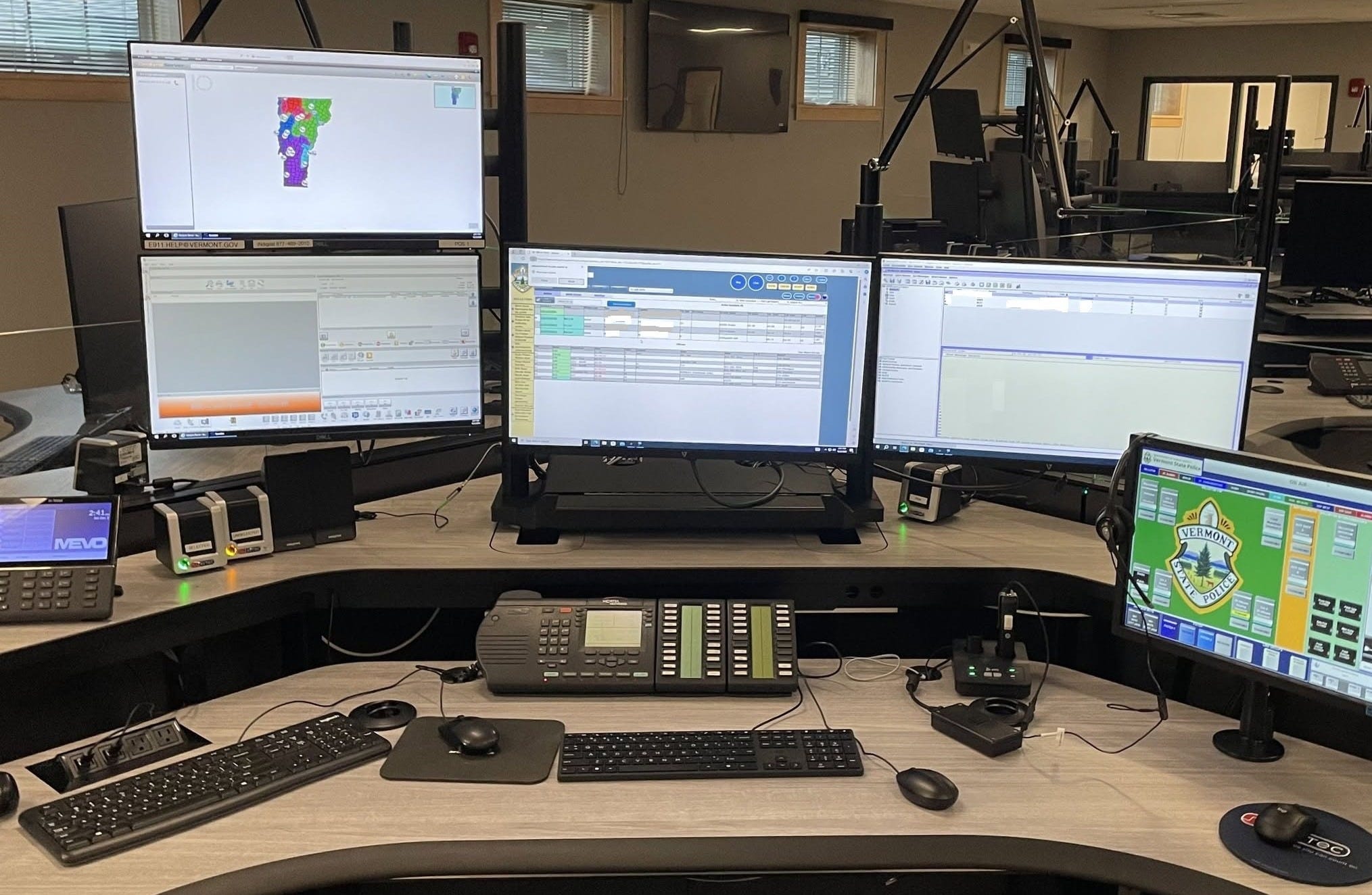
Say you see a crash in Burlington and call for help. The dispatcher needs to know where it happened and whether anyone is hurt. But a 2024 Burlington police report to the city’s Police Commission shows the dispatcher may also ask your name, your date of birth, a number to call you back and whether you’re a witness or a victim. The report says dispatch will “DOCUMENT all information & activity in the Valcour system,” and that every call is also audio recorded.
Nearly every police department in Vermont uses Valcour to send help and to keep track of what happens afterward. The state took it offline Monday night after CrossWind Technologies, the California company that runs it, reported a potential security incident.
In a 3:05 p.m. update Wednesday, Public Safety Commissioner Jennifer Morrison and Interim Digital Services Secretary Andrea DeLaBruere said 911 and emergency response are working and non-emergency phone lines are normal. Valcour will stay down until the investigation and any repairs are finished, and they did not expect it back Wednesday. They have not said whether anyone got information out of the system.
The state’s wording changed between its two statements. On Tuesday, officials called it a “potential security incident.” Wednesday’s statement dropped “potential” and referred to “the security incident affecting the use of Valcour.” Officials did not explain the change.
What Valcour Is
Dispatchers are the people who answer 911 and police phone lines and send officers out. Valcour is the computer screen they type each call into. It is also where the officer’s report, the follow-up and the final outcome of the case are kept. The state describes Valcour as the central place for reports and all documentation of calls for service, from the first call to the end of the case.
Valcour was born in Burlington. A 2014 Montpelier city report called it “the brainchild of Burlington Police Chief Michael Schirling” and noted it was named for Valcour Island in Lake Champlain. Morrison, then Burlington’s deputy chief, helped design Valcour and put it in place, according to the Boston Globe. The Globe reports that the Department of Public Safety adopted Valcour in 2021, which pushed use close to universal across the state.
Valcour’s selling point is that departments share what they collect. South Burlington police Sgt. Jonathan Namdar told CrossWind in a 2016 interview on the company’s site that he valued “the ability to share data with neighboring agencies instantly,” without phoning around. Wednesday’s state statement said the same: Valcour data is shared among participating agencies so officers know more about what they are walking into.
What’s in Valcour
Valcour holds far more than arrests. The state’s 2020 contract with CrossWind lists records of services provided, incident information, people involved in investigations, crimes reported, arrests, and stolen and recovered property. Valcour also writes tickets. When the Department of Public Safety switched to Valcour, it said it would retire its old electronic ticketing program because Valcour has one built in.
That means the people in Valcour include:
the driver who got a ticket
the neighbor who reported a break-in
the victim
the witness who stopped at a crash and gave a name and date of birth
Would You Be Told?
Vermont’s Security Breach Notice Act applies to state agencies and local governments as well as businesses. But it only requires notice when certain details are taken along with your name:
a Social Security number
a driver’s license, state ID, passport or military ID number
a bank account, credit card or debit card number, or a password to a financial account
fingerprints or other biometric data used to identify you
genetic information, health records or a health insurance policy number
Your date of birth, home address and phone number are not on that list, and neither is what you told the dispatcher. A witness statement or a victim report that holds only a name, address and birth date would not require a notice letter under this law, however personal it is.
If covered details were taken, the law says people must be told as fast as possible and no later than 45 days after the breach is discovered. Police can ask for a delay if notice would hurt an investigation. Notice can also be skipped if the owner of the data shows misuse isn’t reasonably possible, but it must explain that to the attorney general. The 45 days start when a breach of covered information is discovered. The outage alone does not start them.
The state has not said what, if anything, was taken.
What You Can Check
Compass doesn’t know yet whether anyone’s information left Valcour. Here’s what you need to judge for yourself whether to keep watch.
Are you likely in Valcour? If you’ve called a Vermont police department, been in a crash police responded to, gotten a ticket, or been a victim, witness or suspect, your information was probably entered in Valcour. Nearly every department uses it.
What would require a notice letter: your name plus a Social Security number, a driver’s license or other ID number, a financial account or card number, a financial account password, biometric data, genetic information or health records.
What wouldn’t: your name with only your date of birth, address, phone number or what you told police.
Where notices are posted: The Attorney General’s Office keeps a table of breach notice letters it receives.
Questions about identity theft: The AG’s Consumer Assistance Program, 800-649-2424 or ago.vermont.gov/cap.
Emergencies: Call 911 as usual. Department non-emergency numbers are working.