


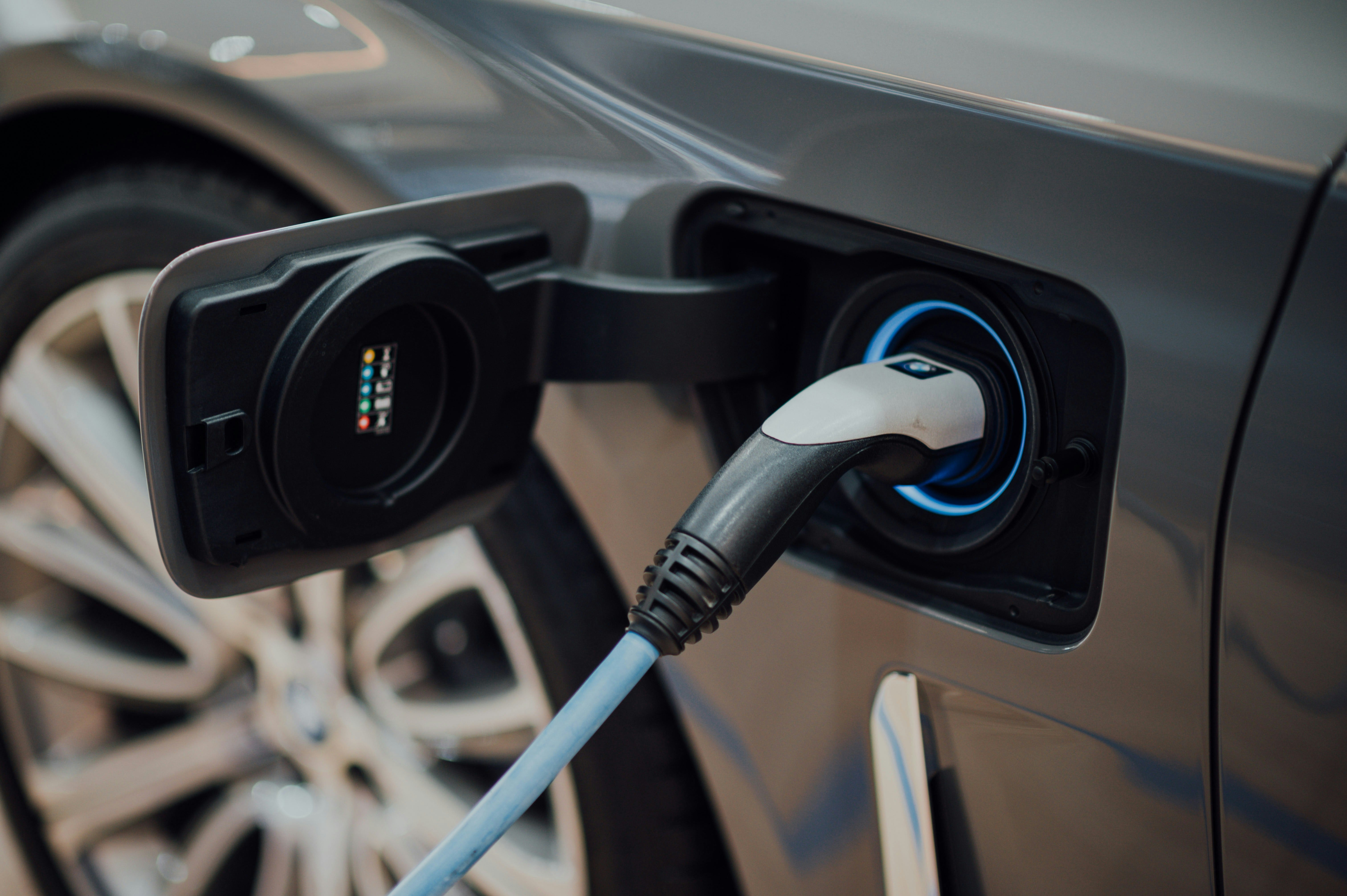
You’re driving Route 2 in January, battery at 20 percent, app says the charger in Montpelier is available. You get there — it’s down. The next option is 25 miles away in subzero cold. This isn’t hypothetical. Nationally, roughly one in three public EV charging attempts fail. Vermont has no state requirement that operators report real-time charger status to drivers before they make the trip.
The Governor’s Own Diagnosis
Governor Phil Scott paused Vermont’s EV sales mandate in May 2025 because the state doesn’t have enough charging infrastructure. He said it explicitly. Executive Order 04-25 directed the Agency of Natural Resources to halt enforcement of the requirement that 35 percent of new cars sold in Vermont be electric by model year 2026, with a complete ban on gas-powered cars by 2035.
“It’s clear we don’t have anywhere near enough charging infrastructure,” Scott said in announcing the order. “We have much more work to do, in order make it more convenient, faster, and more affordable to buy, maintain and charge EV’s.”
The pause runs through the end of 2026.
The governor’s diagnosis was underscored by the Trump administration’s freeze on federal EV charger funding earlier this year. Vermont was expecting $16 million in NEVI (National Electric Vehicle Infrastructure) funding to build 11 new fast-charging stations along major highways. That money was frozen in February, then partially restored in August after a federal court ruled the freeze unlawful — though Vermont was excluded from the injunction.
The Infrastructure That Does Exist — and How Much Actually Works
Vermont has received $21.2 million in NEVI formula funds over five years (2022-2026). As of today, one station is open: Bradford, with four fast-charging ports, which opened in spring 2025 using about $700,000 in federal grants. Nine more projects are moving forward after the six-month federal freeze was lifted in September. A second round of solicitations is planned for May or June.
The state’s goal, set by statute, is a fast charger within one mile of every interstate exit and within 25 miles along state highways. As of mid-April 2026, Vermont is nowhere near that target.
Nationally, the reliability picture is worse than most people realize. According to ChargerHelp’s analysis of over 100,000 charging sessions across 2,400 chargers, operators report 98.7 to 99.9 percent uptime. But the actual first-time charge success rate is only 71 percent. More than a third of failures occur on chargers that appear operational. New stations average 85 percent success on first attempt; that drops below 70 percent by year three — a 15-point decline that standard uptime metrics completely miss.
J.D. Power’s 2025 data tells a similar story: 14 percent of EV owners visited a charger without successfully charging. When they fail, 60 percent of the time it’s because the charger is out of service or malfunctioning.
Vermont does not track first-attempt success rates. According to Andrea Wright, Vermont Agency of Transportation’s Environmental Policy Manager, the state’s transparency mechanism is PlugShare — a crowdsourced consumer app where users self-report their charging experience. Vermont is spending $21 million in public money on chargers and relying on drivers to tell each other whether they work.
What the Legislature Is Debating Right Now
H.944, the FY2027 transportation bill currently in Senate Transportation, contains two separate EV policy tracks. One raises the revenue side: a 1.4-cent-per-mile user fee on EV owners, replacing the current $89 flat annual registration fee, with collection starting in 2028. The other addresses accountability: proposed language would require public charging station operators to report real-time data on charger status, availability, and pricing.
Both the Conservation Law Foundation and ChargePoint testified on April 13 in support of the real-time data requirement. Both also urged a phased approach: start with publicly funded and ratepayer-funded chargers, aligned with federal NEVI standards (one-minute status updates) and the OCPI protocol used in other states.
ChargePoint made a telling admission: they don’t always know which of their own stations received public funding and asked legislators to help them figure it out.
Driving Without Knowing
This is where the two policy tracks create the real problem.
The state is building the obligation side faster than the accountability side. EV drivers will soon pay 1.4 cents per mile to use Vermont’s roads. The governor paused the sales mandate but only temporarily — it expires at the end of this year. Yet there is no state requirement that the publicly funded chargers EV drivers depend on tell you whether they actually work.
The federal NEVI standard requires one-minute status updates from NEVI-funded chargers. But Vermont has one NEVI station open. The broader network of state-funded, settlement-funded, and private chargers has no equivalent requirement.
Vermont’s Agency of Transportation keeps a map of NEVI locations. But municipally funded and utility-funded chargers are “not separately identified or necessarily known,” according to VTrans. When four separate funding streams exist — NEVI, state grants, municipal money, and utility ratepayer funds — and nobody maintains a consolidated list, nobody knows which chargers received public money. The operator doesn’t know. The state doesn’t know. The driver has no way to know.
For a rural state where the next charger might be 25 miles away on a winter road, the difference between “available” and “actually working” is the difference between getting home and getting stranded.
The Unfinished Infrastructure Build
Vermont sought federal Reliability Accelerator funding in 2023 to repair broken EV chargers. But according to VTrans, the state never formally applied. Station owners who might have been eligible for repair grants were not interested. The federal program required all repaired chargers to meet NEVI minimum standards — meaning a two-port station would have to expand to four ports and meet other federal requirements. Vermont’s small-town charger hosts didn’t want the federal money on those terms.
That gap — between what Washington requires and what rural Vermont needs — sits at the center of why the state’s charging network remains fragmented. The infrastructure is being built, but the visibility into whether it works is not.
What Happens Next
The legislature is debating whether charger operators should have to tell you if their chargers work. The industry is asking to go slow, starting with publicly funded stations. VTrans will issue a second round of NEVI solicitations in May or June. And the governor’s pause on the EV sales mandate expires at the end of 2026 — the same year the charger network is still being built.
By then, EV drivers will have been paying the mileage-based user fee for months. They will have no state-level guarantee that the chargers they’re driving to will actually charge their cars.
Seems like a lot of public money and management to satisfy what seems to be essentially a sort of hobby, getting around in retirement without, supposedly, adding to the planet’s
CO2 load.getting down and back from Burlington to Boston on ten gallons of gas in our hybrid is not amazing enough ?
Are you feeling lucky today?