


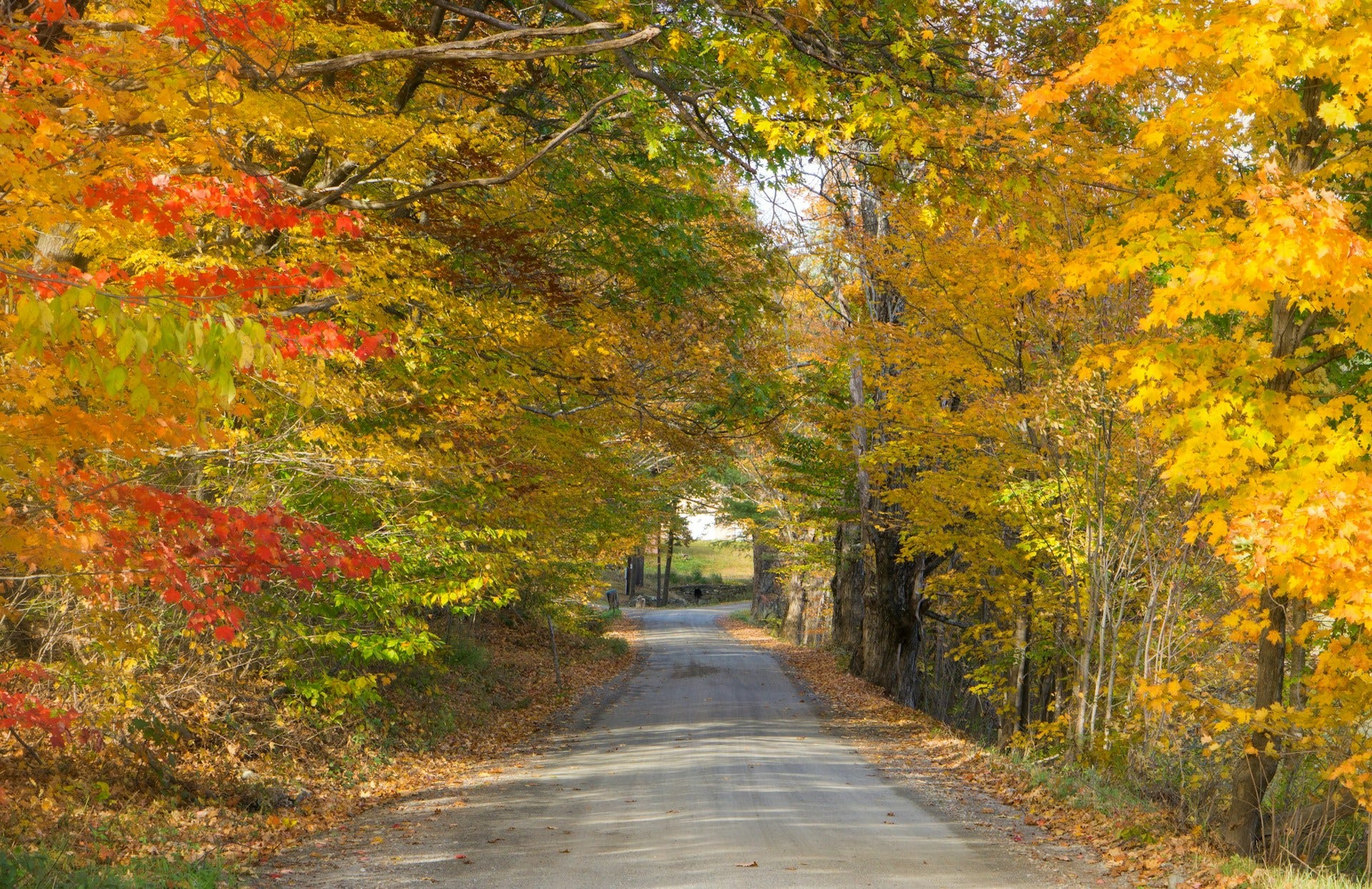
Vermont is one of the most forested states in the nation—and one of the most regulated. As lawmakers expand the reach of Vermont’s landmark land-use law through Act 181 (2024) and advance a new tiered system for land-use regulation, a fundamental question is resurfacing in Montpelier: does Vermont still distinguish between land that is being fragmented and land that is being actively managed?
For the state’s forest products industry, the answer increasingly appears to be no.
The tension is not new, but it has sharpened as the Land Use Review Board (LURB) moves toward finalizing “Tier 3” resource mapping—a designation that would place the highest level of regulatory scrutiny on lands identified as containing rare natural communities, habitat connectors, or sensitive headwaters. The outcome of that process, expected in 2026, could determine whether large portions of Vermont’s working forests remain eligible for active management or become functionally off-limits to anything beyond minimal disturbance.
This is not a fight over whether forests should be protected. That question has been settled for decades. The unresolved issue is what counts as conservation—and whether active stewardship still qualifies.
What Act 250 Proponents Are Trying to Do
Environmental advocates supporting the expansion of Act 250’s jurisdiction frame their case around cumulative impact, not hostility toward forestry. Their stated goals are consistent and largely uncontested: reduce forest fragmentation, protect biodiversity, safeguard headwater streams, and steer development toward existing town centers rather than intact rural landscapes.
These priorities are reflected in Vermont’s broader conservation framework, including the state’s 30x30 and 50x50 conservation goals, which aim to conserve 30 percent of Vermont’s land by 2030 and 50 percent by 2050.
From this perspective, roads—especially those extending into undeveloped areas—are not neutral infrastructure. They are the primary mechanism by which large forest blocks are carved into smaller, less resilient parcels. Once built, roads tend to be permanent, regardless of their original purpose.
Act 181’s “Road Rule,” which brings certain road construction under Act 250 review, is intended to address that risk. Likewise, Tier 3 mapping is designed to identify places where ecological value is so high, or so irreplaceable, that the state should err on the side of precaution.
In theory, these objectives are compatible with sustainable forestry. In practice, that compatibility is now at the center of dispute.
Where the Timber Industry Says the System Breaks
The Vermont Forest Products Association (VFPA), which represents loggers, foresters, truckers, sawmills, and manufacturers across the forest products supply chain, argues that Act 250’s modernized framework fails to distinguish between temporary, low-impact forestry activity and permanent land conversion.
Industry leaders point to three recurring friction points.
First, the Road Rule treats access roads required for timber harvesting similarly to roads built for residential subdivision, despite their different purposes, lifespans, and impacts. Temporary or seasonal forest roads, they argue, are being regulated as if they were speculative development.
Second, Tier 3 mapping is being drafted at a scale that industry groups say is too broad, potentially sweeping in large tracts of actively managed forest that have remained intact precisely because of long-term stewardship. Once designated, these areas could face restrictions that make routine management economically or administratively infeasible.
Third, Act 250 timelines are ill-suited to industries with narrow margins and capital-intensive operations. Delays of a year or more—common in complex permitting—can be the difference between reinvestment and closure for mills and contractors.
Forestry, unlike agriculture, does not currently receive the same level of regulatory deference under Act 250, despite both being land-based, production-oriented uses.
The industry’s core claim is not that regulation is unnecessary. It is that the system no longer distinguishes between stewardship and speculation.
The Science: Where Both Sides Are Right—and Talking Past Each Other
Both environmental advocates and the timber industry rely on legitimate scientific findings, but they emphasize different risks.
According to research synthesized by the University of Vermont’s Forest Ecosystem Monitoring Cooperative and the state’s Forest Carbon Inventory, older, unmanaged forests generally store more total carbon per acre, particularly in soils and standing biomass. They also provide stable habitat for certain species and ecological communities.
At the same time, younger forests sequester carbon at a faster rate, and harvested wood products—especially long-lived ones like structural lumber—can store carbon outside the forest for decades. When wood substitutes for more emissions-intensive materials such as steel or concrete, it can reduce overall carbon emissions, a phenomenon commonly referred to as the “substitution effect.”
The science does not declare a single winner. Instead, it presents tradeoffs.
Environmental advocates tend to prioritize carbon permanence and biodiversity stability. The forest products industry emphasizes carbon flux, material substitution, and economic resilience.
Vermont policy increasingly treats one set of risks as non-negotiable, and the other as secondary.
The Unspoken Tradeoff: Environmental Certainty vs. Economic Elasticity
Nothing in the Act 250 debate suggests indifference to housing affordability, rural employment, or poverty. Yet policy design reveals priorities.
Act 181 deliberately channels development away from rural land, even when that constrains supply. Environmental protection is treated as a hard constraint; economic impacts are treated as variables to be managed downstream.
For working forests, this matters. Vermont’s Use Value Appraisal (UVA) program, often cited as one of the state’s most successful conservation tools, relies on the premise that active management provides sufficient economic return to keep land intact and undeveloped.
If regulatory burdens make management impractical, landowners may exit the program, sell parcels, or shift land use in ways that reduce long-term forest continuity.
The paradox is that a system designed to prevent fragmentation could, if miscalibrated, incentivize it.
What Happens If Vermont Gets This Wrong
The stakes extend beyond the timber industry.
If mills close or relocate, Vermont wood is more likely to be exported for processing elsewhere, increasing transportation emissions and reducing local control over forest outcomes. If large parcels are sold rather than managed, they may be subdivided in ways that fall outside Act 250 triggers but permanently alter the landscape.
Conversely, poorly designed exemptions could allow genuinely harmful development to proceed under the banner of forestry.
The challenge is not choosing between protection and production. It is designing a system capable of telling the difference.
The Question Vermont Hasn’t Answered Yet
Vermont’s land-use debate is no longer about whether forests should be protected. The unanswered question is whether active management still counts as conservation—or whether protection now means withdrawal.
As Tier 3 rules move toward finalization, lawmakers and regulators must decide whether Act 250 remains a tool for balance, capable of distinguishing stewardship from fragmentation, or whether it has quietly evolved into a system optimized for saying no.
The future of Vermont’s 4.5 million acres of forest may hinge less on ideology than on whether the state’s regulatory framework can still recognize the difference.