


The Document at the Center of the Storm
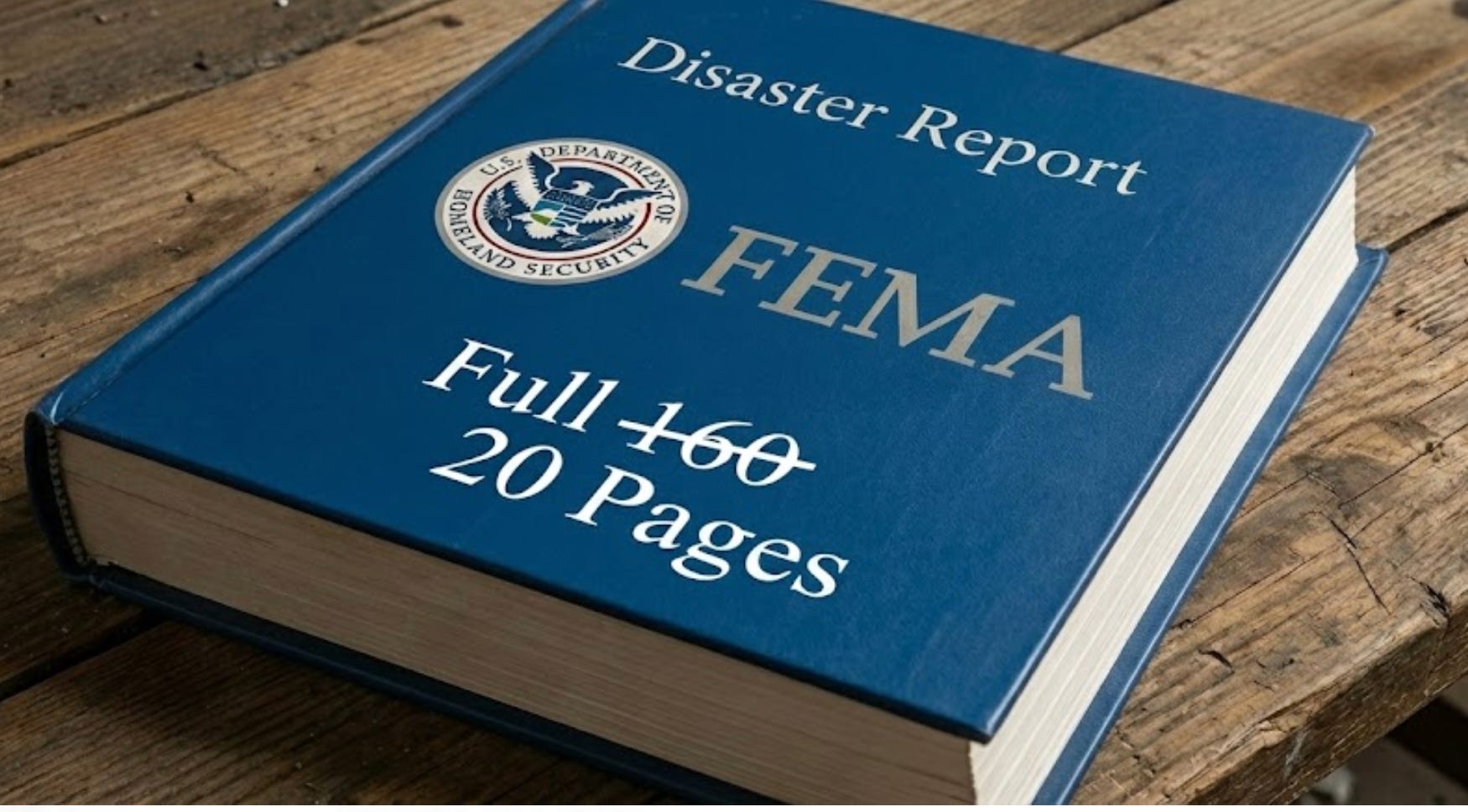
Vermont Senator Peter Welch is demanding that Homeland Security Secretary Kristi Noem release the complete version of a federal disaster management report—a document that was dramatically cut from 160 pages to just 20 before its scheduled December 11 release.
The missing 140 pages may contain critical recommendations that could help Vermont secure federal aid for devastating 2025 floods.
At stake is more than bureaucratic transparency. Vermont is appealing the Trump administration’s denial of disaster relief for a July 2025 storm that caused $1.8 million in verified damage to roads and infrastructure in the Northeast Kingdom—damage that exceeded federal thresholds but was nonetheless rejected in November.
What Was in the Original Report?
The Federal Emergency Management Agency Review Council was established by President Trump in January 2025 to assess FEMA’s effectiveness and recommend reforms. Over several months, the council’s subcommittees gathered nearly 13,000 public comments and met with governors, mayors, and tribal leaders across the country.
According to multiple sources who reviewed the draft, the original 160-page document included detailed sections on improving rural resilience, maintaining federal cost-share ratios, reforming flood insurance, and recognizing the cumulative impact of repeated disasters on small states.
The draft reportedly recommended that FEMA consider a state’s fiscal exhaustion from prior disasters when evaluating new aid requests—particularly relevant for Vermont, which has experienced major flooding in 2023 and 2024 as well as 2025.
The “Rural Resilience” Section and Vermont’s Struggle
The deleted material is especially significant for Vermont’s current predicament. The state faces structural disadvantages in the federal aid system because FEMA calculates eligibility by multiplying population by a per-capita damage threshold—currently about $1.89 per person, adjusted for inflation.
For Vermont, with a population of roughly 647,000, that means the state needs to demonstrate approximately $1.2 million in statewide damage to qualify for a Major Disaster Declaration. While Vermont’s July 2025 storm damage exceeded that threshold by 50 percent, the administration denied the request, saying the damage was “not of such severity and magnitude as to be beyond the capabilities of the state.”
The original report’s “Rural Resilience” chapter—now removed—likely addressed these exact concerns about how population-based formulas disadvantage small states, according to disaster policy experts who reviewed leaked portions.
Who Made the Cuts and Why
Secretary Noem, confirmed to lead the Department of Homeland Security in January, has pursued what administration officials call a policy of “devolution”—shifting more disaster response responsibility and costs back to state and local governments. National Security Council spokesman Brian Hughes has stated that state and local governments “often remain an impediment to their own community’s resilience” by relying too heavily on federal assistance.
The report editing was overseen by Noem working closely with Corey Lewandowski, a political advisor serving as a “Special Government Employee” at DHS. Congressional oversight committees have raised concerns about Lewandowski’s extensive role in department decisions despite his temporary status.
The Pattern of Denials
Vermont’s denial occurred alongside decisions on other states’ disaster requests in November. The pattern raised eyebrows: Alaska, Nebraska, and North Dakota—all Republican-led states that voted for Trump in 2024—received approvals, while Illinois, Maryland, and Vermont were denied, despite Vermont having a Republican governor in Phil Scott.
Senator Welch has not explicitly accused the administration of political discrimination, but in his letter to Secretary Noem he emphasizes the importance of transparency in a process that affects “vulnerable communities regardless of political affiliation.”
The Cost-Share Question
Another critical deletion from the report involves federal cost-sharing arrangements. Under current law, the federal government typically covers 75 percent of disaster recovery costs, with states responsible for 25 percent. The administration has discussed reducing the federal share or moving to a “block grant” system that would give states a fixed sum regardless of actual costs.
The draft report reportedly included warnings from governors—both Democratic and Republican—against such changes, arguing they would overwhelm state budgets. Those warnings were removed from the final version, according to disaster policy analysts.
Vermont’s Three-Year Flood Crisis
Understanding Vermont’s urgency requires understanding the cumulative toll. The July 2023 “Great Flood” dropped up to 9 inches of rain in some areas, causing rivers to crest higher than during Hurricane Irene. Then in July 2024, remnants of Hurricane Beryl reflooded many of the same communities. The July 2025 storm hit the Northeast Kingdom particularly hard, with the town of Sutton alone experiencing over $1 million in damages.
Governor Scott has argued in his appeal that while $1.8 million might appear manageable in isolation, it represents an unsustainable burden for a state whose disaster reserve fund has been depleted by three consecutive years of major flooding.
Welch’s Legislative Response
Senator Welch isn’t only seeking the full report—he’s also legislating against the policies it appears to endorse. His Disaster Assistance Improvement and Decentralization (AID) Act (S. 2247) would explicitly prohibit the White House from withholding disaster funding and require FEMA to provide technical assistance to small towns.
The bill represents an alternative vision of “decentralization”—empowering local leaders to direct federal funds more efficiently, rather than reducing those funds altogether.
Questions About Contracting and Oversight
Adding complexity to the situation, Welch has also called for an investigation into $220 million in DHS advertising contracts, including a $143 million no-bid contract to a firm with reported ties to Lewandowski’s political network.
House Oversight Committee Democrats have demanded public release of Lewandowski’s financial disclosures, citing concerns about potential conflicts of interest and his role in grant decisions.
What Happens Next
Governor Scott’s appeal of the disaster declaration denial is currently under review by FEMA. The agency has no set timeline for deciding appeals, though they typically take several weeks to months.
Senator Welch’s demand for the complete FEMA Review Council report puts Secretary Noem in a difficult position. Releasing the full document could provide Vermont with powerful evidence to support its appeal—specifically, recommendations from the administration’s own expert panel that appear to validate the state’s arguments about cumulative impacts and rural disadvantages. Continuing to withhold the material may fuel accusations of political decision-making and potential legal challenges.
The broader question is whether the report controversy represents a temporary dispute over a single document or signals a fundamental shift in how the federal government responds to disasters. With climate scientists projecting increased frequency of extreme weather events, and with rural communities facing infrastructure challenges regardless of political affiliation, the debate over these missing 140 pages may preview larger battles over the future of federal disaster policy.
For Vermont residents watching roads remain damaged and bridges weakened as winter approaches, the bureaucratic struggle in Washington carries immediate, practical consequences. The outcome of both the appeal and the transparency fight will likely influence not only Vermont’s recovery from 2025’s flooding, but how the state—and others like it—prepare for the disasters still to come.
Really solid piece on the FEMA report controversy. The part about population-based damage thresholds basically creating a structural disadvantage for rural states is crucial and often gets missed in disaster policy debates. If Vermont exceeds the per-capita threshold by 50% but still gets denied because of cumulative fiscal exhaustion, that kinda shows the formula is measuring the wrong thing. What matters isnt just if a state can technically afford the recovery mathematically but whether they have reserve capacity after repeated hits. The deleted 'Rural Resilience' section probably containd the exact recommendations that would validate Vermont's appeal.