


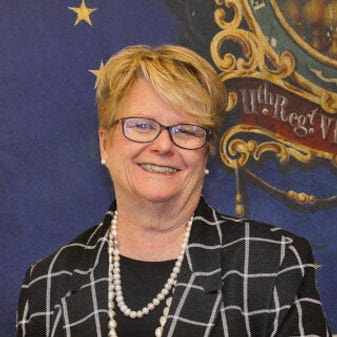
As the Vermont Senate begins its 2026 session, a new proposal—Senate Bill 175 (S.175)—has re-ignited a debate over who should decide what happens in Vermont classrooms. Introduced by Senator Anne Watson on January 6, the bill mandates a new interdisciplinary climate change curriculum for all public schools.
For many residents, however, the bill is arriving at a moment of high tension. With the controversial Act 73 already pushing for district consolidation and school mergers, S.175 raises a fundamental question for Vermont communities: How much “local control” do they actually have left?
The Act 73 Context: A Shifting Landscape
To understand the reaction to S.175, one must look at the impact of Act 73. Passed to address declining enrollment and rising costs, Act 73 incentivizes or requires districts to merge and, in some cases, repurpose or close buildings.
To many Vermonters, local control is symbolized by the neighborhood school board’s ability to manage its own budget and facilities. Act 73 challenges this by centralizing governance into larger supervisory unions. When a new mandate like S.175 is added to the pile, it is often viewed not just as a curriculum change, but as another example of the state “handing down” requirements to communities that feel they are losing their seat at the table.
The Reality of State Mandates: A Crowded Desk
A common misconception in the “local control” debate is that school boards currently have a blank slate when designing curriculum. In reality, Vermont schools operate under a thick layer of State Board of Education Rules.
Even before S.175, schools were already legally required to meet the following mandates:
Science: Adoption of the Next Generation Science Standards (NGSS).
Health: Mandatory comprehensive health education including substance abuse and nutrition.
Global Citizenship: Requirements for civics, economics, and world languages.
Financial Literacy: State-required financial education proficiencies.
S.175 would amend the Education Quality Standards (Rule 2000), adding climate change to this list of “non-negotiables.”
Defining Local Control: “The What” vs. “The How”
The answer to “how much local control do we have?” often depends on the distinction between standards and curriculum.
The State’s Role (Standards): The state defines what a student must know to graduate (e.g., “A student must understand the carbon cycle”).
The Community’s Role (Curriculum): Historically, local boards decide how to teach it (e.g., “Which books will we use? Will we visit a local farm or a lab?”).
S.175 blurs this line. By directing the Secretary of Education to “develop or adopt” a specific curriculum, the state is providing a pre-packaged model. While the bill uses “open-source” materials to keep costs down, the requirement for supervisory unions to “incorporate” this specific curriculum suggests a move toward standardized content, leaving less room for local boards to choose their own educational path.
Regional Comparison: Mandates vs. Incentives
Vermont’s neighbors illustrate different philosophies on local control:
New Hampshire remains the regional champion of local control, recently killing a resolution that even “urged” climate education, preferring to leave the decision entirely to town boards.
Maine uses a “carrot” approach, offering grants for teacher training rather than a mandatory “stick.”
Vermont and Connecticut are moving toward the “stick” approach—using statutory mandates to ensure every student receives the same information, regardless of their zip code.
Conclusion: Essential Reform or Encroaching Mandate?
For proponents of S.175, the bill is an essential step to ensure Vermont students are prepared for a changing world. For many local residents already weary from Act 73’s consolidation efforts, it is seen as a further erosion of the community’s right to steer its own schools.
Ultimately, Vermont communities today possess significant control over the delivery of education—hiring, facilities, and specific lesson plans—but almost no control over the requirements of education. S.175 represents a further shift in that balance, moving more of the “how” into the state’s hands.
What Happens Next
The Senate Committee on Education is expected to take up S.175 later this month. Public testimony will likely focus on whether the state’s Agency of Education has the capacity to develop this curriculum and whether local school boards will be given the flexibility to adapt these new mandates to their specific community needs.