


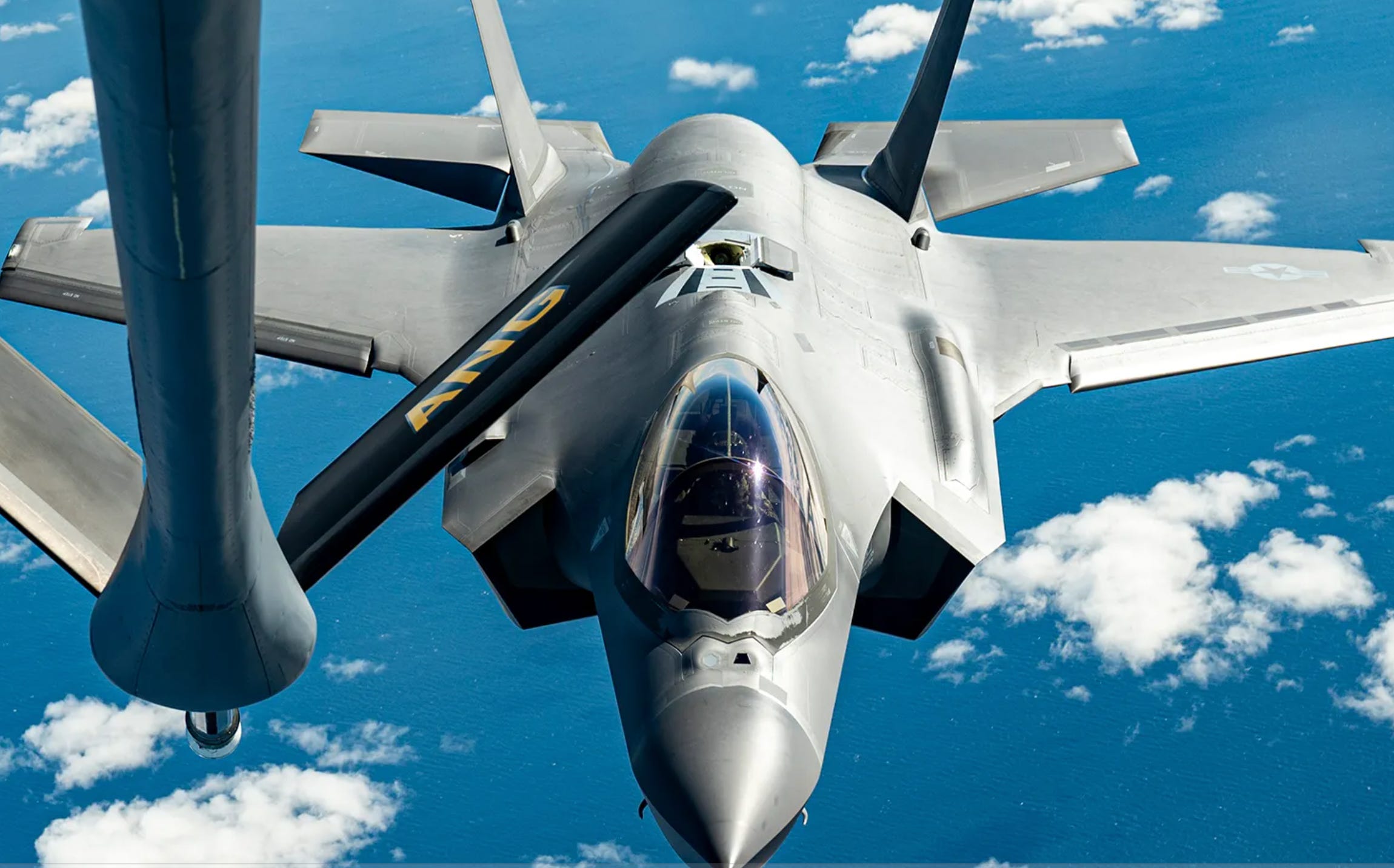
Vermont’s Air National Guard has been thrust into the center of an escalating U.S. military operation in the Caribbean, with pilots and support personnel from Burlington’s 158th Fighter Wing now deploying their F-35A stealth fighters to the region under urgent federal orders.
A Sudden Call to Action
The mobilization came with little warning and unusual speed. Unit members who reported for routine drill training the weekend of December 6-7 learned they would soon be federally mobilized. By December 9, Vermont Army National Guard spokesperson Joe Brooks confirmed the deployment would happen “sometime here in December,” noting the “short turnaround time.”
On December 10, the unit received its Title 10 federal mobilization orders, and by December 11, defense officials confirmed the Green Mountain Boys would be heading to the Caribbean to support Operation Southern Spear.
For a Guard unit that typically plans deployments 12 to 24 months in advance, the compressed timeline was described as “unusual” and suggested an urgent need for their specialized capabilities.
The Green Mountain Boys: Vermont’s Elite Fighter Wing
The 158th Fighter Wing, based at Burlington International Airport, became the first Air National Guard unit to fly the F-35A Lightning II stealth fighter, receiving its first aircraft in September 2019 and reaching full operational capability in late 2021.
This isn’t a typical reserve unit. The Vermont pilots are highly experienced aviators, many with thousands of hours flying F-16s before transitioning to the cutting-edge F-35. Earlier in 2025, they deployed to Kadena Air Base in Japan, operating in the high-tension Indo-Pacific environment.
The F-35A they fly represents the most advanced fighter jet in the U.S. arsenal, capable of evading sophisticated radar systems and carrying precision weapons deep into contested territory. Their aircraft are equipped with Block 4 software, providing advanced capabilities necessary for complex combat scenarios.
What Federal Mobilization Means
Under Title 10 of the U.S. Code, Vermont Guard members are federalized and removed from the command of Governor Phil Scott. They become active-duty personnel under direct control of the President and the U.S. Air Force, subject to the Uniform Code of Military Justice.
Governor Scott acknowledged to reporters that he “didn’t know a lot about any of the mission” and referred questions to the Pentagon. This lack of information sharing underscored how completely the operation shifted to federal control.
Lt. Col. Meghan Smith, the unit spokesperson, cited federal operational security restrictions in refusing to disclose how many aircraft or personnel would deploy, or their exact destination. This level of secrecy is typical of combat deployments rather than routine training missions.
The Mission: Operation Southern Spear
The Vermont pilots are joining Operation Southern Spear, officially described as a counter-narcotics and counter-terrorism effort in the Caribbean. Secretary of Defense Pete Hegseth announced the operation in November 2025, explicitly linking drug interdiction to homeland defense.
The operation has escalated significantly since its September launch. The U.S. has conducted at least 22 strikes on vessels allegedly carrying drugs and linked to criminal organizations, resulting in over 87 fatalities. The Trump administration designated groups like Venezuela’s Tren de Aragua and the Cartel of the Suns as Foreign Terrorist Organizations in February 2025, a legal move that allows the use of lethal military force without traditional law enforcement requirements.
The military buildup in the region is substantial. The USS Gerald R. Ford aircraft carrier and its strike group arrived in November, joining amphibious assault ships, Marine Corps forces, and various aircraft already deployed to the region. The U.S. has also reactivated Roosevelt Roads Naval Station in Puerto Rico, a facility that was closed in 2004.
Why Vermont’s F-35As Matter
While Marine Corps F-35B variants have operated in the Caribbean since September, Vermont’s F-35A model brings significantly enhanced capabilities. The Air Force variant can fly roughly 200 nautical miles farther than the Marine version, carry heavier weapons internally while maintaining its stealth profile, and pull higher G-forces in air combat.
From Roosevelt Roads in Puerto Rico, Vermont’s fighters can reach deep into the Venezuelan interior without immediate refueling—a critical capability given the sophisticated Russian-made air defense systems Venezuela possesses.
The deployment of these aircraft suggests potential missions beyond drug interdiction. The F-35A excels at suppressing enemy air defenses and striking hardened targets, capabilities that would be needed if the operation expands beyond its current scope.
Impact on Vermont Families
The December mobilization has created hardship for Vermont families during the holiday season. While not all of the wing’s roughly 1,000 personnel are deploying, a significant portion of the squadron’s pilots and support staff are expected to participate.
International Controversy
The operation has created diplomatic tensions with U.S. allies. France’s Foreign Minister called the military strikes a violation of international law, while the United Kingdom suspended intelligence sharing with the U.S. regarding Caribbean drug trafficking—a significant move given the UK’s typical cooperation with American counter-narcotics efforts.
Legal scholars have questioned whether the lethal strikes against drug smuggling vessels comply with international humanitarian law, arguing that drug trafficking remains a law enforcement matter absent direct links to armed conflict.
In Latin America, Colombian President Gustavo Petro has called the operation a “power grab” for Venezuelan oil resources. Brazil’s government warned that a U.S. invasion could trigger a “Vietnam-style” regional conflict.
Russia has denounced the buildup as a “fabricated pretext” for regime change, while China opposes the airspace restrictions that affect commercial travel and trade.
The Broader Picture
The operation represents the largest U.S. military buildup in the Caribbean since 1989, when the U.S. invaded Panama. More than 15,000 U.S. military personnel are now in the region.
Beyond drug interdiction, the operation appears designed to pressure the government of Venezuelan President Nicolas Maduro. The U.S. recently seized the oil tanker Skipper off Venezuela’s coast, and the FAA has closed airspace south of Puerto Rico.
The military has also deployed autonomous drone vessels to patrol the Caribbean, part of what the Navy calls its “Hybrid Fleet” concept combining traditional warships with unmanned systems.
What Happens Next
The duration of Vermont’s deployment remains unclear. Federal operational security prevents the Pentagon from disclosing specific timelines, but the infrastructure investments at Roosevelt Roads and the scale of forces involved suggest an operation planned to continue into 2026.
Three potential scenarios could unfold: The U.S. might maintain the current blockade posture, using economic pressure to force political change in Venezuela. Alternatively, any provocation could trigger a limited air campaign targeting Venezuelan military capabilities—a mission that would rely heavily on Vermont’s F-35As to suppress air defenses. The least likely but most consequential scenario would be a full-scale intervention aimed at regime change.
For Vermont families, the immediate concern is the safe return of their loved ones. For the Guard members themselves, they face the reality of serving in an operation that has generated significant controversy both internationally and at home. The Green Mountain Boys, flying from a base 500 miles from the Venezuelan coast, now sit at the center of the most significant U.S. military operation in Latin America in more than three decades.
Where is my comment from weeks ago???