


Vermont’s Uniform Approach
Vermont’s H.727, the Sustainable Data Centers Act, would regulate facilities requiring 20 megawatts or more of power capacity. The bill focuses on proper siting, environmental protections, and ratepayer cost controls—but applies the same requirements to all data centers regardless of their technology or environmental footprint.
The legislation does not currently distinguish between traditional water-intensive facilities that can consume millions of gallons daily for cooling and newer water-free technologies. Nor does it create pathways for facilities that generate their own power rather than drawing from Vermont’s electric grid.
During extensive February hearings before the House Committee on Energy and Digital Infrastructure, witnesses from utilities, regulators, and environmental groups testified about ratepayer protections, water usage, and grid capacity—but the bill itself contains no technology-specific exemptions or waivers.
Maine’s Water-Free Exception
Maine legislators are taking a different approach with LD 307. While an amendment discussed in February would pause construction of data centers above 20 megawatts until July 2028, it includes provisions for waivers based on environmental performance.
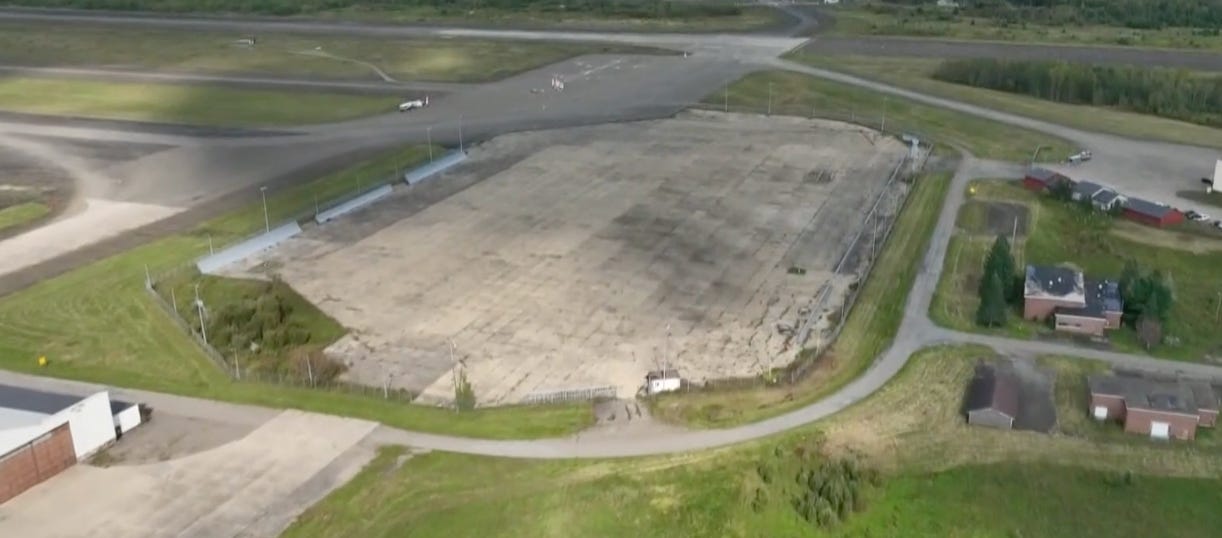
LiquidCool Solutions, planning a facility at the former Loring Air Force Base, has specifically requested such a waiver. The company’s vice chair, Herb Zien, told The Daily Yonder that their “hope and expectation is that the Loring data center will receive a waiver because the facility consumes no water for cooling servers.”
The project uses immersion-cooling technology, submerging electronics in polyalphaolefin oil rather than using traditional water-based cooling systems. It would start at 2 megawatts and potentially scale to 26 megawatts—using existing underutilized power infrastructure at the former military base.
Maine’s approach creates a pathway for facilities that address one of the primary environmental concerns about data centers—massive water consumption—while still allowing the state to pause conventional projects during the study period.
New Hampshire’s Off-Grid Exemption
New Hampshire went even further with a structural alternative. Governor Kelly Ayotte signed HB 672 into law on August 1, 2025, creating an entirely new legal category for “off-grid electricity providers.”
The law exempts facilities that generate their own power—without connecting to the existing electric grid—from regulation by the New Hampshire Public Utilities Commission. Such providers still must comply with siting regulations, environmental laws, and safety requirements, but avoid the utility regulatory framework entirely.
Citizens Count, a nonpartisan civic education organization, explained the law allows data centers to “build an independent power generating facility and supply power to that customer without ever connecting to the existing public power grid.”
The bill’s sponsor, Rep. Michael Vose, R-Epping, told Citizens Count he believes the law would “encourage innovation in New Hampshire” and attract energy-intensive businesses without burdening the existing power grid or existing ratepayers.
This creates a fundamental distinction: a data center in New Hampshire that builds its own nuclear reactor or renewable energy facility faces an entirely different regulatory path than one connecting to the grid. Vermont’s approach makes no such distinction.
The Infrastructure Reality
Vermont has direct experience suggesting infrastructure costs, not regulation, may be the primary barrier to data center development. St. Albans briefly pursued a data center proposal last year ranging from 8-12 MW or 50 MW in capacity.
The project would have created approximately 1,000 temporary construction jobs and 20 permanent positions, former Town Manager Sean Adkins told VTDigger. But it collapsed when connecting to the electric grid would have required roughly $30 million for infrastructure upgrades.
“It all came down to power,” Adkins said. “It was going to cost just too much money to build a substation that would have allowed the project to move forward.”
Sam Chevalier, who studies electrical power systems at the University of Vermont, told Vermont Public the case illustrates broader challenges: “The infrastructure limits and the price of electricity together just make it kind of a non-starter.”
This raises questions about whether Vermont’s regulatory framework should create incentives for data centers that solve infrastructure problems—for instance, by generating their own power or locating near existing transmission capacity—rather than applying uniform rules regardless of a facility’s approach to power and water.
The Regulatory Debate
Policy specialists have noted competing pressures as states develop data center frameworks.
Alex McWard, senior policy specialist with the energy program at the National Conference of State Legislatures, testified before Vermont lawmakers that “there is some opposition to this kind of legislation due to concerns that it will set too strict of oversight regulations that could drive data centers to locate in other states with less rigid requirements.”
States introduced 70 bills to regulate data center development in the 2025 legislative session, according to VTDigger, with at least six states considering temporary moratoriums.
Kerrick Johnson, Commissioner of Vermont’s Department of Public Service, raised concerns during legislative testimony about a “fear of change” that could lead to lost opportunities and stable industrial demand in the region, according to background materials.
Vermont’s Current Status
Currently, Vermont has no large-scale data center proposals under consideration. Commissioner Johnson told Vermont Public there are no active proposals before the state. Green Mountain Power, Vermont’s largest utility, reported receiving “maybe one or two very speculative general inquiries over the years” but no serious proposals, according to spokesperson Kristin Kelly.
Vermont does have a handful of small data centers, mostly clustered around Chittenden County. Vermont’s total peak electricity demand hovers around 900 megawatts.
The Utility Perspective
Green Mountain Power presented research to lawmakers suggesting properly sized data centers could benefit ratepayers. Engineer Cam Twarog told the House Committee on Energy and Digital Infrastructure that the utility tested five Vermont sites and found data centers operating between 50 and 200 megawatts “can be kind of a net benefit for costs on the electric system.”
The utility’s analysis examined locations in New Haven near a VELCO substation, Williston near the GlobalFoundries campus, West Rutland near the former granite quarry, and Vernon adjacent to the former Vermont Yankee site, VTDigger reported.
However, Mark Sciarrotta, general counsel for Vermont Electric Power Company, told lawmakers that while New England has the country’s highest electricity rates, “data centers really don’t care about the rates that much because they’re making so much money at these things it’s not their biggest concern.”
Companies seeking data center sites prioritize cheap energy and expeditious permitting processes—areas where Vermont may struggle to compete.
Two Legislative Paths
Vermont lawmakers are considering two distinct approaches:
H.727 would establish criteria for data center construction starting at facilities requiring 20 MW or more of power capacity, focusing on proper siting with environmental protections while minimizing ratepayer impacts. Sponsored by Rep. Laura Sibilia, I-Dover, the bill aims to regulate what she called “factory-sized developments that can strain local electric grids, raise customers electric bills, and cause environmental and noise pollution.” The bill remains in the House Committee on Energy and Digital Infrastructure.
S.205, sponsored by Sen. Becca White, D-Windsor, would impose a moratorium on AI data center construction through July 1, 2030. The bill defines an AI data center as a facility requiring more than 100 megawatts of electricity—a threshold White told the Senate Finance Committee would be “larger for energy use than Burlington and Winooski combined in one facility.”
The pause would allow the Public Utility Commission to study impacts and recommend a regulatory framework by January 15, 2027. The bill is currently in the Senate Finance Committee.
Sen. White also raised concerns about potential federal preemption. A December 2025 executive order by President Trump titled “Ensuring a National Policy Framework for Artificial Intelligence” prohibits states from regulating AI, which White said could lead to federal backlash if S.205 passes.
What Happens Next
Both Vermont bills remain in committee with no floor votes scheduled. The question facing lawmakers is whether Vermont’s regulatory framework should differentiate between data centers based on their technology and environmental approach—as Maine and New Hampshire are doing—or apply uniform standards regardless of whether facilities use water-free cooling, generate their own power, or employ other innovative approaches.
The divergent thresholds in Vermont’s two bills—20 MW in H.727 versus 100 MW in S.205—reflect ongoing debate about what scale of development warrants state intervention. But neither bill currently creates the kind of technology-specific pathways that neighboring states are building into their frameworks.
Editor’s Note (March 13, 2026): An earlier version of this article incorrectly stated that H.727’s 20-megawatt threshold might “capture” smaller 1-2 megawatt facilities. In fact, a 20 MW threshold means facilities requiring 20 MW or more would be subject to regulation; smaller facilities would not be regulated under the bill. The article also incorrectly attributed concerns about unintended impacts on smaller facilities to legislative testimony cited in a VTDigger article; those concerns do not appear in that source. The article has been reframed to focus on the documented differences between Vermont’s uniform regulatory approach and the technology-specific exemptions being created in Maine and New Hampshire. We regret the errors.