


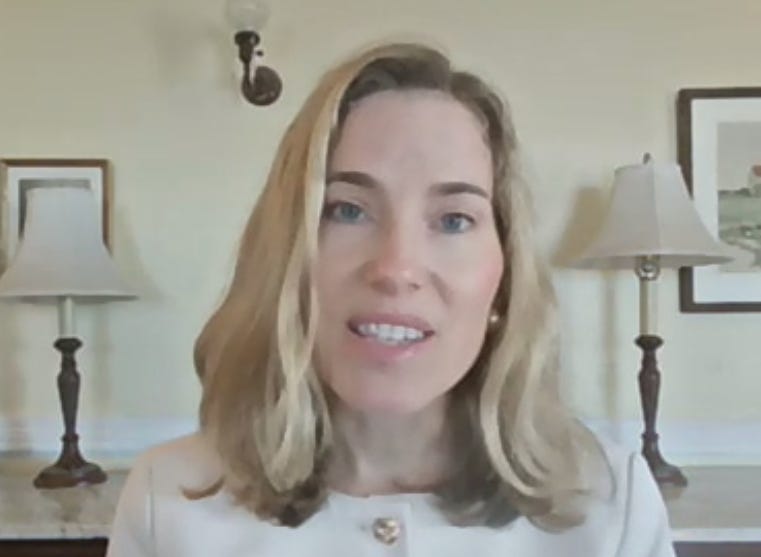
Vermont will receive $92.7 million from Meta Platforms, the parent company of Instagram and Facebook, under a settlement announced Wednesday morning by Attorney General Charity Clark. Clark called it the largest settlement with a single company in Vermont history.
The money resolves the lawsuit Vermont filed in Chittenden Superior Court in 2023, which alleged that Meta designed Instagram to be compulsively used by children and then misled young users and their parents about it. Vermont sued under the state’s Consumer Protection Act, and the case is named in the settlement as State of Vermont v. Meta Platforms, Inc., No. 23-CV-04453.
Vermont was one of 51 states and territories to settle. Meta will pay the states at least $12.1 billion in total.
For a state of roughly 648,000 people, $92.7 million works out to about $143 for every Vermonter. Measured against the company paying it, the number looks different: Meta reported $200.97 billion in revenue for 2025, or about $551 million a day. Vermont’s entire settlement is roughly four hours of Meta’s revenue. The annual installment Vermont will collect each January is about 23 minutes of it.
What changes for Vermont families, and when
The settlement requires Meta to change Instagram and Facebook for users aged 13 to 17. Nothing changes for adults.
Two-hour daily limit across Instagram and Facebook combined, with “productive pauses” — full-screen interruptions — after 15 minutes of continuous use and again at 60 and 90 minutes.
Nighttime block: teens cannot open the apps from midnight to 6 a.m., and push notifications go silent from 10 p.m. to 7 a.m.
School mode: no push notifications from 8 a.m. to 3 p.m. on weekdays between August 15 and June 15.
Age assurance: Meta must adopt technology to detect users under 13, who are not permitted on the platforms at all.
Parental controls, including notice when a teen first messages an adult, and alerts if a teen repeatedly searches terms related to self-harm.
Meta has six months from the settlement’s effective date to comply with most of it. The effective date has not arrived yet — it is the first business day after a federal court in California enters the consent judgment, the court order that makes the settlement enforceable.
The Age-Appropriate Design Code hearings: Vermont’s own rules governing platform design for minors, written under Act 63 of 2025, are in progress now. The Attorney General’s Office is holding public hearings Sept. 9 in Montpelier, Sept. 21 in White River Junction, and Sept. 23 in Shelburne, all with a Zoom option. Written comments are due Oct. 2.
Two protections run five years, not ten
At the press conference, a reporter asked Clark to confirm that the restrictions expire after a decade rather than lasting forever. She said that was correct.
That is true of most of the settlement. It is not true of the two protections Clark led with.
The executed settlement agreement, posted publicly by the District of Columbia’s attorney general, divides the time-management rules into two phases. Phase I is the two-hour daily limit and the midnight-to-6 a.m. nighttime block. Section II.B.1 gives Phase I five years, running from whenever Meta actually turns the features on.
Phase II is a tighter version — 60 minutes per app and a nighttime block stretched to 10 p.m. through 7 a.m. — and it runs the full ten years. But Phase II only takes effect if Snap, TikTok and YouTube all agree to comparable rules.
Everything else in the settlement does run the full ten years: school mode, age assurance, the content restrictions, the parental controls. So does Meta’s obligation to keep those protections at least as strong as they are on day one.
The independent auditor watching all of it stops sooner. Section III.C ends the auditor’s term 120 days after its fifth annual report, which leaves the back half of the ten-year agreement with no outside monitor.
The extra $34 million is all or nothing
Clark told reporters Vermont could collect up to $127 million if the other major platforms settle, describing the difference as “the whipped cream on top.”
The agreement is more specific about what that would take. Vermont’s share of the contingent money — about $34.3 million — is released only when Snap, TikTok and YouTube are each bound to Vermont by an enforceable agreement carrying equivalent time limits and age assurance, each subject to five years of independent audit, and each carrying a payment to Vermont at least as large as the contingency itself.
Two details matter for readers trying to judge the odds:
If the conditions are eventually met, Vermont is paid retroactively for every year it waited. Nothing erodes by delay.
If the conditions are never met within ten years, Section VI.D.3 says Vermont forfeits the money permanently. There is no partial credit for two companies out of three.
Vermont has sued TikTok. Clark declined to say whether her office is investigating Snap or YouTube, noting that her office does not confirm the existence of investigations.
The compliance timeline is longer than described
Asked how quickly parents would see changes, Justin Kolber, whom Clark introduced as chief of the office’s Environmental and Public Protection Division, said most protections would arrive within 15 to 30 days, with productive pauses taking up to 90 days.
The agreement sets longer deadlines. Meta has four months for productive pauses and the non-personalized feed option, six months for its under-13 detection methods and for general compliance, and one full year to adopt the age assurance framework — the provision reporters asked about most.
The age assurance standards are also looser than the framing suggested. In year one, Meta’s own in-house detection tools are permitted to misclassify up to 14 percent of 16- and 17-year-olds as adults, tightening to 10 percent in year two.
Where the money can go
Clark said repeatedly that the Legislature will decide how to spend the settlement, and that she would offer advice but defer to lawmakers. She also said there will be no oversight panel of the kind created for Vermont’s opioid settlement money.
The agreement is not silent on the question. Section VI.G lists the purposes the money is meant for, including expansion of the 988 Suicide and Crisis Lifeline, after-school and summer programs, youth mental health programming, digital literacy counselors, phone-free school zones, and grants to school districts. The list is written as examples rather than a hard restriction, but the agreement also requires that at least half the payment be reported to the IRS as compensatory restitution and remediation.
Lawmakers will appropriate the money. They will not be starting from a blank page.
How Vermont gets paid
Vermont’s payment arrives on a schedule, not in a lump sum. Meta pays the Cambridge Analytica portion within 30 days of the effective date, then ten annual installments of about $8.88 million each — the first within 30 days and the rest every Jan. 15 beginning in 2027. The last check arrives in January 2035.
One point is worth stating plainly, because the two figures are easy to add together by mistake: the roughly $3.9 million Vermont receives for the Cambridge Analytica claims is part of the $92.7 million, not on top of it. The arithmetic confirms it. Subtract the Cambridge payment from $92.7 million, divide the remainder across ten installments, and you get the $8.8 million figure Clark gave reporters.
Compass reported on May 26 that the U.S. Supreme Court had refused to hear Meta’s appeal of Vermont’s jurisdiction ruling, the decision Clark credited Wednesday with clearing the way for this settlement, and covered the tech industry’s push for that review in March. We covered the Age-Appropriate Design Code rulemaking on Aug. 15.
The settlement takes effect only after the federal court enters the consent judgment. Vermont’s own rules for how platforms may be designed for children are being written this fall, in hearings open to the public.