


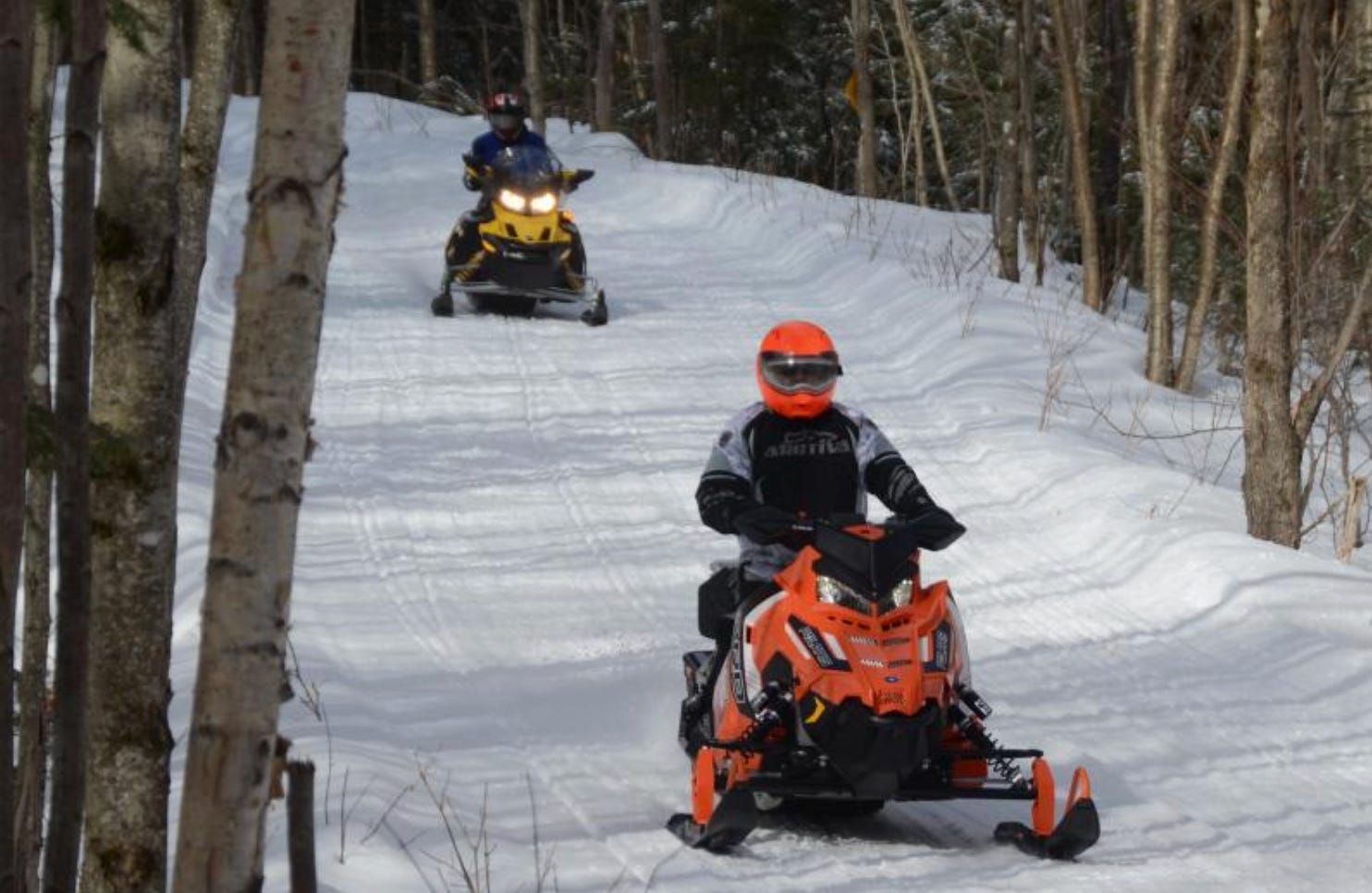
The statutory snowmobile season in Vermont begins December 16, but riders shouldn’t expect all trails to be open on that date, according to Vermont Association of Snow Travelers (VAST) President Patty Companik. Whether you can ride depends entirely on decisions by individual local clubs—and current snow conditions suggest a delayed, patchwork opening across the state.
“While December 16 is the legal start date, actual trail access remains strictly contingent upon local club decisions and snow volume,” Companik announced. For the 51,000 Vermonters who follow snowmobiling news, understanding what happens between now and actual riding requires looking at how Vermont’s unique trail system works—and the preparations that go into making trails safe for riders.
How Vermont’s Snowmobile Trail System Actually Works
Unlike most states where trails are managed by state parks departments, Vermont’s 5,000-mile network operates through VAST, a private nonprofit that has been legislatively mandated since 1978 to administer the Statewide Snowmobile Trail System. This makes VAST unique in the United States.
But VAST isn’t a top-down organization that can simply “open” the trails. It’s a federation of 127 independent local snowmobile clubs organized into 14 county divisions. Each club holds the relationships with local landowners, maintains its specific trail sections with volunteers, and makes the final call on when trails are safe to open.
This decentralized structure means “Opening Day” is actually a misnomer—it’s more accurately the start of an opening phase that can take weeks as individual clubs bring their networks online based on local conditions.
Why December 16? The Hunting Connection
The December 16 date wasn’t chosen based on weather or snow predictions. It’s timed to follow the end of Vermont’s muzzleloader deer season, which typically concludes in mid-December.
This scheduling prevents high-speed snowmobile traffic from overlapping with hunters in the woods and respects landowners’ hunting seasons—critical since approximately 80 percent of VAST trails cross private land. Many of these landowners are hunters themselves or allow hunting on their property, making this timing essential to maintaining the landowner agreements that make the trail system possible.
December 15 marks the first day grooming equipment can legally enter trails, meaning on the morning of December 16, most trails have had at maximum 24 hours of preparation time. Given that grooming equipment travels just 5-8 mph and the system spans thousands of miles, it’s logistically impossible for everything to be groomed and ready simultaneously.
What Makes a Trail “Ready”—It’s Not Just About Snow
For a trail to officially open, local clubs must verify multiple factors beyond a coating of white powder. Trail masters and club presidents evaluate:
Snow Depth and Quality: Trails typically need 6-12 inches of snow on frozen ground before grooming can begin safely. The snow must be sufficient to fill drainage ditches, cover water bars (erosion control humps), and smooth over stumps and rocks. Early-season grooming involves “panning” to pack air out of the snow rather than the cutting and dragging techniques used mid-winter.
Ground Freeze: If deep snow falls before the ground freezes, it acts as an insulator, preventing the mud below from hardening. Heavy grooming equipment weighing over 10,000 pounds can sink into unfrozen swamps, causing environmental damage and costly equipment recovery operations.
Trail Clearing and Signage: Volunteers must clear fallen trees (blowdowns) from fall storms, install speed limit signs, mark road crossings, and post hazard warnings. A trail with adequate snow but missing safety signage poses liability risks.
Landowner Permissions: Landowners may request delayed openings due to late-season hunting, active logging operations, or livestock presence. Respecting these requests is essential—ignoring them can lead to permanent trail closures that sever vital links for entire communities.
The 2025 Snow Situation: A Tale of Two Vermonts
As of December 12, snow accumulation across Vermont reveals sharp disparities that will drive local opening decisions.
Northern mountain areas have received significant snowfall: Montgomery in Franklin County reported 8 inches, Westfield in Orleans County received 6.5 inches, and high elevations around Jay Peak and Stowe show favorable conditions for early opening of limited corridors.
Valley floors and southern exposures tell a different story. St. Johnsbury had just 1.4 inches, and many Connecticut River Valley locations show less than 2 inches. The Caledonia Trailblazers have explicitly stated trails remain closed until they receive 5 inches of snow on frozen ground. Opening trails with insufficient cover would damage the ground, anger landowners, and risk permanent easement loss.
The Woodford SnoBusters in southern Vermont, often among the first to open due to high elevation, announced grooming starts December 15 but explicitly warned that “early season conditions will exist everywhere”—meaning open but rough trails.
Additionally, significant long-term corridor closures affect major routes, including Corridor 100 (Dover/Wilmington/Woodford) and Corridor 120 (Montgomery/Jay/Newport), meaning riders cannot plan long-distance touring trips for opening week regardless of snow depth.
Critical Early Season Safety Considerations
Beyond the club-by-club opening decisions, riders need to be aware of specific hazards that come with early December conditions.
Ice Safety: Early-season riding often involves crossing frozen bodies of water, but December conditions create particularly dangerous situations. Early snow falling on water bodies just beginning to freeze acts as a thermal blanket—when it sits on thin ice, it insulates water from cold air, slowing or stopping the freezing process and creating layers of “slush ice” that may look solid but have zero structural integrity.
Snowmobiles generally require 5-7 inches of clear, blue ice for safe travel, and river ice is estimated to be 15 percent weaker than lake ice due to currents. Vermont Fish & Wildlife maintains a strict “No Ice Is Safe Ice” policy, and experienced riders know that all water crossings should be treated with extreme caution during opening week, regardless of how solid they appear.
Water Bars and Terrain Hazards: Vermont trails use deep dips called water bars to drain water. In mid-winter these are filled with snow and smooth, but in December they’re 2-foot-deep trenches that can break snowmobile suspensions or throw riders over handlebars if hit at speed. Stumps, rocks, and fence posts require roughly 12-18 inches of snow to be safely covered—current accumulations of 1-8 inches mean these hazards lurk just below the surface.
Equipment Considerations: Riding in low snow (1-2 inches) causes sleds to overheat and rapidly melt their slide rails (hyfax), since snow both cools engines and lubricates these components, leading to expensive repairs.
Cold Weather Preparedness: Extended forecasts predict very cold temperatures for December 18-21. Riding at 30 mph in 15°F weather creates a windchill of -5°F. Combined with the high probability of getting stuck in thin snow or mud—requiring physical exertion that causes sweating—riders face elevated hypothermia risk when wet layers freeze during continued riding.
Legal Requirements and Trail Access
Operating a snowmobile in Vermont requires compliance with specific regulations that riders should understand before the season opens.
The Trail Maintenance Assessment (TMA) is mandatory for riding VAST trails, and the 2026 season pass (covering winter 2025-26) is now sold almost entirely online. Early bird pricing of approximately $155 for Vermont residents (including VAST fee and club dues) ends December 15, after which prices increase significantly. Purchase requires uploading a digital image of valid Vermont DMV registration.
Understanding Trail Access: Since 80 percent of trails cross private land, the right to ride is a revocable privilege granted to the club, not the public. If a club hasn’t declared a trail open, riding it constitutes criminal trespass under Vermont statute 23 V.S.A. § 3206, with fines approaching $622.
More importantly, riders who ignore closed trail status can cause landowners to gate trails permanently, severing vital links for the entire community. The landowner relationships that make the trail system possible depend on riders respecting club decisions about when trails are safe to open.
How to Know What’s Actually Open
The only official way to verify trail status is through VAST’s “Snowmobile Vermont” app, developed by Mapgears, which provides real-time updates on whether trails are green (open), yellow (use caution), or red (closed).
The app allows downloading map regions for offline use—critical in Vermont’s rural areas with spotty cell coverage—but trail status updates only when connected to cellular data. This creates a potential gap: a rider might check at home and see green, drive to a remote trailhead without service, and not realize the status changed to red due to a sudden thaw or hazard.
VAST’s official trail conditions page also provides updates, but there’s inherent latency between a local trail master deciding to open a trail and that information reaching the app. The guidance: trust physical “closed” signs on the trail over the app. If the app says green but a gate is shut, the gate rules.
What Happens Next
Between now and Christmas, riders should expect a rolling, fragmented opening as individual clubs assess their specific conditions. High-elevation areas along the Green Mountains spine and near the Canadian border—particularly around Jay Peak, Island Pond, and Woodford—have the best chances of opening limited corridors by December 16.
Valley floors, Connecticut River Valley towns, and southern exposures will likely remain closed until additional snowfall and sustained cold temperatures arrive. The forecasted cold snap could help freeze the ground and build ice thickness, but precipitation timing remains uncertain.
For the businesses that depend on snowmobiling—gas stations, diners, and rural motels in the Northeast Kingdom—the delay between the statutory opening and actual green-light status represents a challenging start to the season. For the volunteers who maintain the system, balancing the desire to open trails with the responsibility to protect landowner relationships and rider safety remains the top priority.
Riders planning to trailer snowmobiles should check specific county status on the VAST app the morning of their trip, target high-elevation hubs for the best chances of finding open trails, exercise extreme caution around any water crossings, and respect local club closures. The patience to wait for proper conditions protects not just individual safety but the volunteer-landowner partnerships that make Vermont’s unique snowmobile trail system possible.