


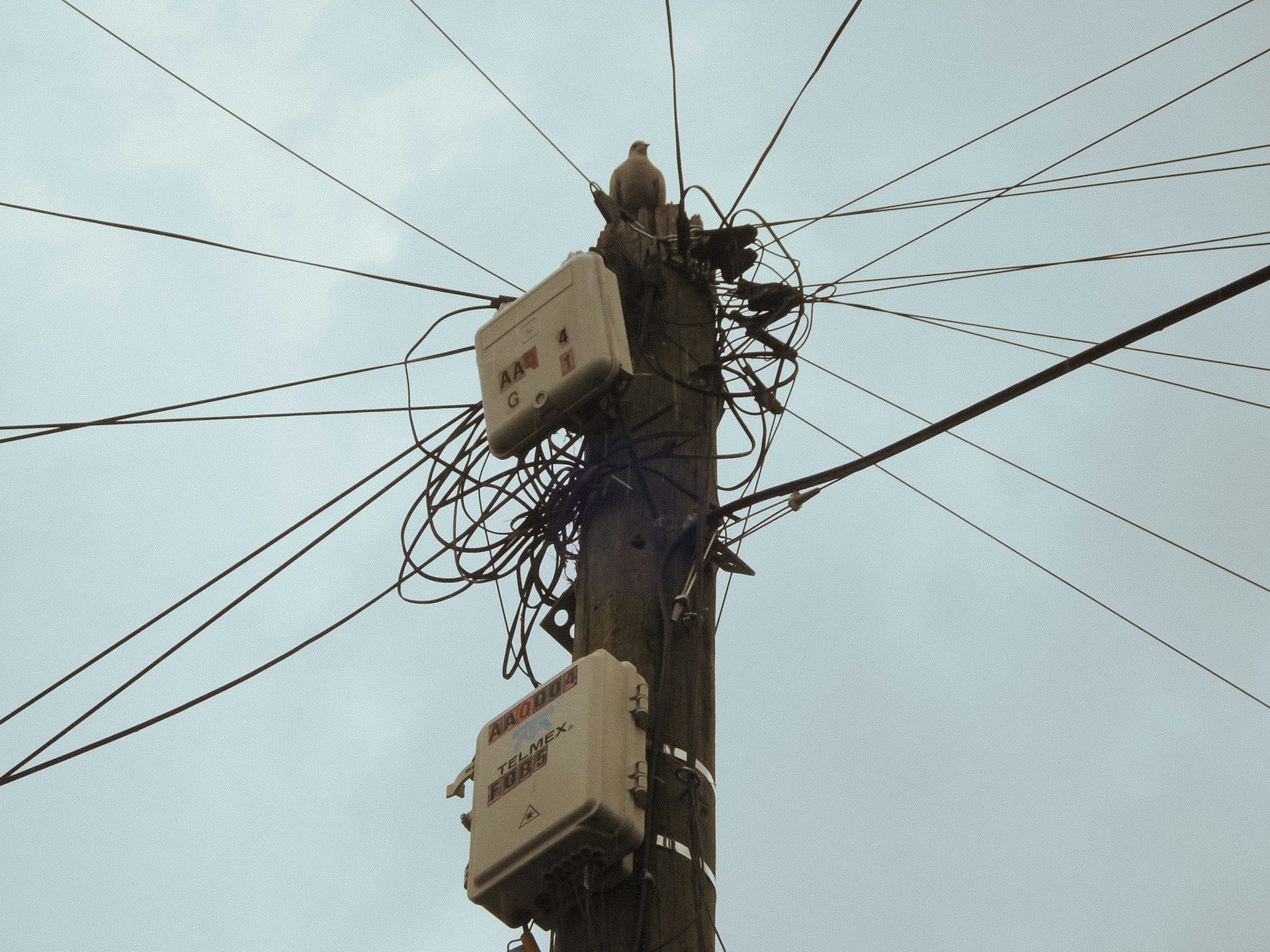
Vermont has cleared a major regulatory hurdle in its quest for universal high-speed internet, but the state now confronts an obstacle that federal funding alone cannot solve: finding enough workers to actually install the fiber-optic cables.
The National Telecommunications and Information Administration approved Vermont’s final broadband plan on February 9, 2026, unlocking access to $93 million in immediate federal funding under the Broadband Equity, Access, and Deployment (BEAD) program, with Vermont’s total allocation reaching nearly $229 million. The Vermont Community Broadband Board expects to reach more than 99% of Vermont addresses by 2030, with construction beginning this year.
“This is a major milestone for many of our rural towns and a once-in-a-generation opportunity to strengthen and revitalize communities,” said Governor Phil Scott in a statement released Monday.
But according to Vermont’s 10-Year Telecommunications Plan, the state needs to grow its broadband construction workforce by approximately 750 workers to build the combined $700 million in state and federal broadband projects. That’s a significant challenge given that Vermont’s broadband workforce actually shrank by 12% between 2018 and 2022.
A National Shortage Hitting Local Projects
Vermont’s worker shortage mirrors a nationwide crisis in the fiber-optic installation industry. The Wall Street Journal reports that record demand for fiber-optic cables is running headlong into a severe shortage of the specialized workers needed to install them—drillers, linemen, and splicers who can work with hair-thin glass fibers carrying digital data at the speed of light.
According to a 2024 report by the Fiber Broadband Association and the Power & Communication Contractors Association cited in the Journal article, the industry expects to create 58,000 new jobs between 2025 and 2032. But with 120,000 workers expected to retire during the same period, the combined shortage could reach 178,000 workers nationwide.
The Journal describes crews working on fiber projects in rural Arizona where experienced directional drill operators—who bore underground paths for fiber cables—can make anywhere from the high $20s to mid-$40s per hour, roughly double Arizona’s median hourly wage. Entry-level fiber workers at one Missouri company made about $60,000 including overtime last year, with pay jumping 25% to 30% in the first three years.
“We just don’t have the people to do the work,” Kyle Braude, a regional manager at JKL Associates, told the Journal. He identified the biggest holdup as finding human capital for roles including drillers, foremen, splicers, and aerial linemen.
What Vermont Has Secured
Vermont’s approved plan allocates $179.4 million to seven provisional subgrantees to build out high-speed internet infrastructure. The selected providers are Comcast, DVFiber, Fidium, Maple Broadband, NEK Broadband, SpaceX, and Vermont Telephone.
Despite recent federal policy changes that emphasized using cheaper technologies like satellite and cable, Vermont’s plan remains focused heavily on fiber-optic deployment, with approximately 90% of federal BEAD funds directed toward fiber projects. The remaining funding supports alternative technologies for the most remote locations: roughly 6% for SpaceX’s Starlink low-Earth orbit satellite service and 4% for hybrid fiber-coaxial cable systems.
“Affordable, high-speed internet is a vitally important resource in every corner of the country,” said Senator Bernie Sanders in the VCBB announcement. “However, thousands of Vermonters still lack access to internet at broadband speed. This approval means Vermonters across our state are one step closer to connecting to reliable, quality service.”
Senator Peter Welch called the approval “a huge moment for Vermont,” adding: “By working together, federal and state leaders secured tens of millions of dollars to support the build-out of high-speed, affordable broadband for Vermont families, workers, and communities.”
Vermont identified 16,895 eligible locations for the BEAD program through a rigorous challenge process that modified federal mapping data to better reflect Vermont’s challenging terrain. Projects funded through BEAD will deliver broadband meeting or exceeding federal performance standards of 100 Mbps download and 20 Mbps upload speeds.
The Federal Policy Context
Vermont’s approval came under the leadership of Arielle Roth, who was sworn in as NTIA Administrator on July 30, 2025. Governor Scott thanked “Assistant Secretary of Commerce Arielle Roth and her team at NTIA for their leadership of this complex federal initiative.”
Roth’s tenure has been marked by significant changes to the BEAD program’s management. In June 2025, the NTIA issued a policy notice that removed what the administration characterized as “extralegal regulatory burdens” from the program, including previous climate resilience requirements and labor standards. The policy replaced the prior administration’s “Fiber Preference” with a strictly technology-neutral framework allowing satellite and cable systems to compete directly with fiber projects on cost alone.
This “Benefit of the Bargain” reform required states including Vermont to rescind earlier provisional award selections and conduct an additional competitive round. The administration claims these reforms have delivered an estimated $21 billion in savings for taxpayers by driving down per-location costs and increasing private sector matching contributions.
The Work That Remains
Having plans to serve 99% of addresses is not the same as having completed construction. VCBB Executive Director Christine Hallquist acknowledged this in Monday’s announcement: “Plans are now in place to bring broadband to more than 99% of Vermonters. And the work isn’t finished. We’re taking a close look to make sure everyone is included and to find solutions where gaps remain.”
The Vermont Community Broadband Board has identified several remaining challenges:
The “Last 1%” Review: VCBB staff are performing an address-by-address review to identify locations that were overlooked or incorrectly marked as already having adequate service.
Affordable Long Drop Connections: Households located far from main fiber routes face installation costs that can exceed standard subsidies. The VCBB established an Affordable Long Drop Program in 2025 to cover these non-standard costs, particularly for low-income residents and manufactured home communities.
Mobile Coverage Gaps: While BEAD focuses on fixed home internet service, Vermont still has 412 miles of road with no mobile coverage from any provider. The state’s telecommunications plan suggests that widespread fiber deployment along roadways will eventually reduce the cost of deploying small wireless facilities to close these gaps.
Representative Becca Balint emphasized the broad impact of the expansion: “Whether it’s a student doing homework, a small business reaching new customers, or a family accessing telehealth, broadband has become critical to our daily lives. This approval is an exciting and important step towards making sure all Vermonters have the reliable connection they need to stay connected and succeed.”
The Timeline for Completion
Under federal rules, subrecipients generally have four years to complete their projects after receiving awards. Vermont’s timeline projects:
2026: VCBB will finalize awards and coordinate with selected providers to begin construction across multiple project areas.
2029: Vermont’s 10-Year Telecommunications Plan projects the state is on track to pass all on-grid premises by 2029.
2030: The four-year deployment window for 2026 BEAD subgrants closes.
Meeting these deadlines depends on three critical factors: workforce availability, permitting efficiency, and completing environmental and historic reviews before construction can begin.
The Phased Funding Approach
Vermont was allocated nearly $229 million total through the BEAD program, but NTIA’s approval provides immediate access to $93 million for deployment. This phased approach allows the federal government to maintain oversight as construction progresses, with additional funding released as projects meet milestones.
Vermont’s $179.4 million in provisional bids against its total allocation leaves approximately $49.5 million as a buffer for the most expensive remaining addresses and potentially for programs supporting broadband adoption and digital literacy.
However, the fate of these surplus funds remains uncertain. Under previous federal guidance, such funds would have been automatically approved for broadband adoption, digital literacy, and workforce training programs. But NTIA Administrator Roth has rescinded these approvals and promised new guidance in early 2026.
There is significant concern among state broadband offices that the Trump administration may attempt to rescind unspent BEAD funds to reduce the federal deficit. NTIA officials have stated that remaining funds must produce “real, measurable value,” signaling a high bar for non-deployment spending approvals.
What Happens Next
In the coming months, the board will finalize subgrant agreements with the seven selected providers and complete environmental and historic preservation reviews required before construction can begin. The board’s immediate priority is the address-by-address review to ensure no eligible locations are missed.
Simultaneously, Vermont must address its workforce shortage. The state needs to recruit, train, and retain 750 additional broadband construction workers—a 12% increase over current levels—to build out both BEAD and earlier state-funded projects. This will require coordination between telecommunications companies, Communications Union Districts, and training programs to develop the skilled labor force needed for roles ranging from directional drill operators to fiber splicers.
The NTIA’s promised guidance on surplus fund usage, expected in early 2026, will determine whether Vermont can use its remaining allocation for digital adoption programs and affordability initiatives, or whether those funds must be returned to the federal government or reserved solely for infrastructure buildout.
If Vermont can solve its workforce challenges and protect its surplus funding, the state is positioned to achieve near-universal broadband coverage by 2030, fulfilling an 18-year effort to bridge the digital divide in one of America’s most rural states. The next four years of construction will determine whether federal funding and state planning can overcome the very human challenge of finding enough skilled workers to lay hundreds of miles of fiber-optic cable through Vermont’s mountains and valleys.
Editor’s Note - This story has been updated to clarify the funding amount awarded to date. The previous version was based on a previous version of the VT-BEAD plan.