


Every Vermont school district has until Sept. 15 to name one of its own board members to a merger committee. State law says that district then has to take part in good faith — and a district that doesn’t can be named in a report to lawmakers and lose state help paying off school construction debt it took on years ago.
Nobody has written down what good faith means.
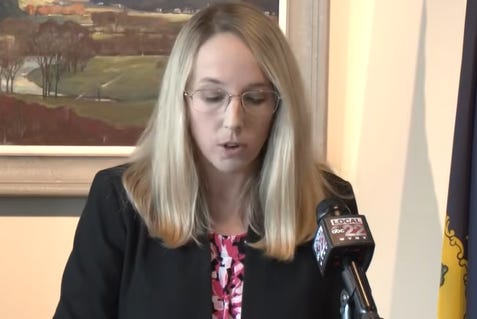
The man who will decide which districts failed the test said so himself Thursday, standing at a podium in Montpelier next to the governor.
“That hasn’t been developed yet,” said Dave Younce, the lead facilitator hired to oversee the merger committee process. “So what I’m sharing with you right now, these are my thoughts and just my musings.”
Act 170, the education law Gov. Phil Scott signed in June, requires the first committee meetings to happen by Oct. 15.
What to check, and when
By Sept. 15: Your school board must appoint at least one sitting board member to your assigned merger committee. That appointment happens at a public board meeting. Ask your district clerk when it is warned.
Find your group: Act 170 lists 20 suggested district groupings by name in Sec. 14, starting on page 42. Facilitators can change them.
By Oct. 15: Your committee holds its first meeting. Younce says these will be in-person public meetings, publicly warned, with virtual sessions only as a winter weather fallback.
Names of the seven regional facilitators are due out Friday through news outlets and at vtlc.org.
Background: The Agency of Education keeps a plain-language summary of the whole transition, including the regional map.
What the law says, in full
Act 170 of 2026 is 152 pages. The good-faith requirement is one sentence.
Sec. 13(b)(3): “Notwithstanding any provision of law to the contrary, a school district shall participate in good faith in the merger committee it is assigned to by the facilitator.”
That is the whole provision. No definition. No standard. No procedure for how the judgment gets made.
Two sections later, the law says who makes it. Sec. 15 requires the lead facilitator to send the House and Senate education committees a written report by Dec. 1, 2028 containing “a determination and identification of any school district that is a bad faith participant.”
The lead facilitator is not a state employee. Under Sec. 13(a), the Vermont Learning Collaborative — a regional education cooperative based in southeastern Vermont — hires seven regional facilitators plus one lead facilitator who oversees them. The Legislature gave the collaborative $442,000 for that work, of which up to $32,000 can go to administrative costs.
So the same office writes the definition, applies it, and reports the violations.
What a bad-faith finding costs
Real money, though not for a few years.
If Vermont’s new school funding formula takes effect as scheduled in July 2029, districts become eligible for what the law calls legacy debt aid — the state covering 75% of the annual debt service on construction and renovation projects that voters approved and that began before 2025. In plain terms: for every dollar your town still owes each year on a school building it voted for years ago, the state would pick up 75 cents. Whatever the state does not cover stays with the district, to be raised from local taxpayers through a supplemental spending tax.
A district named a bad-faith participant becomes ineligible for that aid, according to the Agency of Education’s own summary of the law.
A district can appeal a bad-faith designation to the Secretary of Education.
Two things are worth knowing about the size and certainty of this. Act 170 states legislative intent to spend up to $45.75 million a year on legacy debt aid, but the Legislature has not appropriated the money. And the aid only exists if the funding formula survives two more legislative sessions.
The penalty, in other words, is conditional. The conduct it judges starts next month.
Who gets judged — the district or the person?
The law penalizes districts. Compass put the question to the governor and his guests: what does good faith mean if a district appoints someone who arrives already opposed to consolidation? Secretary of Education Zoie Saunders referred it to Younce, who answered by describing how he would handle a person.
“It’s a question I can’t offer a detailed answer to, unfortunately, yet,” he said. Every person comes to the table with preconceived notions about what should or should not be the case, he said, and “getting to open-mindedness or getting to being willing to explore will be an important part of the process.”
Then he posed the follow-up himself — what happens if someone isn’t demonstrating good faith, and how does that get handled.
His answer described a conversation, not a penalty. “If there were a scenario where an individual was perhaps negatively impacting the work of the group,” he said, then conversations could happen on the side, between the facilitator and anyone relevant to the work, until an understanding of what Act 170 intends is reached within the group. Facilitators have about a year, he said, before final reports are due to the Agency of Education and the State Board — time in which they can help committees “get to whatever destination they’re going to get to.”
Not every group will land somewhere that looks like unification or merger, he said. But if a group lands at a destination that looks like a process where everyone was involved, “I think we will have been better off overall.”
Speaking earlier, before questions, Younce drew the line he is sure of. “Good faith is not a commitment to join a merger or not join a merger,” he said. He offered a working definition — showing up with a spirit of willingness to engage and dream about what could be — and said facilitators will agree on a shared version and present it at every committee’s first meeting, because at the end he has to report to the Legislature on how good-faith participation went.
Nothing in Sec. 15 authorizes a finding against an individual, and nothing in it explains how one appointee’s conduct becomes a finding against that person’s district. It is the question the process has not answered: whether one board member’s conduct can cost a town state coverage of three-quarters of its school debt.
What the last round actually did
Vermont has tried this before, and the history explains what the good-faith clause is reaching for.
Under Act 46 of 2015, districts formed study committees. Those committees were not free-ranging: they could only prepare proposals to form a unified union school district, and could not legally examine alternatives to merger. Members could not simply walk away either — when Vernon’s board voted to pull out of the Windham Southeast study committee in 2016, then-Secretary of Education Rebecca Holcombe wrote that the board had no legal authority to withdraw the district or its appointed members.
What stopped mergers was voters. In June 2016, all eight districts in Orleans South rejected a merger and all five towns in Franklin Northeast scuttled theirs, while Chittenden South and Washington West approved theirs. Orwell and Barre Town rejected mergers more than once. Several towns sued. The State Board eventually ordered mergers anyway, and the Vermont Supreme Court upheld it.
Act 170 does not repeat that ending. Voters still decide, on March 7, 2028. What the Legislature added instead is a duty to participate in the room beforehand — and a penalty for a district judged not to have.
It also narrowed who sits in that room. Act 170 requires every merger committee member to be a current school board member. Under the older study committee law, a board appointing more than one person could fill the remaining seats with any resident it chose.
What happens next
The seven facilitators spend September in training. In the second half of the month they begin contacting appointed board members to schedule first meetings. Younce said he expects those first meetings to look like organizational meetings — electing a chair, setting a schedule, sorting out how districts of different sizes will be represented — followed by training on what the act does and does not say.
Three questions the record does not answer: when the definition will be published, whether it will be open to public comment before it is applied, and whether a bad-faith finding can rest on the conduct of a single committee member. Compass will report the answers as they come.
One more provision worth marking now, because it is the part that lasts: Act 170 bars Vermont towns from petitioning to withdraw from a union school district through fiscal year 2035.
This whole "good faith" requirement sounds like a lawsuit waiting to happen. How can you penalize a whole town's debt aid because one board member showed up to a meeting grumpy?
Blackmail courtesy your tax dollars