


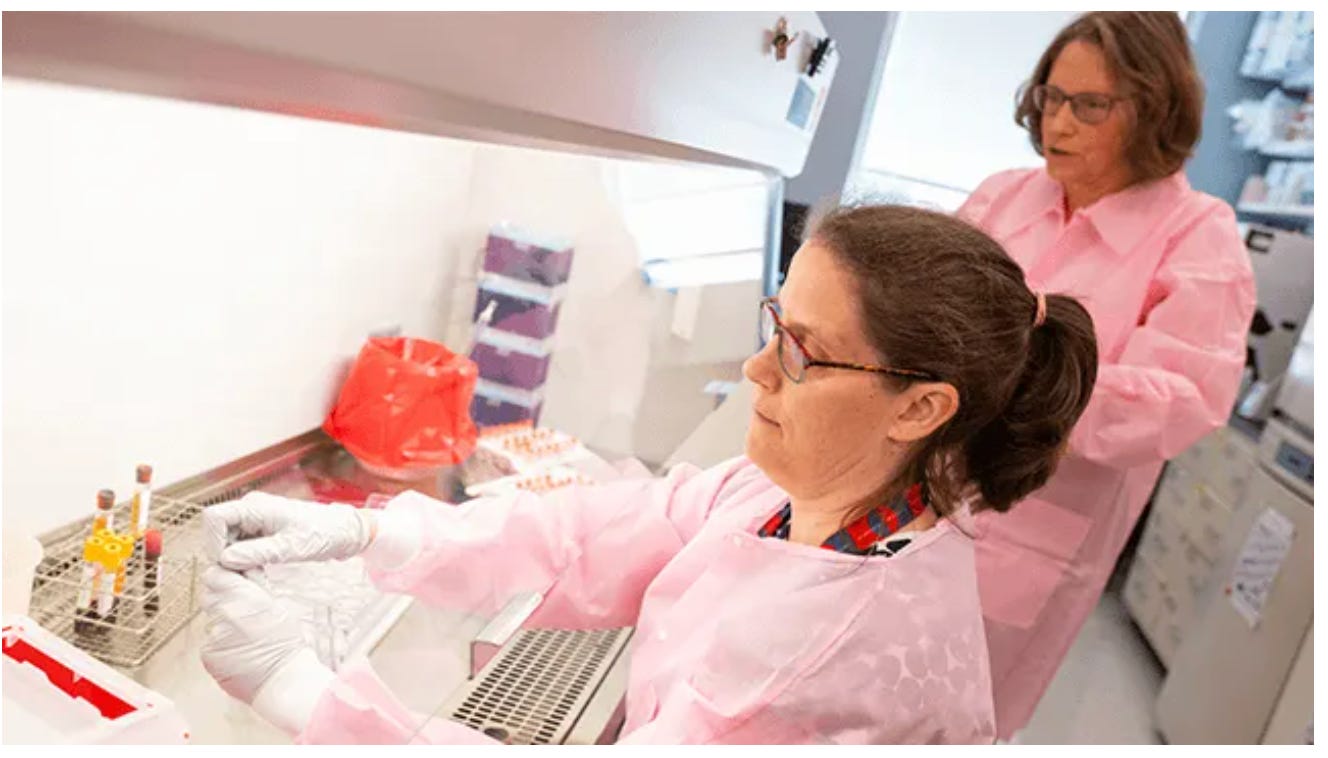
University of Vermont scientists played a key role in testing two new tools to fight dengue fever—a devastating mosquito-borne disease that is no longer confined to the tropics and has begun appearing in American communities.
A Vaccine Gets Approval in Brazil
Brazil has approved a new dengue vaccine called Butantan-DV that requires only a single dose, making it the first one-shot dengue vaccine in the world. The country’s regulatory agency, Anvisa, granted licensure in late November 2025.
The vaccine was developed through a partnership between the U.S. National Institutes of Health and Brazil’s Instituto Butantan, with critical safety testing conducted at UVM’s Vaccine Testing Center. Researchers at UVM and Johns Hopkins Bloomberg School of Public Health ran early-stage clinical trials that helped prove the vaccine was safe before larger studies in Brazil could proceed.
The vaccine works by using weakened versions of all four types of dengue virus to train the immune system to recognize and fight the disease. In a major clinical trial involving more than 16,000 participants across Brazil, the vaccine showed 79.6% effectiveness at preventing symptomatic dengue and demonstrated over 90% effectiveness at preventing severe disease that requires hospitalization.
Why a Single Dose Matters
The one-dose schedule represents a significant advantage over competing vaccines. Takeda’s Qdenga vaccine requires two doses three months apart, while the older Dengvaxia vaccine from Sanofi requires three doses over a year. In remote areas like Brazil’s Amazon region or densely populated urban favelas, patients often don’t return for follow-up appointments, which means multi-dose vaccines leave many people only partially protected.
The vaccine will be incorporated into Brazil’s national public health system starting in 2026. The Instituto Butantan has already manufactured one million doses and has partnered with WuXi Biologics to produce tens of millions more doses annually.
Understanding the Dengue Threat
Dengue fever causes high fever, severe muscle and bone pain (earning it the nickname “breakbone fever”), headaches, and rashes. In severe cases, the disease can cause blood vessels to leak plasma, leading to shock and death. There is currently no specific treatment beyond supportive care like fluids and pain relievers.
The disease has exploded in recent years. Brazil recorded approximately 6.5 million probable dengue cases by August 2024, with nearly 6,000 deaths—a four-fold increase from 2023. This represents one of the worst dengue outbreaks in recorded history.
More concerning for Americans, the disease is expanding northward as climate change allows the mosquitoes that carry dengue to establish themselves in new territories. The Centers for Disease Control reports locally acquired cases in Florida, California, and Texas—meaning people caught the disease from mosquitoes in their own communities, not from traveling abroad.
An Antiviral Shows Promise but Faces Uncertainty
The second development involves an experimental drug called Mosnodenvir, which UVM researchers tested in a unique type of study. In research published in the New England Journal of Medicine in November 2025, scientists gave healthy volunteers the drug daily and then intentionally exposed them to a weakened dengue virus to see if the medication could prevent infection.
The results were striking: 60% of people taking the higher dose had no detectable virus in their blood, compared to 100% infection in those taking a placebo. This proved that a pill could potentially prevent dengue infection in humans.
However, there’s a significant complication: Johnson & Johnson announced in October 2024 that it was discontinuing its entire infectious disease development program, including this dengue drug. The decision wasn’t based on safety concerns or lack of effectiveness, but rather a corporate strategy to focus on more profitable drugs for cancer and immune disorders. This means the antiviral currently sits as what experts call an “orphaned asset”—scientifically proven but commercially abandoned. The medication could advance if another pharmaceutical company licenses it, but no such deal has been finalized.
Vermont’s Role in Global Health Research
UVM’s Vaccine Testing Center has become a specialized facility for testing vaccines and drugs against tropical diseases using what’s called a “controlled human infection model.” Rather than waiting for unpredictable outbreaks in endemic countries, researchers can test interventions under controlled conditions by giving volunteers weakened viruses that cause mild symptoms but allow scientists to measure whether a vaccine or drug works.
This approach dramatically speeds up research and was essential for validating both the vaccine and the antiviral before larger, more expensive field trials.
What Happens Next
The Butantan-DV vaccine will begin rolling out through Brazil’s public health system in 2026, prioritizing high-risk areas experiencing the worst outbreaks. Brazil also plans to export the vaccine to neighboring South American countries facing their own dengue crises.
For Americans, the vaccine is not yet available in the United States. The FDA would need to conduct its own review process before approving Butantan-DV or any dengue vaccine for use in the general U.S. population. Currently, only Takeda’s Qdenga vaccine is available in the U.S., and it’s primarily marketed to travelers visiting endemic areas rather than for domestic use.
As for the antiviral Mosnodenvir, its future remains uncertain pending potential licensing negotiations with other pharmaceutical companies. Public health experts note that while the science has proven the concept works, there’s a significant gap between laboratory success and getting medications to patients who need them—particularly for diseases that primarily affect lower-income countries where profit margins are smaller.
The expanding presence of dengue-carrying mosquitoes in southern U.S. states may eventually shift the equation, potentially making dengue vaccines and treatments more commercially attractive to pharmaceutical companies as the American market grows. For now, the best protection remains avoiding mosquito bites through repellent, protective clothing, and eliminating standing water where mosquitoes breed.