


At the bottom of this story: how to check whether a property is on the state’s three-acre list, where to find permit funding information, and how to comment on the budget by Nov. 12.
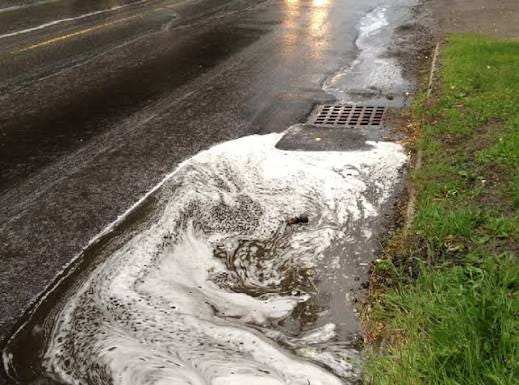
When rain or snowmelt hits a roof, a parking lot or a road, it doesn’t soak into the ground. It runs off, picking up soil and phosphorus and carrying them into the nearest stream. Phosphorus feeds the toxic algae blooms that close beaches on Lake Champlain.
Newer developments have to catch and clean that runoff before it leaves the property. Many older ones don’t, either because they never had a stormwater permit or because theirs dates to rules older than 2002.
In 2015, Vermont passed its own Clean Water Act, in part to show the federal government it could meet the cleanup targets set for Lake Champlain. One piece of that law: older properties with 3 or more acres of hard surface have to be brought up to modern standards. Those are the “three-acre sites.”
In Richmond’s Southview neighborhood, 48 homes sit inside a site on the state’s three-acre stormwater list. The town will hold the permit. Under a plan the selectboard approved in January, homeowners would pay their share through a special fee charged only to their properties. At January’s cost estimate, that came to about $7,900 per home, or roughly $400 a year over 20 years. Engineers have since raised the construction estimate to about $358,000, from $310,000.
Help with costs like those comes from one line in Vermont’s clean water budget. Next year’s draft sets aside $2.3 million for it, about $1.1 million less than this year, a drop of nearly a third. For many owners, the application deadline arrives three months into the budget year.
Who has to comply, and when
A site can be a shopping plaza, a school, a ski area or a whole neighborhood. In Southview, the roofs, driveways and streets add up to more than 10 acres. The state counted roughly 680 three-acre sites in early 2025, and a single site can include anywhere from one to more than 100 owners.
In the Lake Champlain and Lake Memphremagog watersheds, and in watersheds already polluted by stormwater, owners who haven’t finished permitting must apply by Oct. 1, 2027. They must have a permit by Oct. 1, 2028, and build the required drainage improvements by Oct. 1, 2033.
In the Lake Champlain and Lake Memphremagog watersheds, and in watersheds already polluted by stormwater, owners who haven’t finished permitting must apply by Oct. 1, 2027. They must have a permit by Oct. 1, 2028, and build the required drainage improvements by Oct. 1, 2033. Elsewhere in Vermont, the state hasn’t identified sites yet, and the deadline to apply is 2037.
Owners who have received state three-acre help include:
Public schools
Manufactured-home communities
Agricultural fairgrounds
Towns
Private property owners
The cut, by the numbers
The money is one line in the annual Clean Water Budget.
This year: $3,382,457 for three-acre permit help, in the budget the Legislature passed.
Next year’s draft: $2,309,080, in the board’s plain-language draft.
That’s the largest dollar reduction of any line in the draft.
For scale, the state’s January clean water report said about 260 sites statewide had received help with design and permitting, totaling a little more than $12.8 million. About 85 sites were planned to receive more than $47 million in help for construction. The same report said “additional resources are likely needed” to give some communities and landowners the help they need to comply.
Why the budget is smaller
The whole draft budget totals about $43.2 million, down about $2 million, or 4.4%, from this year’s $45.2 million.
The regular funding isn’t the cause. Both years have about $40 million in base money: dedicated Clean Water Fund revenue plus $10 million from the state’s construction budget. What’s shrinking is the one-time money, which is leftover revenue from earlier years and interest the fund earns.
This year: $5.3 million in one-time money.
Next year’s draft: $3.1 million.
All of this year’s three-acre money came from one-time funds. Much of the earlier three-acre help came from federal pandemic relief money, which the state can no longer budget and must spend by December 2026.
What else changes in the draft
Grants to farms for water quality projects: $12.04 million to $11.30 million
Erosion fixes on state forest and park roads: $1.2 million to $600,000
Help for loggers to buy portable bridges that keep equipment out of streams: $150,000 to $650,000
Startup payments for towns forming stormwater utilities: $125,000 to zero
Grants for town sewer and stormwater projects: $3.92 million to $4 million
Grants for town road drainage: unchanged at $4 million
Grants to regional groups that cut phosphorus in the Lake Champlain and Memphremagog basins: unchanged at $7.21 million
What it means for owners
The permit deadlines don’t move with the budget. Whether a smaller new appropriation means less help for any one owner depends on three things the budget documents don’t answer:
how much earlier funding is still available after existing commitments,
what other assistance programs offer, and
whether a project qualifies.
DEC’s funding page for three-acre sites lays out where help stands now:
The state’s main permitting-help program, paid for with federal relief money, closed to new applicants in September 2024.
Upcoming programs will put manufactured-home communities and public schools first.
Most public schools with three-acre sites have already enrolled in the state’s Green Schools program.
Other owners can turn to low-interest state loans or, in some cases, Lake Champlain Basin Program grants.
The same page asks owners to tell the Clean Water Board their funding needs during this comment period.
The state’s January report says the cost of meeting Vermont’s clean water goals was always expected to be split among the state, towns, farms, homeowners and businesses.
What happens next
The board takes public comment through Nov. 12 and makes its final recommendation in December. The governor considers that recommendation in preparing the state budget proposal, and the Legislature has the final say. The budget year, fiscal 2028, runs July 1, 2027, to June 30, 2028.
Check It Yourself
The board is asking the public whether the funding is enough and what should come first. Here’s what you need to decide for yourself and weigh in.
Is a property on the list? DEC’s list of three-acre sites was last updated June 16, 2026. It covers the Lake Champlain, Lake Memphremagog and stormwater-polluted watersheds.
Funding information for three-acre sites: DEC’s funding assistance page.
What’s been funded in your area: the state’s Clean Water Interactive Dashboard.
Comment on the budget by Nov. 12:
Attend the public hearing Thursday, Nov. 5, at 11 a.m.
In person: Catamount Room, Davis Building, second floor (Room D215), One National Life Drive, Montpelier.
Online: Microsoft Teams.
By phone: 802-828-7667, conference ID 291 044 456 498 555.
DEC asks for an RSVP by noon Wednesday, Nov. 4, especially if you’ll attend in person. The RSVP form and Teams link are on the board’s meetings page.
Email ANR.CleanWaterVT@vermont.gov with the subject line “Clean Water Budget Public Comment.”
Fill out the budget questionnaire. It’s best for readers who already know the budget’s line items.
Compass Vermont is built on giving you the information and the next step so you can decide for yourself. If you find that useful, a paid subscription is the best way to support it, and it’s greatly appreciated.
Burlington better hurry up and apply. Their "Run-off" is terrible.....