


Twenty-five years ago today, terrorists killed nearly 3,000 people in New York, at the Pentagon and in a Pennsylvania field.
Of the roughly 2,700 people killed at the World Trade Center, nine out of ten were residents of New York or New Jersey, according to the death certificates filed with New York City’s health department. Ninety lived in Massachusetts, where the two planes took off. Twenty-nine lived in California, where the planes were headed. Twenty-seven lived outside the United States. Everyone else — every remaining state combined — came to about 150 people, an average of three or so per state.
That is the scale at which Vermont enters the record of that morning. The attacks killed people at their desks, and the people at those desks lived where the commuter rail ran. Vermont’s losses on Sept. 11 ran through people who had left: a graduate, a cousin, someone who grew up in a Vermont town and took a job in a tower.
The bill this state paid came later, and it was not small.
What Vermont Sent
Within a week of the attacks, Congress passed the Authorization for Use of Military Force, and American aircraft were over Afghanistan by Oct. 7. The invasion of Iraq eighteen months later rested on a separate authorization and the still contested premise that Iraq was in possession of weapons of mass destruction. But both wars drew on the same national buildup, and Vermont’s National Guard served in both.
The word the military uses for that is mobilization: calling citizen-soldiers off their jobs, out of their houses and onto federal active duty for months or years at a time. These are not full-time troops. They are mechanics, teachers, state troopers and line workers who drill on weekends and then, on an order, leave.
Vermont did more of it, for its size, than 48 other states.
Seven Send-Offs in Three Months
By February 2005, the Washington Post reported, Vermont’s Guard and reserve units had the second-highest mobilization rate per resident in the country, behind only Hawaii’s. About 1,400 Vermont troops had been activated — one for every 440 people in the state. Send-off ceremonies had been held seven times since the previous November.
The cost of that showed up at home long before any casualty count did. The same reporting described a heavy toll on hundreds of families, small businesses left short of workers and police barracks running understaffed.
No State Was Hit Harder
The first Vermonter killed in Iraq was Chief Warrant Officer 4 Erik Halvorsen of Bennington, on April 2, 2003, two weeks into the war. His Black Hawk went down near Karbala. An Army investigation classified the crash as non-hostile and attributed it to pilot error.
Twenty-one more followed.
By January 2010, the Pentagon counted 22 service members from Vermont killed in Iraq. In a state of about 621,000 people, that worked out to 3.54 deaths for every 100,000 residents — the highest rate of any state in the country, and roughly two and a half times the national rate.
The states that came next were not close. Montana was second at 2.87 deaths per 100,000 residents, then Wyoming at 2.57, Nebraska at 2.50 and South Dakota at 2.46. California lost 469 people, more than twenty times Vermont’s number, and finished at 1.27. New York, which lost more people on Sept. 11 than any state, finished at 0.95.
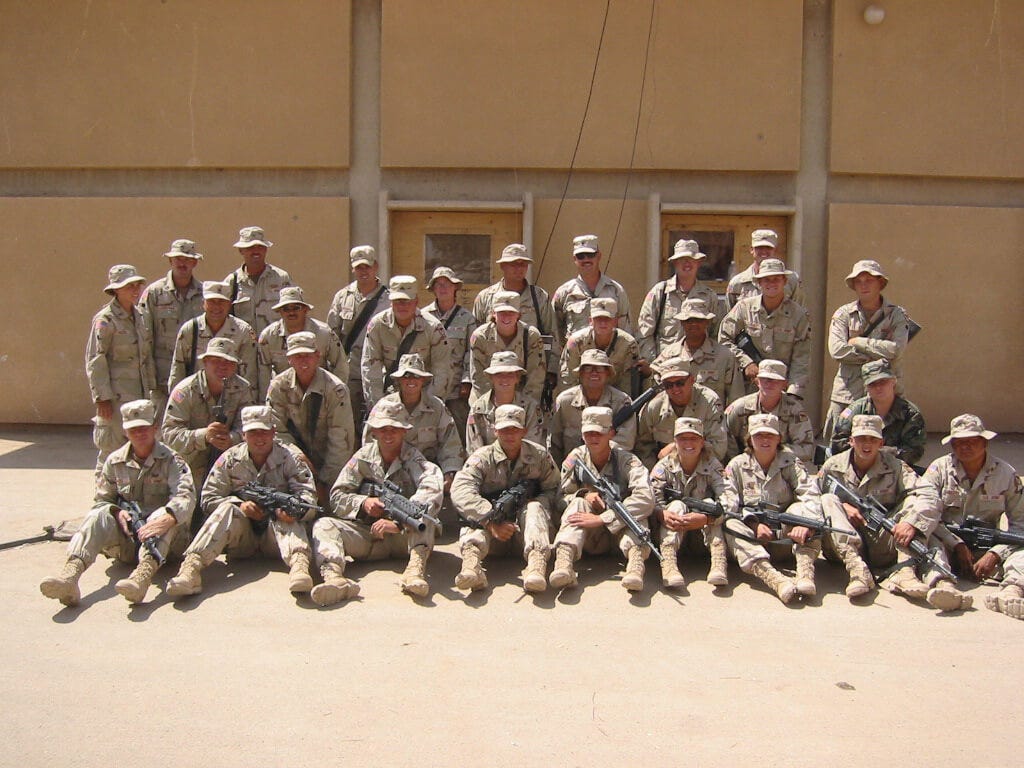
Nearly half of Vermont’s 22 were members of the Vermont National Guard. Six of them were killed in and around Ramadi, where a Vermont contingent served during the fighting of 2005 and 2006.
Vermont was not simply unlucky. It had activated more of its citizen-soldiers, for its size, than almost any other state, and some of them drew the hardest ground in the war.
And Then Afghanistan
By January 2010 — the same month the Iraq figures were tallied — more than 1,500 soldiers of the Vermont Guard’s 86th Infantry Brigade Combat Team were on their way to Afghanistan. It was the largest Vermont deployment since the Second World War. The brigade was taking one person to Afghanistan for every 400 residents of the state.
On Aug. 22, Sgt. Tristan Southworth of Walden was killed in a firefight in Paktya Province while trying to reach another soldier. He was 21, had enlisted as an eleventh grader at Hazen Union and wore the uniform in his yearbook photograph. He was promoted to sergeant posthumously. Sgt. Steven DeLuzio, 25, of South Glastonbury, Connecticut, serving in the Vermont Guard, was killed in the same fight. They were the 12th and 13th members of the Vermont Guard killed in combat since the two wars began.
Well over 1,000 people filled the Hazen Union gymnasium in Hardwick for his funeral.
The Number on the Wall
Vermont’s answer to how many it lost depends on when you count and whom you count.
The Vermont National Guard put up its own memorial in 2008 to 11 of its members killed in Iraq. By January 2010, the Pentagon’s Vermont count for Iraq stood at 22. Families building a statewide memorial that spring were working from a broader list of 36 people with Vermont connections. When that memorial was dedicated on Veterans Day, Nov. 11, 2010, by Gov. Jim Douglas, state officials said it carried 40 names of military members with Vermont ties.
Those are four different questions, not four competing answers to one. The state a service member lists as home, membership in the Vermont Guard, a Vermont connection of any kind, and the year you happen to be counting each produce a different total, and no single number is the right one.
Vermont was not in the path of the attacks 25 years ago. It was in the path of nearly everything that came after.
The memorial stands at the Vermont Veterans Memorial Cemetery in Randolph Center, open to the public. The 40 names are there.