



As the 2026 legislative session begins in Montpelier, Vermont leaders are navigating a significant shift in how the state addresses homelessness.
Following the June 2025 veto of a previous reform plan, lawmakers have introduced H.594, officially known as the Temporary Emergency Housing and Accountability Program and the Return Home Program. This new framework represents a move toward centralized state oversight and stricter eligibility requirements compared to earlier proposals.
The Shift from H.91 to the “New Plan”
To understand the current proposal, it is necessary to look back at H.91, the VHEARTH Act, which was the primary focus of the 2025 session. According to the official text of H.91, that bill sought to decentralize the state’s hotel voucher program by transferring authority to local community action agencies. The goal was to eliminate night-by-night stays and focus on “Housing First” principles.
However, Governor Phil Scott vetoed H.91 in June 2025, stating the bill did not sufficiently reduce the size or the $2.7 million monthly cost of the emergency housing program. This set the stage for H.594, which retains control within the Department for Children and Families (DCF) and emphasizes “treatment and accountability” over the previous “Housing First” model.
Mapping the Growth of the Crisis
The scale of the challenge has changed dramatically in recent years. Data shows that the number of Vermonters experiencing homelessness has more than tripled since before the pandemic.
According to the 2019 Point-In-Time (PIT) count, there were 1,089 Vermonters identified as homeless. By January 2025, that number rose to 3,386 individuals, as reported by the Housing & Homelessness Alliance of Vermont. While the PIT count is a single-night snapshot, the state’s Coordinated Entry Master List—which tracks those actively seeking services—recorded 4,588 unhoused Vermonters as of June 2025, suggesting the crisis may be more widespread than single-night counts show.
Who is Currently Receiving Assistance?
Recent data from the Vermont Agency of Human Services provides a snapshot of the households currently eligible for General Assistance (GA) emergency housing as of January 12, 2026. The data indicates that the majority of those in the system belong to vulnerable demographic groups.
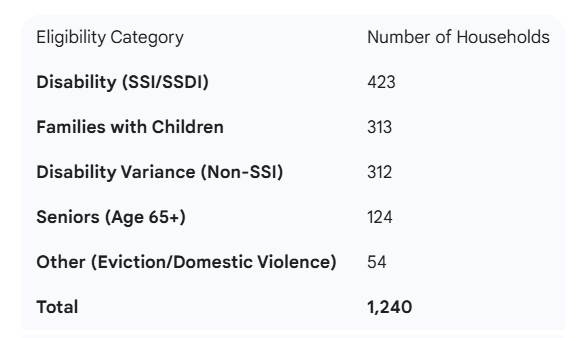
This demographic breakdown is central to the debate over H.594, as nearly 60% of the current population qualifies based on a disability, and 25% are families with children. Additionally, while Black Vermonters make up approximately 1% of the state’s total population, they accounted for 8% of the homeless count in recent years, according to historical PIT data.
The “Return Home” Program and Accountability
The most discussed feature of H.594 is the Return Home Program. As outlined in Section 16 of the bill, the state would fund travel and relocation for unhoused individuals who wish to return to a state where they maintain legal residency.
Key details of the program include:
Voluntary Participation: The statute requires “informed, written consent” from participants.
Verification: Participants must have a verifiable permanent address in their home state.
Public-Private Partnerships: The program would be administered through contracts with nonprofit organizations.
Beyond relocation, H.594 introduces “active participation” requirements. To remain eligible for housing assistance, individuals must demonstrate they are actively searching for permanent housing. While the state aims to increase responsibility, some service providers, such as the Vermont Community Action Partnership, have raised concerns about the administrative burden this places on both social workers and the unhoused in a market with extremely low vacancy rates.
The Fiscal and Operational Reality
The state’s reliance on motels is a primary driver of the current legislative urgency. According to legislative monthly housing reports, the “burn rate” for motel payments exceeded an average of $2.7 million per month in the last fiscal year.
Supporters of H.594 argue that the Return Home program is a cost-effective alternative. A relocation package might cost between $500 and $1,000, whereas a three-month motel stay in Vermont averages $7,200. Critics and legal advocates, including the ACLU of Vermont, have signaled they will monitor the program closely to ensure it does not become coercive or violate the constitutional right to travel.
Local vs. State Strategies
While the state focuses on managing the emergency housing population, municipalities like Burlington are pursuing supply-based solutions. On January 14, 2026, Mayor Emma Mulvaney-Stanak announced a plan to increase affordable housing through zoning changes and public-private partnerships on city land.
The 2025 Vermont Housing Needs Assessment indicates a statewide housing vacancy rate near 1%. This highlights a potential gap between state and local efforts: H.594 requires unhoused individuals to search for housing, but it does not directly fund the construction of the new units those individuals would need to find.
What Happens Next?
H.594 is currently under review by legislative committees. Because the bill is designed to take effect for Fiscal Year 2027 (starting July 1, 2026), a major question remains regarding the “gap” in current funding.
The immediate focus for lawmakers is whether a “bridge budget” can be reached to sustain the General Assistance program through the remainder of the 2026 winter. Without an agreement on supplemental funding, current motel residents could face the expiration of cold-weather exemptions in March or April before the new H.594 framework is fully operational.