


At the bottom: how to find your legislators, leave them a message at the State House, and reach the governor’s office if you want to weigh in on the fix.
Most manufactured homes in Vermont never move after they’re set on a foundation. But every one of them still sits on the steel frame that carried it down the highway from the factory. Vermont law says it has to. A manufactured home is defined as a house “built on a permanent chassis.”
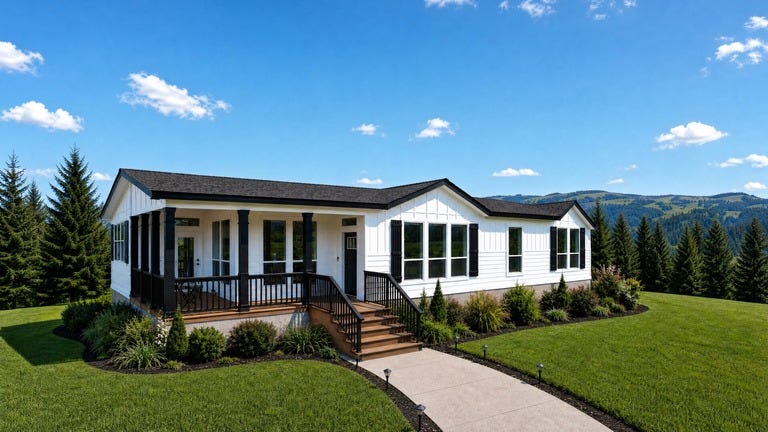
These aren’t the trailers many Vermonters picture when they hear “mobile home.” Homes built since 1976 have to meet a national construction and safety code set by the U.S. Department of Housing and Urban Development. Today’s homes are good quality, often energy efficient, and can look no different from a house built on site, The Pew Charitable Trusts reported.
Congress dropped the frame requirement in July in the 21st Century ROAD to Housing Act. Builders can now ship a house on a frame, set it on a foundation, and take the frame back to use again. One of the country’s largest manufacturers, Cavco, has already shown its first home built that way.
Vermont buyers can’t get one yet. Unless the Legislature changes state law by July 11, 2027, those homes can’t be sold or installed in Vermont.
What it could mean for the price of a home
Dropping the frame could take $5,000 to $10,000 off the price of a new manufactured home, the Niskanen Center estimates. That’s roughly 7% to 9% of the price of an average single-wide, Pew calculated.
For a Vermont buyer, that’s about the size of a down payment. The median manufactured home with land sold for $166,000 in Vermont last year, according to the Vermont Housing Finance Agency. A 5% down payment on that home is about $8,300.
Builders say the savings won’t all reach the buyer. A home without a frame takes more wood, and more of them will need a crane to set instead of being rolled into place, Cavco’s chief executive told investors. He sees the bigger change in what the homes can look like.
Without the frame, a manufactured home can:
sit lower to the ground and look like the houses next door
go up two stories on the same lot
be built as a duplex or a building with up to four homes
That means more homes on the same land, Pew reported.
Why it matters in Vermont
Manufactured homes are already the most affordable way to buy a house here. That $166,000 median compares with $379,000 for a typical Vermont home. Factory-built homes cost about half as much per square foot to build, Pew found, and they go up faster.
Vermont needs 24,000 to 36,000 more homes over five years, or roughly 5,000 to 7,000 a year. Towns issued permits for about 2,300 buildings last year.
More than 16,000 Vermonters already live in manufactured homes. Nothing changes for them. The change is about what the next buyer can choose.
Why Vermont didn’t do this already
It couldn’t. Until July 11, federal law required every manufactured home to be built on a frame and keep it.
Lawmakers rewrote Vermont’s manufactured home law this spring. Act 155, signed June 17, opened more neighborhoods to manufactured homes and retired the term “mobile home.” When the House housing committee took testimony on it in January, Pew’s Rachel Siegel told members that every manufactured home still had to sit on a frame. She flagged two-story designs as one thing that would open up if that requirement ever went away. The federal change came 24 days after Act 155 was signed.
Compass found no group on record opposing the change, in Vermont or nationally.
What the Legislature has to do
The frame requirement shows up in several places: the law that defines manufactured homes, the law covering their sale, the rules lenders follow when a home secures a loan, and the state’s mobile home park regulations. All of them have to change.
Then Vermont has to tell federal housing officials that its laws treat homes with and without a frame the same way. That includes how buyers finance, insure, title and pay taxes on them. The deadline is July 11, 2027. The Legislature usually adjourns in May, so the change has to pass in the session that starts in January.
Vermont isn’t behind yet. As of Oct. 1, only six states had acted, Pew found.
Compass Vermont previously reported on modular housing in Vermont and the Treasurer’s inquiry into the delivered price of a Vermont home.
If you want to weigh in
Here’s how to reach the people who will decide this, so you can make up your own mind and make your views known.
Find your legislators: Look them up by town at the Legislature’s website. Lawmakers elected this week take office in January.
Leave a message at the State House: Call (802) 828-2228 during the session, which starts in January.
Committees that handled this year’s law: House General and Housing, and Senate Economic Development, Housing and General Affairs. Membership for 2027 is set in January.
Governor’s office: (802) 828-3333, or write the governor online.
Compass Vermont is built on giving you the information and the next step so you can decide for yourself. If you find that useful, a paid subscription is the best way to support it, and it’s greatly appreciated.
........"Vermont needs 24,000 to 36,000 more homes over five years, or roughly 5,000 to 7,000 a year."........ And this........."An estimated 2,100 to 2,600 newly constructed homes have been sold across Vermont since the beginning of 2024."......... What's wrong with this picture????