


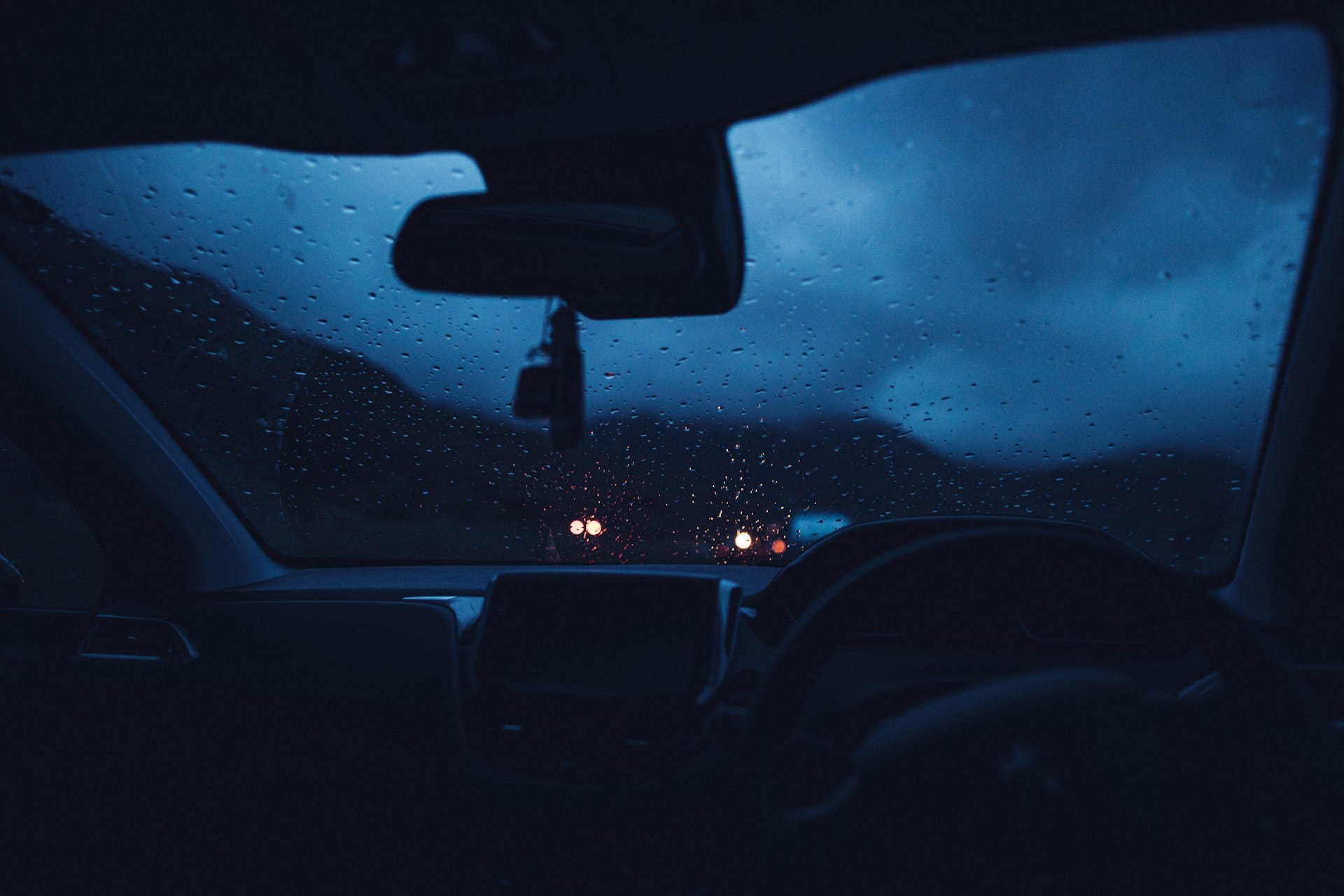
School is back, fair season is over, and Vermont’s teenagers are driving again on a schedule — to practice, to shifts, to friends’ houses, and home afterward.
The drive home is the part that changes from here. In late June the sun sets in Burlington at 8:43 p.m. By the second week of December it sets at 4:14 p.m. Nothing about a 6 o’clock drive home from practice changes over those months except that it stops happening in daylight. The same trip, the same road, the same 16-year-old — in the dark.
Forty-nine states and the District of Columbia treat that difference as worth a rule. They restrict when newly licensed teenagers can drive without an adult, as part of the licensing system that phases in driving privileges. Vermont is the one that doesn’t, according to the Centers for Disease Control and Prevention. A 16-year-old who picked up a junior operator’s license this morning can legally drive alone at two o’clock tomorrow morning.
The Insurance Institute for Highway Safety, which studies what licensing rules do to crash numbers, estimates that a restriction beginning at 9 p.m. cuts fatal crash rates among teen drivers by about 18 percent — roughly one death in six — and reduces insurance collision claims about 8 percent, compared with no restriction. Those figures come from the Institute’s graduated licensing calculator, where anyone can select a state and see what one change would be worth.
What Vermont Requires Now
Under 18:
Learner’s permit at 15, held a full year before you can take the road test
40 hours of supervised practice, at least 10 of them at night
A state-approved driver education course: 30 hours classroom, 6 behind the wheel, 6 observation
A road test
Junior operator’s license at 16; it becomes a regular operator’s license at 18
What lifts, and when:
First three months: no passengers unless a parent, guardian, driver education instructor or licensed adult 25 or older is riding along
Second three months: immediate family added
After six months: no passenger limit
Night driving: no rule, at any point
18 or older: no driver education required. Pass the road test and you are licensed.
Check your own situation at the Vermont DMV’s graduated license page and its driver education requirements. VTrans publishes a Driver Education Dashboard and a Fatal Crash Dashboard covering 2020 through 2025.
The Hours Are Earlier Than People Assume
A nighttime restriction sounds like a rule about 1 and 2 in the morning. The crash data says otherwise.
The CDC found that about 31 percent of drivers aged 16 or 17 involved in fatal crashes crashed between 9 p.m. and 5:59 a.m. — and that among those night crashes, 57 percent happened before midnight. National figures compiled by Advocates for Highway and Auto Safety put 20 percent of teen crash deaths in the 9 p.m. to midnight window alone.
The dangerous hours are the ordinary ones. They are the drive home from a shift that ended at 9, or from a game that ran long. That is also why a number of states get less from their rules than they might: their restrictions start at midnight, after most teenagers have finished driving for the night.
Vermont Is Not a Careless State
The easy version of this story is that Vermont is lax about teen drivers. It isn’t, and the record is worth stating plainly.
A full year on a learner’s permit before a road test is among the longest waiting periods in the country. Wyoming requires ten days. New Hampshire requires no holding period at all. Vermont requires driver education of everyone licensed before 18. It bars junior operators from carrying any passengers for the first three months, a provision the Insurance Institute counts Vermont among 17 states as getting right, and from driving for an employer for a full year after licensure.
Vermont built a slow, supervised on-ramp to a driver’s license. That is what makes the missing piece hard to explain.
The Rule Vermont Did Write, and Half-Armed
There is a second finding in the statute that has not been reported.
Vermont’s passenger restriction lives in 23 V.S.A. § 614. The subsection lays out the first-three-months and second-three-months rules, sets a $50 penalty and a 90-day license recall for a violation, and closes with this: the provisions “may be enforced only if a law enforcement officer has detained the operator for another suspected traffic violation.”
That is what traffic law calls secondary enforcement — a rule police can cite you for only after they have stopped you for something else. A trooper who watches a junior operator drive past with a carload of teenagers cannot pull that car over for it. The trooper needs a separate reason first.
The sentence sits at the end of the subsection, which means it governs all of it, including the first three months. The Insurance Institute’s state-by-state table, updated in September, describes Vermont’s first three months as applying without exception and only the second three months as secondary enforcement. The statute does not draw that line. The two descriptions do not match, and the statute is the law.
The Other Half: What Vermont Teaches
Vermont requires driver education of everyone licensed before 18. It has trouble supplying it.
Seven Days documented the problem last September: a shortage of certified driver education teachers, no in-state program to certify new ones, classes filling with waiting lists, and private driving schools charging $800 and up. Some students finish high school with no formal instruction and then wait until they turn 18 — at which point Vermont asks for none. The driver education teacher at Middlebury Union took that route himself as a young man and calls it a mistake.
It has been raised in Montpelier once. In January 2024, Sen. Ruth Hardy of Addison, with Sens. Wendy Harrison and Rebecca White, introduced S.210, which would have required driver education of every new licensed driver regardless of age, established a standardized curriculum, and opened more paths to certifying instructors. The Senate Transportation Committee took testimony three times that winter, including from the DMV’s education unit supervisor. The bill never left committee.
“More Training” Is Not the Answer It Sounds Like
The common complaint about licensing is that the road test is too easy — that examiners are reluctant to fail an excited 16-year-old, and that drivers pass who shouldn’t. Whatever that is worth as a description, the research does not support it as a fix.
Studies that follow drivers after licensing keep finding that road test performance predicts very little about who crashes later. A Quebec analysis found no meaningful relationship between passing on the first attempt and later crash risk. A more recent Ohio study found only a small one.
The evidence on more demanding car-handling training is stronger, and it runs backwards. When Norway made a second-phase course including skid-track training mandatory in 1979, a follow-up study found crashes among novice male drivers rose 17 percent, and their crashes on slippery roads rose 23 percent. Researchers attribute it to confidence outrunning skill. Finland later rebuilt its own program around anticipating hazards rather than recovering from them.
What does reduce crashes is hazard perception — spotting a developing problem before it becomes one. Adding a hazard perception test to licensing in the United Kingdom was estimated to cut new drivers’ crash rates 11.3 percent in the following year. In Queensland, Australia, drivers who failed the hazard perception test were 25 percent more likely to crash within a year.
Hazard perception is not what a parallel parking maneuver in a DMV lot measures. Vermont’s road test does not measure it at all, and neither does any additional hour of practice the state could require.
The Case Against a Curfew
There is a real argument on the other side, and in a state like Vermont it is not a weak one.
Vermont is rural. A 16-year-old in Craftsbury or Whitingham who works a closing shift has no bus home. Teenagers here drive to jobs, to farms, and to schools that may be a half hour away, and a nighttime restriction lands hardest on the families with the fewest alternatives. A rule that is easy to write in a city is a real cost in a hill town, and it would be enforced unevenly — a point Vermonters raise about traffic law generally.
The states that share Vermont’s geography answered that by writing exceptions rather than skipping the rule. North Dakota’s under-16 restriction runs from 9 p.m. or sunset, whichever is later, to 5 a.m., with exemptions for work, school and religious activity. Montana, Wyoming and South Dakota all restrict night driving for new teen drivers, with similar carve-outs. The choice in front of Vermont has never been a curfew or nothing.
So Why Doesn’t Vermont Have One?
The honest answer is that the public record does not contain one, because nobody has been asked to give it.
Compass reviewed recent legislative sessions and found no bill proposing a nighttime restriction for junior operators — not one that failed, not one that was amended out, not one that got a hearing. S.210 in 2024 is the only measure in years that touched Vermont’s new-driver rules at all, and it was about driver education, not night driving. Vermont’s graduated licensing law was built in the late 1990s and last substantially amended more than a decade ago. The night provision is not missing because it was fought over and lost. It appears never to have been proposed.
That is a question for legislators rather than an answer, and it is the one Compass will put to the Transportation committees when the session opens in January.
Two Changes That Would Cost Nothing
Both are sentences in a statute.
Write a nighttime restriction into § 614. The Institute’s estimate for a 9 p.m. start is an 18 percent reduction in teen driver fatal crash rates. It needs no instructors, no vehicles, no classroom time and no appropriation. Vermont’s driver education shortage is a real constraint on teaching new drivers more. It is no constraint at all on this.
Strike the secondary-enforcement sentence. Vermont wrote a passenger rule the safety research supports, then attached a clause keeping police from acting on it directly.
Vermont already decided night driving is different. It requires 10 of a learner’s 40 practice hours to be after dark, on the theory that a new driver needs to have done it before doing it alone. The state has simply never carried that judgment across the line into the rules that apply the day the license is issued — which, this month, is the line between a drive home in daylight and the same drive in the dark.
At Compass Vermont, our only advocacy is for the reader’s right to the complete picture