


U.S. Military Buildup in the Gulf
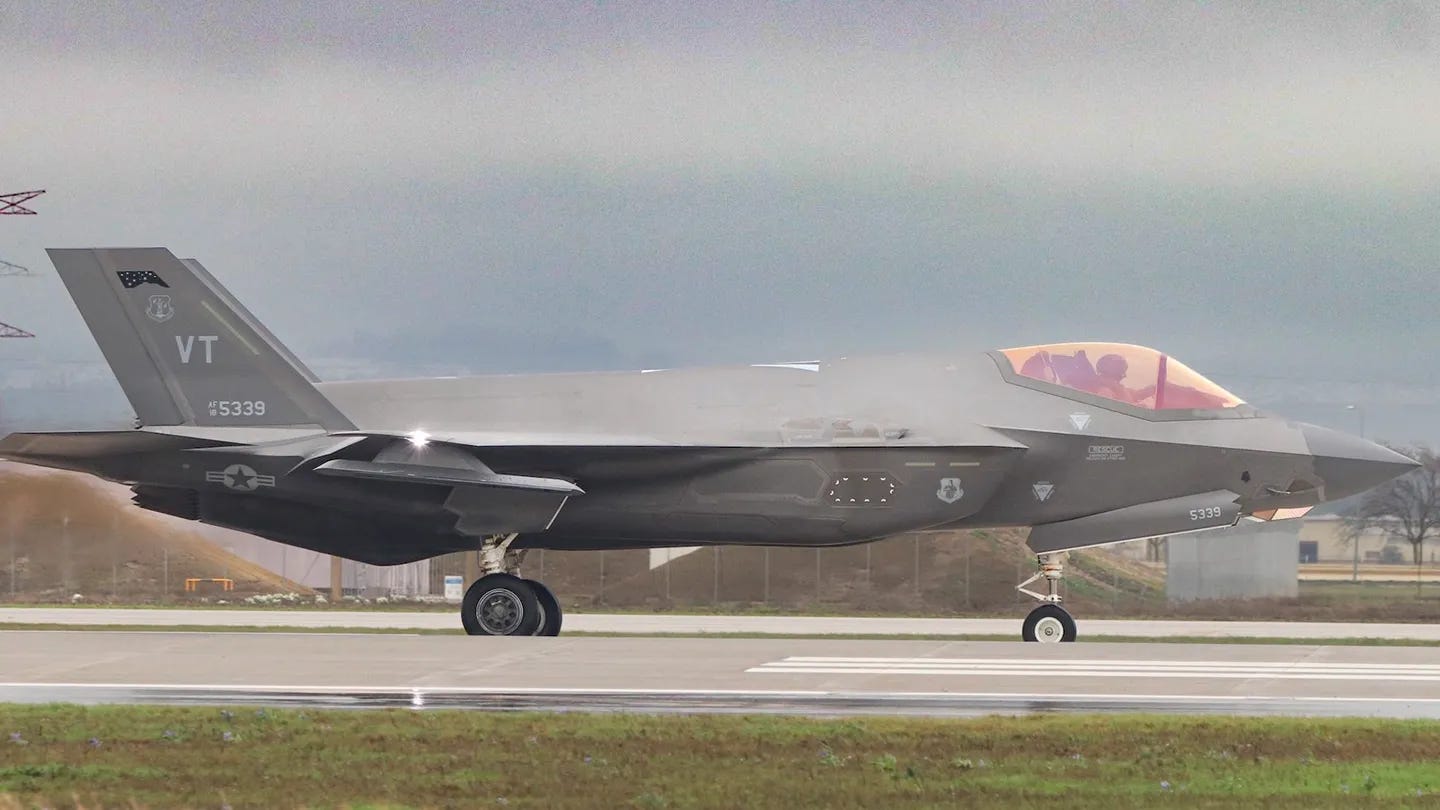
The Vermont Air National Guard’s 158th Fighter Wing has been redeployed to the Middle East in February 2026 as part of a substantial U.S. military buildup in the region amid escalating tensions with Iran. The twelve F-35A Lightning II stealth fighters from South Burlington are joining approximately 125 aircraft already conducting operations in the Middle East theater.
The deployment comes at a moment of heightened friction between Washington and Tehran, following a February 3 incident in which a U.S. Navy F-35C from the aircraft carrier USS Abraham Lincoln engaged and destroyed an Iranian drone in the Arabian Sea.
The Drone Incident
U.S. Central Command identified the Iranian aircraft as a Shahed-139, an armed variant capable of carrying air-to-surface munitions that approached the carrier strike group. The military characterized the drone’s approach as aggressive, stating it came within threatening range of U.S. naval forces operating approximately 500 miles off the Iranian coast.
Iranian state media contested the American account, claiming the downed aircraft was an unarmed Shahed-129 reconnaissance drone conducting a routine and lawful mission. Iran’s Islamic Revolutionary Guard Corps stated the drone successfully transmitted surveillance data back to its control center before losing communication with U.S. forces.
The distinction between the two drone variants carries operational significance. The Shahed-129 is primarily an intelligence, surveillance and reconnaissance platform, while the Shahed-139 represents an evolution capable of carrying offensive weaponry.
Background: Operation Midnight Hammer
The current tensions follow Operation Midnight Hammer, a June 2025 U.S. strike on Iranian nuclear facilities. The administration claimed the strikes “obliterated” Iran’s nuclear capabilities, though Pentagon briefings used more measured language, estimating the program was set back one to two years.
The operation targeted multiple Iranian nuclear sites and was described by U.S. Central Command as achieving a “decisive effect” through the synchronization of joint force capabilities.
High-Level Diplomatic Activity
The military buildup has been accompanied by intensive diplomatic engagement. Special envoys including Steve Witkoff and Jared Kushner visited the USS Abraham Lincoln on February 7, suggesting coordination between military posture and ongoing negotiations with Tehran.
The timing of high-level visits to the carrier strike group, combined with the rapid deployment of additional F-35 assets to the region, indicates the administration is attempting to balance military pressure with diplomatic channels.
Vermont Guard’s Unusual Deployment Path
The 158th Fighter Wing’s arrival in the Middle East follows an unusual movement pattern. Rather than deploying directly from Vermont, the unit is coming from the Caribbean, where it had been stationed since mid-December 2025 as part of Operation Southern Spear.
The direct theater-to-theater movement, described by military analysts as “out of sequence”, means the aircraft are moving to a new mission area without the typical reset period at their home base in Vermont. This reflects what military planners call Dynamic Force Employment, a strategy prioritizing flexible deployment of assets to where they are most needed.
Caribbean Mission: Operation Southern Spear
The Vermont jets had been operating from Roosevelt Roads Naval Station in Puerto Rico as part of a significant U.S. military buildup in the Caribbean that began in August 2025. Secretary of Defense Pete Hegseth initially announced the operation as focused on narcotics interdiction, though it expanded to include broader objectives.
By November 2025, the deployment had grown to include the USS Gerald R. Ford aircraft carrier strike group, bringing approximately 15,000 U.S. personnel to the region in what observers characterized as a substantial military presence in a theater that historically saw minimal such activity.
Venezuela Operation
On January 3, 2026, the Caribbean buildup culminated in Operation Absolute Resolve, a military operation to capture Venezuelan President Nicolás Maduro and his wife. The operation involved over 150 aircraft, including the Vermont Guard’s F-35As.
The 158th Fighter Wing’s specific mission involved suppression of enemy air defenses, utilizing the F-35’s advanced radar and electronic warfare systems to neutralize Venezuelan air defense networks. This created safe corridors for special operations helicopters to reach Maduro’s compound.
The administration characterized the operation as a “law enforcement action with military support”, though legal analysts have questioned this framing, noting that the scale resembled a military intervention. The operation successfully captured Maduro, though casualty figures vary, with reports ranging from 23 to over 80 deaths, including Venezuelan and Cuban personnel.
The Donroe Doctrine
Both the Caribbean and Middle East operations occur within the framework of the “Donroe Doctrine”, codified in the November 2025 National Security Strategy. The doctrine asserts American dominance in the Western Hemisphere and represents a revival of 19th-century Monroe Doctrine principles, characterized by a mix of military pressure and economic coercion.
Beyond the Venezuela operation, the administration has conducted strikes against drug trafficking vessels off Colombia’s coast and pursued various territorial objectives including acquisition discussions regarding Greenland and renaming the Gulf of Mexico as the “Gulf of America.”
International reaction has been largely critical, with UN officials and international law experts stating the Venezuela operation violated prohibitions on the use of force. Both Russia and China have condemned the actions, while Latin American leaders have called the strikes an assault on regional sovereignty.
Route to the Middle East
The Vermont Guard’s movement was split into two groups of six aircraft each. The first group, using callsigns “Tabor 41” through “Tabor 46,” landed at RAF Lakenheath in England on February 9 before continuing eastward. The second group took a southern route through the Azores, landing at Morón Air Base in Spain on February 10.
The deployment encountered some logistical challenges, including a KC-46 aerial refueling tanker that suffered an engine failure and blew eight tires at Morón, temporarily closing the runway. The incident highlighted the demands placed on aerial refueling assets during rapid, long-distance deployments.
Air National Guard Deployment Doctrine
The Vermont Guard’s deployment reflects changes in how the Air Force employs National Guard units. Under the “Air Expeditionary Wing 2.0” concept, units are trained to operate while dispersed from their home base, maintaining high readiness for rapid redeployment between theaters.
This approach prioritizes flexible deployment of assets over traditional rotation schedules that would return units to home station between deployments. Military planners view this as enabling faster response to emerging crises, though it places additional demands on maintenance and personnel.
What Happens Next
The 158th Fighter Wing’s immediate mission in the Middle East has not been officially disclosed. The unit’s arrival expands U.S. fifth-generation stealth fighter presence in the region, adding to existing F-35 capabilities operating from carriers and other bases.
For Vermont residents, the timeline for the unit’s return to South Burlington remains unclear. The direct theater-to-theater movement suggests an extended deployment period, though Air National Guard units typically operate on shorter deployment cycles than active-duty forces.
The trajectory of U.S.-Iran relations will likely determine the duration of the deployment. The combination of military buildup and high-level diplomatic engagement suggests the administration is pursuing a strategy that combines pressure with negotiation. Whether this approach leads to de-escalation or further confrontation remains to be seen.
The redeployment also raises broader questions about force availability and maintenance cycles for Air National Guard units. Moving units between high-intensity operations without home station reset periods represents a test of the flexible employment doctrine, with implications for how frequently Guard units may be called upon for overseas operations in the future.
No official end date for the deployment has been announced, and the Defense Department has not provided a public timeline for the unit’s activities in the Middle East theater.