


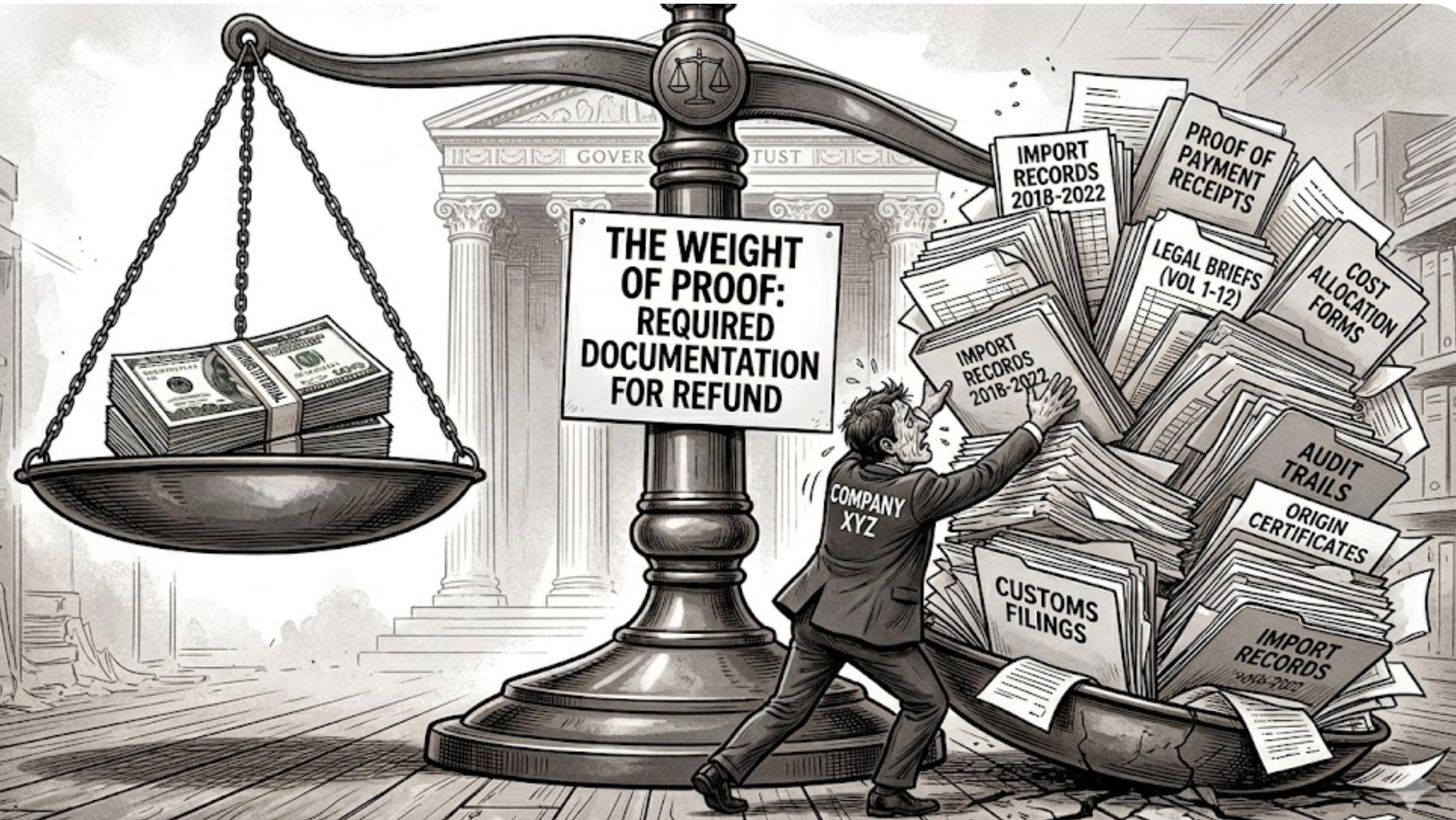
When the Supreme Court struck down the Trump administration’s sweeping tariff regime on February 20, Vermont businesses that had been paying those duties for ten months finally had reason to celebrate. Burlington’s Terry Precision Cycling and Westford’s Rovers North were at the front of the legal fight, and they won.
But for the Vermont families who paid higher prices at the cash register — on everything from car parts to winter gear — the money is almost certainly gone for good. Legal experts and economists warn that while corporations can sue to get their share of an estimated $130 billion to $200 billion in illegally collected duties, there is no mechanism to refund the consumer who ultimately footed the bill.
What the Supreme Court Actually Did
In a 6-3 decision in the consolidated cases of Learning Resources Inc. v. Trump and Trump v. V.O.S. Selections, Inc., the Court ruled that the International Emergency Economic Powers Act of 1977 does not give the president the power to impose revenue-raising tariffs. Chief Justice John Roberts, writing for the majority, held that the power to tax is a core legislative function belonging to Congress.
The majority found that the IEEPA contains no reference to “tariffs,” “duties,” or “taxes,” and that in nearly 50 years of use, the law had never been invoked to impose them. The ruling invalidated the “Liberation Day” and “reciprocal” tariffs but left other trade authorities — including Section 232 steel tariffs and Section 301 tariffs — untouched.
Vermont Businesses: Who Is Going After Their Money?
Vermont played an outsized role in bringing this case to the Supreme Court. Terry Precision Cycling was a lead plaintiff in the original challenge, part of a coalition of five small American companies represented by the Liberty Justice Center. But while the legal victory is clear, the financial recovery is not.
Terry Precision Cycling, Burlington — The cycling apparel maker absorbed more than $200,000 in tariff costs in 2025 alone, with projections reaching $400,000 for 2026. CEO Nik Holm called the ruling a “great moment for small companies,” but the damage to production costs was already done.
Rovers North, Westford — The Land Rover parts dealer saw sales drop by 30 percent and laid off 20 percent of its staff — the first layoffs in 47 years. CEO Calef Letorney noted that the administration’s immediate pivot to replacement tariffs under Section 122 left the business in continued uncertainty.
Hearthlink International, Randolph — Co-founder Candy King watched her wood stove company’s duties climb from $5,000 to $300,000. She laid off her entire sales team and forewent her own salary. Critically, many of her costs came from Section 232 steel tariffs — which were not affected by the ruling — meaning a significant portion of her burden remains.
Burlington headwear company Skida reported significant drops in Canadian business, and Richmond-based stainless steel bottle maker Bivo faced retail cancellations in Canada. Both are monitoring the refund process.
Nationally, more than 1,800 companies have filed lawsuits in the U.S. Court of International Trade to recover payments. But Vermont small businesses are at a distinct disadvantage: federal trade litigation is expensive. As customs broker Kimberly Daniels told reporters, 19 out of 20 of her clients seeking refunds cannot afford to file a case.
Why Consumers Are Left Behind
For most Vermonters, the tariff costs they paid in higher prices at stores are legally unrecoverable.
The “Indirect Purchaser” Barrier. Federal law allows only the “importer of record” to claim a refund from U.S. Customs. Consumers did not pay the government directly and have no paper trail proving individual financial injury. The legal standing to sue belongs to the business that wrote the check, not the shopper who absorbed the cost.
The Logistical Nightmare. Tariff revenue flowed into the general Treasury fund and was spent alongside all other federal revenue. Refunding individual shoppers would require calculating the precise tariff-driven price increase on every product sold over ten months — a task economists describe as essentially impossible.
Corporate “Gains.” Even when a company receives a refund, it is under no legal obligation to pass that money to past customers. Justice Brett Kavanaugh raised this point in his dissent, noting that some importers had already passed costs along to consumers. Analysts expect many businesses will simply book the refund as a gain to offset previous losses.
The $130 Billion Question
The Supreme Court did not order refunds. It struck down the tariffs and left repayment mechanics to the Court of International Trade.
The Tax Foundation and the Brookings Institution have placed total illegal collections as high as $175 billion to $200 billion. Brookings noted the ruling erases roughly three-fourths of the administration’s hoped-for new revenue.
The CIT must now decide whether to consolidate the 1,800-plus cases into a single master litigation or require each company to proceed individually. Consolidation could mean refunds within months. Individual treatment could stretch the process for years.
Large corporations like Costco, Goodyear, and FedEx were among the first to file and have the resources for prolonged litigation. Meanwhile, a secondary market for tariff claims has emerged, with hedge funds purchasing refund rights from cash-strapped businesses at steep discounts.
The Administration’s Shifting Position
During earlier court proceedings, administration lawyers assured judges that companies could be “made whole through a refund, including interest.” After the ruling, President Trump told reporters that refunds are “not discussed” and predicted five years of litigation.
Treasury Secretary Scott Bessent said the administration will “follow the court’s orders,” but legal analysts note the Supreme Court did not issue a refund order. By deferring to the CIT, the administration has effectively chosen maximum procedural resistance.
Within hours, the White House announced replacement tariffs under Section 122 of the Trade Act of 1974. But that statute carries a strict 150-day limit and a 15 percent maximum rate, meaning the replacement tariffs are not a permanent fix.
Vermont’s Elected Officials Respond
Sen. Peter Welch described the tariff regime as imposing “chaos and economic pain“ on Vermont families and called for immediate federal refunds. Attorney General Charity Clark joined a multistate lawsuit challenging the tariffs’ constitutionality. Treasurer Mike Pieciak called the tariffs the “biggest tax increase in history“ on the middle class and is monitoring the fiscal impact on state commerce.
What Happens Next
The immediate future rests with the Court of International Trade, which must decide how to process the flood of lawsuits. The statute of limitations for filing a refund claim is generally two years from the date of payment, so companies that have not yet filed risk losing their right to recovery.
The administration’s Section 122 replacement tariffs expire after 150 days. Whether the White House pursues new investigations under Section 232 or Section 301 — statutes that remain valid but require lengthy procedural steps — will determine whether Vermont importers face another round of duties later this year.
Vermont’s relationship with Canada, its largest trade partner, remains strained. State economists have noted that rebuilding cross-border commerce will take time regardless of the legal outcome.
And for Vermont consumers who paid higher prices over the past ten months, the outlook is straightforward: no refund is coming. American trade law was designed for businesses that pay duties at the border, not for families that absorb the cost at the checkout counter. That gap is unlikely to close.
Hi Lor
Thank you for taking the time to write. I appreciate you reading both Compass and Seven Days before making your decision.
I’m a native Vermonter, and every story published under the Compass Vermont name is written, reviewed, edited, and approved by me personally. I take full responsibility for the reporting and standards behind the work.
If you ever decide to take another look, you’re always welcome.
Wishing you the best,
Tom
It should be clearly assumed any money"re-claimed" will never see the light of citizen, especially if Vt politicians get their fingers in the pot.
The whole idea drips with the stupidity which government, especially Vt's, is famous for.
Historically feds regulate such that small enterprise can't compete.
Later they gain political kudos suggesting federal regs have hurt so and so.
Any "relief" eventually enacted is usually absorbed by "costs" along the way and all the small business folks, who now greet at WalMart, never receive justice.
The only workable solution was once suggested by Trump....appropriate, non taxable, rebate checks direct to the people.