


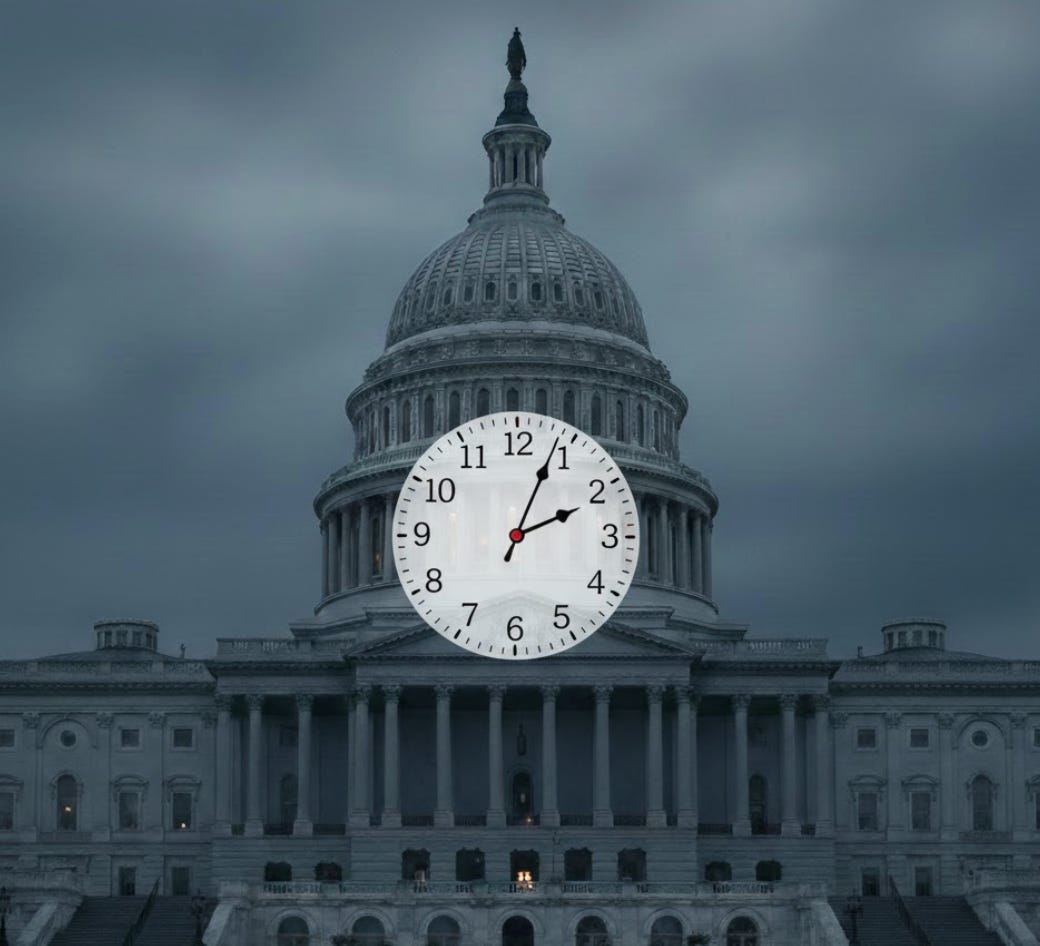
A partial federal government shutdown began at 12:01 a.m. Saturday morning after the Senate failed to deliver a $1.2 trillion funding package to the House of Representatives before the deadline.
The lapse triggered “orderly shutdown” protocols across the Departments of Defense, Homeland Security, and Transportation, among others, affecting thousands of Vermonters and critical state infrastructure projects.
Six prior appropriations bills passed earlier in the fiscal year continue to fund essential operations for the Department of Veterans Affairs and Department of Justice. The current impasse centers on the remaining six bills, which have been consolidated into the $1.2 trillion package now awaiting action in the House.
The Senate’s Bipartisan Deal
The Senate voted 71-29 on Friday to pass a revised package that includes five full-year funding bills and a two-week stopgap extension specifically for the Department of Homeland Security. This unusual split approach was designed to break a Democratic filibuster, as minority party senators refused to support full-year DHS funding following a fatal shooting by federal agents in Minneapolis.
The earliest the House will vote on this Senate-passed package is Monday night at approximately 6:30 p.m. House Republican leaders plan to use the “suspension of the rules” process, which fast-tracks legislation but requires a two-thirds majority for passage.
The Minneapolis Catalyst
The funding impasse stems from escalating tensions over the Department of Homeland Security’s “Operation Metro Surge,” a massive deployment of federal agents to Minneapolis launched in December 2025. The operation, which doubled the number of federal immigration agents nationwide, was funded by redirecting over $170 billion from social programs, including Medicaid and SNAP, into immigration enforcement.
On January 24, federal agents shot and killed a second American citizen, Alex Pretti, a 37-year-old intensive care nurse at the Minneapolis VA Health Care System. Administration officials characterized Pretti as an “assassin” who had “attacked” officers while “brandishing” a handgun. However, independent forensic video analysis by the BBC, Reuters, and The New York Times contradicts these assertions.
Vermont’s Federal Workforce at Risk
Vermont is home to approximately 6,600 federal employees. The largest federal employer in the state is U.S. Citizenship and Immigration Services, primarily centered around St. Albans and Burlington. While law enforcement officers in Customs and Border Protection and Immigration and Customs Enforcement are deemed “essential” and must work without pay, thousands of other workers in administrative roles face immediate furlough.
Furloughed workers can file for Unemployment Insurance benefits, which range up to $757 per week in Vermont. However, these benefits must be repaid once workers receive federal backpay, adding administrative burden and financial stress.
The Vermont National Guard faces significant impact, with approximately 450 of its 1,000 technicians facing furlough. Air traffic controllers at Burlington International Airport, classified as essential personnel, will continue working without pay.
Infrastructure Projects in Jeopardy
The Department of Transportation shutdown directly threatens Vermont’s infrastructure maintenance and upgrades. The Readsboro Memorial Bridge project, a $33 million undertaking that received $25.8 million in federal funding via the Bipartisan Infrastructure Law, is particularly vulnerable.
While a temporary bridge currently carries traffic, the full-scale replacement of Bridge #25 depends on continued federal surface transportation grants. The Vermont Agency of Transportation has indicated that while immediate construction may continue for a few days using existing funds, a prolonged shutdown would jeopardize the demolition schedule and the planned 2028 completion date.
Impact on Norwich University
The town of Northfield faces significant economic consequences through Norwich University, which represents roughly 30% of the retail load for the Northfield Electric Department.
Shutdowns historically suspend Military Tuition Assistance for active-duty students. During previous funding lapses, Norwich University allocated $150,000 from endowed scholarship funds to cover tuition for 146 military students to prevent them from dropping out. Additionally, Department of Defense Cyber Scholarship applications for the fall 2026 term have already been delayed due to the current funding lapse.
Social Safety Net Challenges
Vermont’s social safety net faces dual pressures. While 3SquaresVT (SNAP) benefits are generally funded through February, state officials describe implementing new work requirements—which now apply to households with children as young as 14—as “quite challenging” during a shutdown when federal communication is disrupted.
The broader context includes the One Big Beautiful Bill Act’s $313 billion cut to food assistance, which puts 700,000 Americans at risk of losing coverage. Senator Bernie Sanders’ failed amendment to redirect $75 billion from ICE to Medicaid highlights ongoing tensions over these funding priorities.
The Political Calculus
President Trump has publicly urged House Republicans to support the deal, calling its passage a “major milestone.” However, several obstacles could derail Monday’s vote.
A significant contingent of House conservatives, including Representatives Anna Paulina Luna and Chip Roy, have threatened to withhold support unless the “SAVE America Act”—which mandates proof of citizenship for voter registration—is attached to the funding bill. Luna characterized any deal without this provision as a sign of being “weaklings.”
With an extremely narrow GOP majority, Speaker Mike Johnson can afford only two Republican defections if the Democratic caucus remains united in opposition. If Democrats demand additional reforms—such as requiring body cameras for ICE agents or banning masks during operations—as conditions for their support, the path to passage becomes more complex.
An additional complication involves what’s known as “pocket rescissions,” a maneuver that allows the President to unilaterally cancel funding for programs if a rescission message is sent to Congress when fewer than 45 days remain in a fiscal year. The administration successfully used this strategy to cancel $4.9 billion in foreign aid in August 2025. While the Government Accountability Office has declared this practice illegal, the administration continues to challenge the Impoundment Control Act in federal court, meaning Vermont’s federal grants could face sudden cancellation even after a budget passes.
What Happens Next
The House returns to session Monday, with the funding vote scheduled for approximately 6:30 p.m. Republican leaders remain “optimistic” they will pass the funding bills early in the week, which would reopen the government by Tuesday morning and minimize disruption to federal workers’ backpay.
If House conservatives reject the deal over the SAVE Act demand, the shutdown could extend into mid-week, with initial furloughs becoming more widespread. If Democrats block the suspension process, Speaker Johnson would need to move to “regular order,” adding additional days to the timeline.
For Vermonters, the immediate focus remains on federal workers filing for unemployment insurance and monitoring the status of infrastructure projects like the Readsboro Bridge. The outcome of Monday’s vote will determine whether this becomes a brief weekend disruption or an extended funding crisis affecting thousands of Vermont families and critical state projects.