


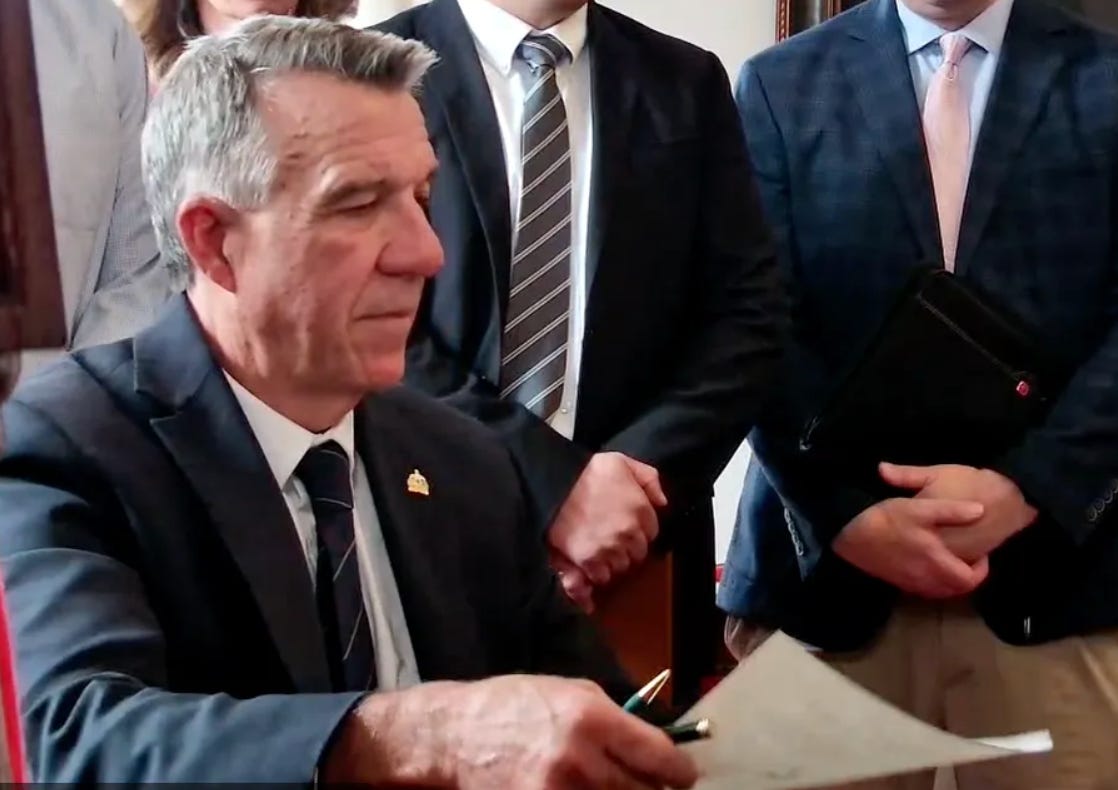
Governor Phil Scott signed the fiscal year 2026 Budget Adjustment Act on March 5, bringing a $111 million spending increase to Vermont’s midyear budget.
The legislation passed with unanimous support in the House—133 votes in favor, none opposed—suggesting broad agreement among lawmakers. But the story behind those numbers is more complicated than the final vote suggests, and Vermonters may benefit from understanding the full picture.
What the Budget Actually Does
The Budget Adjustment Act, officially known as H.790, adds $111.3 million to the original $9.01 billion state budget passed in May 2025. Much of this new spending addresses what officials call “base pressures”—the rising costs of simply maintaining existing programs and services.
The largest increases include $34.3 million for Medicaid caseloads, $4.6 million for the state’s correctional healthcare contract with Wellpath, and $870,000 for State Police overtime. The Department of Mental Health received $390,000 specifically for traveling nurse contracts, reflecting the state’s ongoing struggle with healthcare staffing shortages.
Perhaps most significantly, the bill sets aside $74.9 million in reserve for fiscal year 2027. This money is designated for three purposes: addressing potential federal funding shortfalls, providing property tax relief, and other uses deemed in the public interest.
Where the Money Comes From
A January revenue upgrade of $80.6 million provided much of the funding for these adjustments. State economists characterized the current economic environment as “extremely uneven,” with higher-income Vermonters benefiting disproportionately from equity gains while consumption-based revenues that depend on middle- and lower-income taxpayers have shown weakness.
Personal Income Tax receipts ran ahead of target by $17.1 million in the first half of the fiscal year, reflecting growth among high earners. But lottery revenues trailed targets by more than 10%, and Corporate Income Tax receipts fell significantly in the second quarter—61% below expectations—due to nearly $23.4 million in refunds, double what was anticipated.
Economic Warning Signs Worth Watching
While some news coverage characterized revenues as “steady,” state economists offered a more cautious assessment. Vermont Business Magazine reported that economists described the current revenue situation as a “gravy train running out of steam.”
The economists’ January forecast highlighted several concerns. Current growth, they noted, depends heavily on what they called an “extraordinary wave of euphoric investment in AI-related technology”—a situation they compared to the dot-com bubble of the late 1990s. They warned the economy remains “highly vulnerable to downside risks from external shocks.”
Regional economic pressures are also uneven. Canadian border crossings have dropped 22.5%, weakening Rooms and Meals tax collections in northern Vermont. Trade tariffs are adding costs to goods, and restrictive immigration policies have reduced net foreign immigration from 2 million in 2024 to an expected 500,000 in 2026—tightening labor markets in sectors like construction and healthcare that Vermont depends on.
The Healthcare Picture
The $34.3 million Medicaid adjustment continues a multi-year trend of rising costs. Vermont Medicaid spending totaled $2.3 billion in fiscal year 2024, with federal funding covering nearly 63% of that amount.
On the same day the budget was signed, VTDigger reported that Vermont was being targeted in a federal investigation of Medicaid waste, fraud, and abuse. Federal authorities cited concerns about “high risk” for fraud in Vermont’s programs, pointing to cases including a $200,000 settlement involving a Burlington mental health provider for backdated records and inflated billing.
State economists project what they call a “healthcare cliff” for fiscal years 2028 through 2030. Federal tax rate reductions and changes to the Hospital Provider Tax are expected to reduce total healthcare fund revenues by up to 7% by fiscal year 2030.
Education and Property Taxes
The $74.9 million reserve for property tax relief addresses what Governor Scott has called a projected 12% increase in property tax bills. But the Governor has characterized this as a “Band-Aid“ that doesn’t fix underlying structural issues in the education system.
Senate President Pro Tem Phil Baruth has introduced S.220, which would cap school district spending for fiscal years 2028 and 2029. The Governor supports this approach to education transformation, but House Speaker Jill Krowinski has raised concerns about what programs might be cut.
The tension over education funding has been significant. Seven Days reported that some legislators felt the Governor was “holding us hostage” on education reform in exchange for property tax relief.
The Housing Compromise
One major point of debate during budget negotiations involved $50 million for housing authorities. House leaders originally proposed direct deployment of state funds to offset feared federal cuts to Section 8 voucher programs.
The Administration expressed concern that this could create unsustainable budget commitments. The final compromise allows housing authorities to access state dollars only after demonstrating that federal funds are insufficient through an application process.
The Political Reality
Despite the unanimous final vote, the path to passage wasn’t entirely smooth. WAMC reported an “atmosphere of anxiety and stress” at the State House due to looming federal cuts.
The Governor noted in his budget address that nearly 90% of the General Fund now goes simply “to keep the lights on,” leaving limited room for new initiatives. The Vermont Chamber of Commerce characterized the fiscal approach as a “return to fiscal reality” after years of federal stimulus.
The budget also officially delays Vermont’s “Raise the Age” law until 2027. The law was designed to move criminal cases involving those 19 and under into family court, but the Department for Children and Families reported its resources are “stretched too thin” to take on the new caseload.
What Happens Next
Several developments will shape Vermont’s fiscal situation in the coming months.
The delayed “Raise the Age” implementation will require continued monitoring. The Legislature must still address the structural issues driving education costs and property tax increases. Federal actions on Medicaid—including the ongoing fraud investigation—could significantly impact state finances.
The $74.9 million reserve provides some cushion, but state interest income is projected to drop from $42 million in fiscal year 2026 to $28 million in fiscal year 2027 as reserves are drawn down.
Lawmakers will continue work on education transformation legislation, including potential spending caps. The housing authority safety net will be tested if federal Section 8 funding faces cuts. And economists will be watching whether the AI-driven investment growth that has supported recent revenues continues or follows the pattern of previous technology bubbles.
The fiscal year 2027 budget process, which will begin later this year, will provide the next major opportunity to assess Vermont’s fiscal direction.
........"Personal Income Tax receipts ran ahead of target by $17.1 million in the first half of the fiscal year, reflecting growth among high earners. But lottery revenues trailed targets by more than 10%, and Corporate Income Tax receipts fell significantly in the second quarter—61% below expectations—due to nearly $23.4 million in refunds, double what was anticipated."........Some serious numbers to think about....