


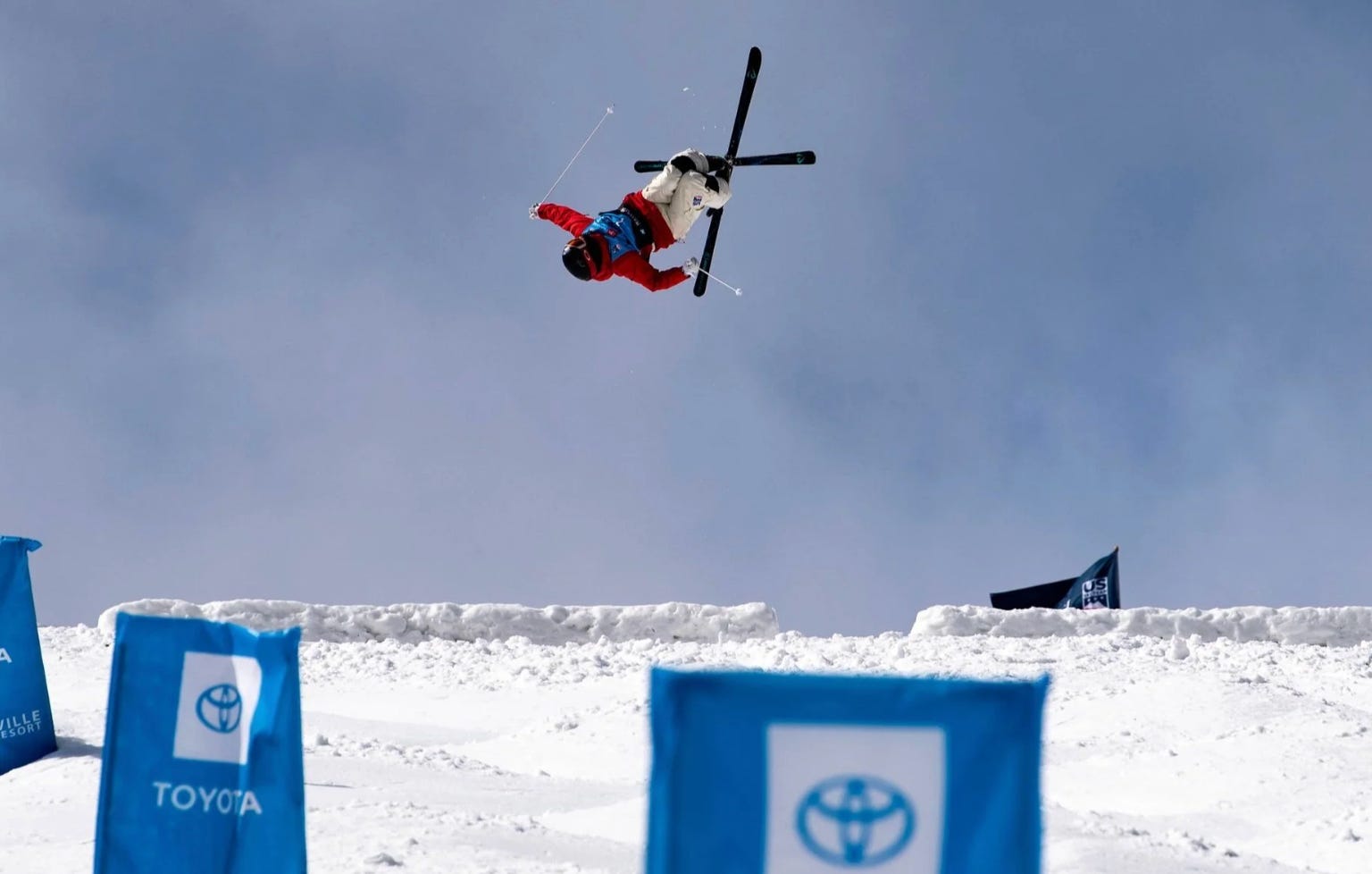
In late December, the International Ski & Snowboard Federation faced a crisis. The Intermountain Health Freestyle International at Deer Valley Resort in Park City, Utah—scheduled for January 16-18, 2026—had to be cancelled. Unseasonably warm temperatures prevented the resort from making enough snow to build the massive features required for World Cup aerials and moguls competitions.
This wasn’t just another tour stop. The event was the final domestic qualification opportunity for athletes competing for spots on the U.S. Olympic Team heading to the Milano Cortina 2026 Winter Games. With Olympic team selections set to be finalized on January 19, canceling without a replacement would have been devastating for athletes on the bubble.
The U.S. Ski & Snowboard had less than four weeks to find new venues.
The Weather Flip
While Utah baked, the Northeast froze. The region experienced what industry officials describe as a “weather inversion”—a strong start to the season with sustained cold temperatures that allowed for aggressive, round-the-clock snowmaking.
“We make our snow and they depend on natural snow,” Scott Brandi, president of Ski NY, told reporters. “We can pretty much get open and have consistency.”
Eastern ski areas have invested hundreds of millions of dollars in high-efficiency snowmaking systems designed specifically to handle the region’s notoriously variable climate. In December 2025, that investment paid off, making the Northeast the obvious choice for a rescue operation.
The Two Winners
Lake Placid Gets the Aerials
The aerials competition landed at Lake Placid’s Olympic Jumping Complex on January 11-12. This was the simplest part of the solution. The venue—managed by the state-run Olympic Regional Development Authority—is the year-round home of the U.S. Aerials team and was already scheduled to host a World Cup aerials event that same weekend.
Organizers simply consolidated the cancelled Deer Valley events with the existing Lake Placid competition, creating back-to-back contests. Broadcast trucks, judges, and officials were already booked. Athletes didn’t need to travel to another location. The risk was minimal because the venue was already prepared.
Waterville Valley Gets the Moguls
The moguls and dual moguls competitions went to Waterville Valley, New Hampshire on January 15-16. The resort’s “Lower Bobby’s Run” is specifically certified for World Cup mogul competition and features permanently buried fiber optic cables for television broadcasting.
Critically, Waterville Valley had hosted the World Cup in both 2024 and 2025. The resort’s operations team knew exactly how to build a World Cup mogul course—a complex process requiring thousands of cubic meters of snow sculpted into precise, rhythmic bumps and two large air jumps.
The Vermont Question
Vermont has the most robust ski industry in the Northeast, so why wasn’t the Green Mountain State part of this emergency plan? The answer comes down to three factors: wrong discipline, bad timing, and strategic mismatch.
Different Types of Skiing
Killington Resort, Vermont’s World Cup venue, hosts Alpine skiing competitions—specifically giant slalom and slalom on its famous Superstar trail. These races require hard, icy surfaces and wide, groomed runs.
Mogul courses need the opposite: soft, deep snow sculpted into hundreds of bumps. Converting Killington’s Alpine venue to host freestyle would require closing the resort’s signature expert trail after the holiday rush, covering the icy surface with massive amounts of new snow, and building an entirely different type of course—all during peak season operations.
Construction in Progress
Even if the venue type matched, timing didn’t work. The 2025-26 season was already designated a “hiatus year” for Killington’s World Cup hosting. The resort is in the middle of a $60 million capital improvement project, replacing the Superstar Express Quad with a new six-person high-speed lift. The construction zone impacts the staging areas needed for television compounds, athlete services, and hospitality tents.
Following its 2024 sale to local ownership, Killington has shifted toward an “every-other-year” hosting schedule for Alpine events to focus resources on infrastructure renewal rather than the roughly $2 million cost of hosting World Cup competitions.
Stratton’s Different Role
Stratton Mountain has a storied freestyle history and will host the NorAm Cup Finals in March 2026. But the NorAm circuit is the development league—one step below the World Cup. The infrastructure required for a NorAm event (minimal broadcast presence, smaller crowds) is vastly different from a World Cup. Stratton’s operational calendar is built around that March event, not an emergency January competition.
Regional Specialization
This relocation reveals how the Northeast ski industry has evolved into specialized niches:
Vermont (Killington): The Alpine powerhouse, hosting giant slalom and slalom with massive crowds
New Hampshire (Waterville Valley): The mogul specialist, leveraging dedicated terrain and expertise
New York (Lake Placid): The Olympic hub, with state-funded permanent facilities for aerials, ski jumping, and Nordic events
Rather than competing venues, this represents complementary strengths.
What This Means for Athletes
The venue change alters the competitive landscape for Olympic qualification. The shift from Utah’s soft, natural snow to the Northeast’s aggressive, man-made surfaces favors athletes with technical precision and edge control—those comfortable on what skiers call “Ice Coast” conditions.
By moving to venues with guaranteed snowmaking, organizers ensured that Olympic qualification would be determined by athletic performance rather than luck with
deteriorating course conditions.
What Happens Next
The Lake Placid aerials competitions take place January 11-12, followed by the Waterville Valley moguls events January 15-16. These are among the final opportunities for athletes to earn qualifying points before the Olympic team is announced on January 19.
For the Northeast ski industry, the successful execution of these emergency events could reshape future World Cup planning. In an era of increasingly unpredictable winter weather, regions with reliable snowmaking infrastructure—regardless of natural snowfall—are proving themselves the most dependable hosts for international competition.
Vermont’s Killington will return to the World Cup circuit for Alpine events once its construction projects are complete, likely resuming its traditional Thanksgiving weekend slot for the 2026-27 season.
Well said for reasons given... There are more though....