


Before Todd Heyman ever filed an Act 250 application, he owed his architect more than $10,000.
Heyman runs Fat Sheep Farming Cabins in Hartland, Vermont — a working farm with five guest cabins where tourists and Vermonters come to milk goats, grow vegetables, and sample his wife’s award-winning cheese. When he began preparing his Act 250 permit application in 2016, he hired an architect with an engineer on staff. As the bills climbed past $10,000 and the application wasn’t yet filed, Heyman pulled out. He decided to do it himself.
He is a former lawyer. He represented himself on appeal. He knows what professional fees look like.
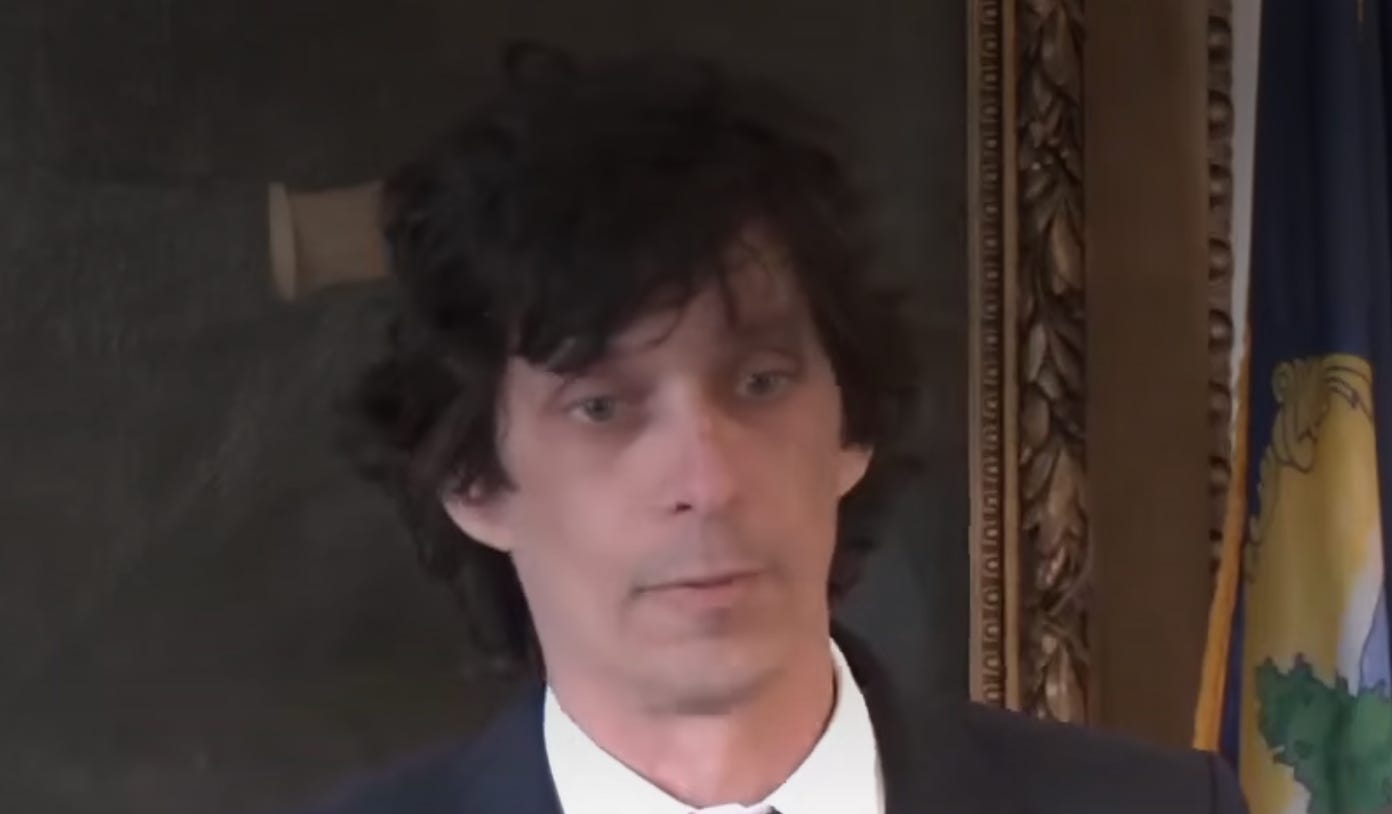
“In those ten years, I not only got an Act 250 permit, but I’ve amended my permit,” Heyman said Wednesday at a press conference alongside Governor Phil Scott at the Statehouse in Montpelier. “I faced two enforcement inquiries. And repeated harassment from my neighbors. The cost of Act 250 is the main thing I have come to share with you. It is not just about getting the permit and paying the fee. It’s with you forever. The jurisdiction is permanent.”
Heyman estimates he has spent more than $15,000 on consultants, lawyers, and engineers — and says that figure almost certainly understates what someone without his legal background would have paid. “I’m sure I’m not done spending money on the fact that I have Act 250 jurisdiction on my farm,” he said.
He has been in Act 250 jurisdiction for ten years. He still is.
The Statistic That Doesn’t Count Todd Heyman
Act 250 defenders have a number they return to reliably when the law comes under scrutiny: the approval rate. According to the Land Use Review Board, which administers Act 250, district commissions receive approximately 400 Act 250 applications per year and approve more than 98 percent of them. On average, one application per year is denied outright. More than 90 percent are approved without a public hearing.
The implication is straightforward: if nearly every applicant who comes before the commission gets a permit, the law cannot be a serious barrier to development.
That statistic doesn’t count Todd Heyman’s first $10,000.
It doesn’t count Peter Kahn, a developer in Vergennes who originally planned to build nine apartments on Armory Lane — not because nine was the right number for the site, but because ten units would trigger Act 250 review, and Kahn didn’t want the cost or the uncertainty. After the Legislature enacted Act 250 exemptions in 2024, Kahn expanded his plans and ultimately began designing a 74-unit workforce housing complex on a nearby vacant lot, as reported by VTDigger and Vermont Public in December 2024. Act 250 never denied Kahn anything. It quietly convinced him to build fewer apartments than the site could support.
And it doesn’t count the projects that are never proposed at all.
“The second I mentioned it might trigger Act 250, those ideas go down the toilet,” Heyman said Wednesday. “You have no idea what the process is going to be until you get into it. Everybody knows what its reputation is. The reputation is earned. People plan to avoid Act 250 jurisdiction because of uncertainty.”
Neil Ryan, a beef farmer from Prince, Vermont, who also spoke Wednesday alongside the governor, put it in concrete terms. When a wood products business in his region spent years tangled in the Act 250 process, it didn’t wait for a denial. It relocated two miles across the Connecticut River to New Hampshire.
Former Governor Jim Douglas, who ran on Act 250 reform, identified the same pattern. “The problem is the permits that are never submitted because developers think it will be too big of a hassle to go through with it,” Douglas said, in remarks reported by WCAX.
The approval rate measures applicants who reach the finish line. It says nothing about those who never entered the race — or who deliberately ran a shorter one.
What Does Act 250 Actually Cost? The State Isn’t Saying.
The filing fee for an Act 250 permit is $6.65 per $1,000 of construction costs for the first $15 million of a project, plus an additional $0.75 per $1,000 collected on behalf of the Vermont Agency of Natural Resources. For a $1 million project, that’s roughly $7,400 in state fees before a single consultant is hired.
Those fees represent the cost the state measures. They are not the cost applicants pay.
According to the Bipartisan Policy Center, citing Vermont’s Department of Housing and Community Development, an Act 250 review can add between $2,000 and $6,000 to the cost of each new housing unit, and can extend the development timeline by months. That figure covers the direct burden of the review process itself — not the full compliance cost.
A complete Act 250 application for any project of meaningful complexity typically requires engineering studies, environmental assessments, traffic analyses, wetlands delineations, stormwater management plans, and legal representation. Total project costs for a straightforward application run between $5,000 and $30,000. Contested projects reach far higher, with timelines stretching 12 to 24 months or more.
The state’s own permit handbook pegs average processing time at 60 to 80 days. The LURB reports that two-thirds of permits are issued in less than 90 days — which means one-third take longer.
None of those figures capture what Heyman described Wednesday: costs that do not end when the permit is issued.
“This agency brought enforcement inquiries against me for the use of my barn for our neighbor’s birthday party,” Heyman said, “because it was unable to find or locate a jurisdictional opinion that it issued saying my barn was agricultural even if I did have an occasional gathering in it.”
The inquiry cost him money. The neighbor complaints that followed cost him more. The legal defense cost him more still. None of it appears in Vermont’s 98 percent approval rate.
The Natural Experiment
The strongest evidence that Act 250’s approval rate obscures its real impact on housing supply came not from a study or an advocacy report, but from the Legislature’s own actions.
When lawmakers passed Act 181 in 2024, they included temporary exemptions from Act 250 jurisdiction for housing development in designated areas. The response was immediate and revealing. In Vergennes, Peter Kahn — who had designed his project around the Act 250 threshold — added units the moment the exemption allowed it. He ultimately began planning a 74-unit workforce housing complex on a nearby vacant lot. A review by VTDigger and Vermont Public found at least a dozen housing projects across Vermont moving forward under the exemptions that would not otherwise have advanced at their current scale.
The Legislature, in passing those exemptions, implicitly acknowledged what the approval rate cannot show: that the law’s burden falls hardest before the application is ever filed, in the calculations developers make about whether to build at all, and how much.
Heyman made the same point Wednesday — not about housing, but about Vermont’s rural economy.
“I have had farmers call me saying they’re thinking about adding this or adding that,” he said. “And the second I mentioned it might trigger Act 250, those ideas go down the toilet.”
The Gap the Statistic Can’t Close
The Vermont Housing Finance Agency has estimated Vermont needs between 30,000 and 40,000 new housing units by 2030. According to recent statewide housing reports, the state is currently building approximately 2,100 units per year.
The 98 percent approval rate does not explain that gap.
It was never designed to.
I wish some enterprising reporter would investigate the impact of out of state money buying up existing housing to stockpile and resell into a tight market and while they are at it, quantify the cost increases for materials and labor driven by second home development throughout the state competing with residential housing. Act 250 protects the environment from developers foisting their external to their project environmental impacts onto my rivers, lakes, roads, schools, highways solely to increase their profit margin. Act 250 alone should not be held responsible for the shortage of residential housing!
Good reporting of the downsides. but two things more are needed for a complete analysis. First, what have the upsides been? What would rural VT look like without Act 250? Would we be happy with that? Second, what changes could be made to achieve a better balance? The other tradeoffs intended to re-balance implementation of the act have been obscured by the furor over the road rule, but do they have merit?