


President Donald Trump announced a massive $12 billion aid package for American farmers yesterday, aiming to offset the financial damage caused by his administration’s recent trade wars. While the announcement promises relief for much of the American heartland, the specific structure of the deal suggests that Vermont’s agricultural sector—already reeling from a year of floods and drought—will see little to none of this funding.
The “Farmer Bridge Assistance” Program: Who Wins?
The core of the President’s announcement is the new “Farmer Bridge Assistance” (FBA) program, funded through the Commodity Credit Corporation. The package is split into two distinct pots of money, with the vast majority going to specific crops that dominate the Midwest, not the Northeast.
According to the official details released by the USDA, $11 billion of the total $12 billion is strictly reserved for “row crop” producers. The eligible list includes corn, soybeans, wheat, cotton, and peanuts—commodities heavily exported to China and most affected by retaliatory tariffs.
For these farmers, the aid is designed as a “bridge” to cover losses until new trade deals are finalized, with checks expected to arrive by February 2026.
Why Vermont is Largely Excluded
While the $12 billion headline figure is significant, the fine print creates a “eligibility gap” for Vermont’s primary agricultural products.
1. The Dairy Exclusion Dairy farming remains the backbone of Vermont’s agricultural economy, yet milk is noticeably absent from the $11 billion row-crop fund. Senator Peter Welch (D-Vt.) issued a statement criticizing the package, noting that “much of this funding won’t help commodity and dairy farmers at all.” Without a specific carve-out, dairy farmers are left waiting for crumbs from the secondary funding pot.
2. The Corn Silage Technicality Vermont farmers do grow a significant amount of corn, but it is primarily grown as “silage” (chopped for cow feed) rather than “grain” (harvested and sold on the market). Federal row-crop aid programs typically target grain corn. If the USDA applies standard eligibility rules to this new program, Vermont’s corn acres may not qualify for payments.
3. The “Specialty Crop” Waitlist Maple syrup, vegetables, and apples—vital parts of Vermont’s working landscape—are categorized as “specialty crops.” These sectors must share the remaining $1 billion with every other specialty crop in the nation. The USDA has stated that details for this smaller fund are still “under development”, offering no immediate guarantee of support.
The Missing Piece: Disaster Relief
Perhaps most critical for Vermont is what this package does not cover. The $12 billion is strictly for trade-related losses, not natural disasters. This distinction leaves Vermont farmers vulnerable on two fronts.
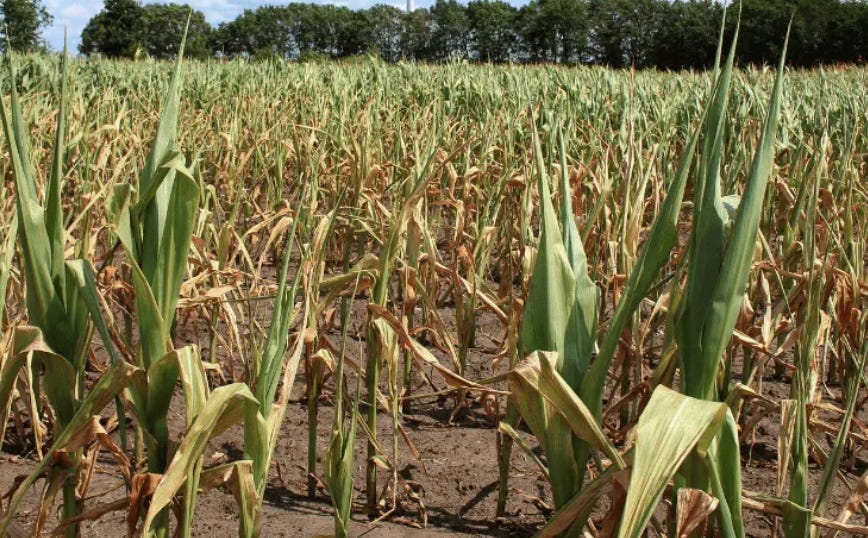
First, they are facing higher input costs due to tariffs on Canadian fertilizer and fuel. Second, they are still recovering from a devastating year of weather events without sufficient federal backing. Vermont farmers suffered through severe flooding in July 2025, followed by a late-season drought.
Despite these clear hardships, the Trump administration recently rejected Vermont’s appeal for a major disaster declaration related to the 2025 floods. This decision denied the state millions in potential FEMA aid. By focusing this new $12 billion solely on trade issues, the administration has effectively bypassed the most urgent financial wound facing Vermont’s agricultural community: climate resilience and disaster recovery.
What Happens Next
For Vermont farmers, the immediate outlook requires patience and close monitoring of federal rulemaking.
Now through December 19, 2025: Farmers of eligible row crops must ensure their acreage reporting is accurate with the Farm Service Agency.
Late December 2025: The USDA will release the specific payment rates for the $1 billion “specialty crop” fund. This will be the first indicator of whether maple or vegetable producers will receive any meaningful aid.
February 28, 2026: The target date for the USDA to begin cutting checks for the main $11 billion program.
While Midwest soy and corn growers can count on this aid to start their planting season, Vermont’s dairy and maple producers remain in a precarious position—paying the price of the trade war without receiving the shield designed to protect against it.