


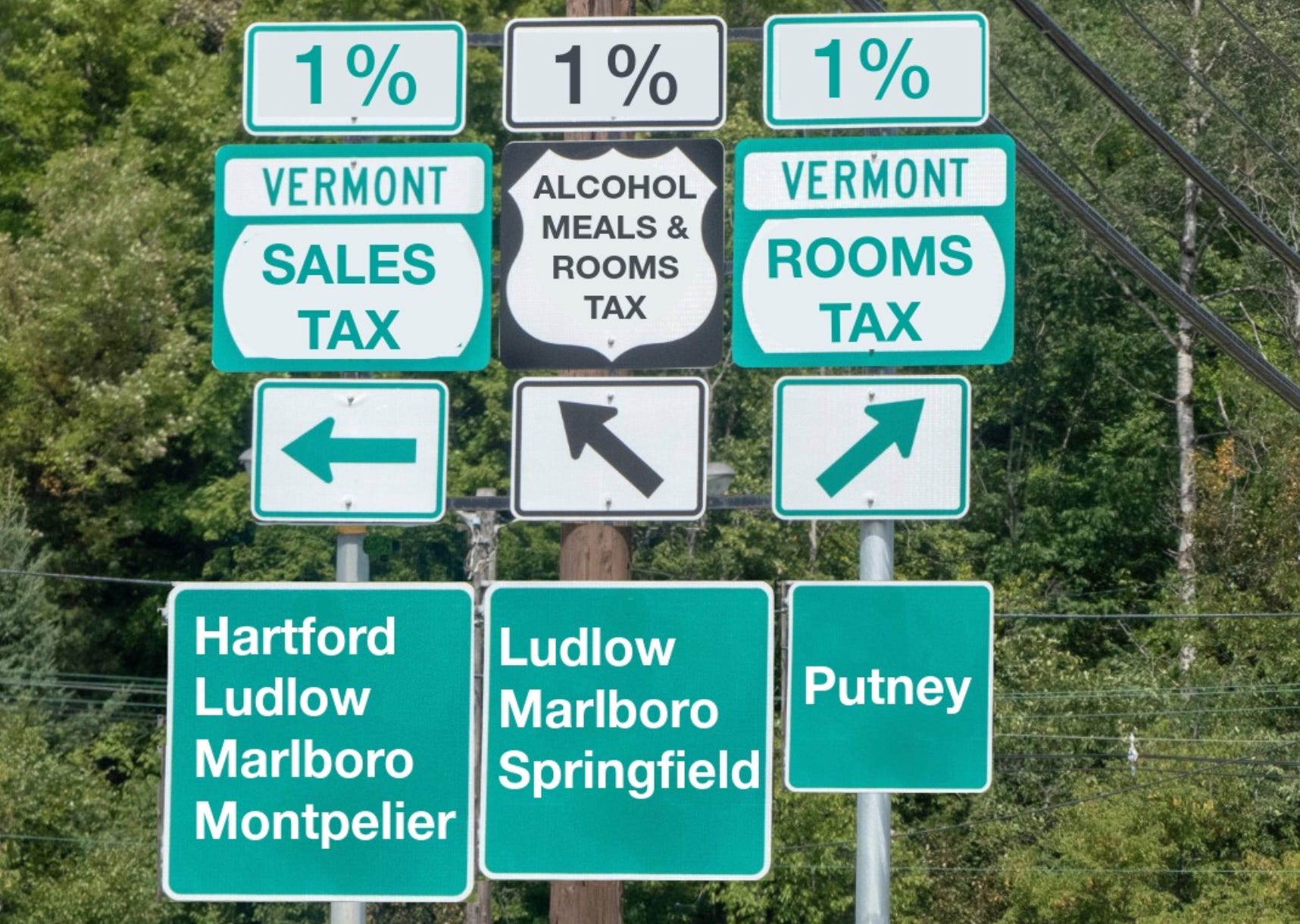
What This Story Is About
Vermont municipalities and state lawmakers are locked in a dispute over more than $15 million sitting in a special state fund. The money comes from Local Option Taxes—the 1% surcharges on meals, rooms, and sales that 34 Vermont towns have voted to collect from visitors and shoppers.
The question at the center of the debate: Does this money belong to the towns that generated it, or can the state redirect it to cover its own budget gaps?
To understand the stakes, it helps to look under the hood at how these funds actually work.
Where the Money Comes From
When a town like Stowe, Burlington, or Montpelier votes to adopt a Local Option Tax, the Vermont Department of Taxes collects the revenue on the town’s behalf. Under current law, 70% of that revenue goes back to the town. The remaining 30% is deposited into a state account called the PILOT Special Fund.
PILOT stands for Payment in Lieu of Taxes. The fund’s original purpose is straightforward: compensate towns for state-owned property—like office buildings, prisons, and conservation land—that doesn’t generate local property tax revenue.
For years, this fund didn’t have enough money to fully cover what the state owed to towns. In fiscal year 2017, towns received only 74.7% of their calculated payments. That changed in fiscal year 2024, when the fund reached “fully funded” status for the first time.
Today, the fund holds a surplus exceeding $15 million.
What “Fully Funded” Actually Means
The phrase “fully funded” sounds like good news, and in one sense it is—towns are now receiving 100% of their calculated PILOT payments rather than a prorated fraction.
But the calculation itself contains a mechanical feature that has quietly reduced what the state owes.
The state uses something called the Common Level of Appraisal, or CLA, in its payment formula. The CLA measures how closely a town’s property assessments match current market values. When property values rise faster than towns can update their grand lists, the CLA drops.
Here’s where it matters: the CLA is a multiplier in the PILOT formula. A lower CLA means a lower payment from the state.
In fiscal year 2025, the statewide weighted average CLA was 77.4%. That means the state is calculating payments based on assessed values that are, on average, more than 22% below actual market value. According to the Joint Fiscal Office, 144 out of 161 taxing jurisdictions had a CLA below 90%.
The town of Johnson illustrates the effect. Between fiscal years 2024 and 2025, Johnson’s PILOT payment dropped by $47,205—not because state-owned property in town decreased, but because Johnson’s CLA fell from 89.67 to 74.15.
The Joint Fiscal Office estimates that removing the CLA from the formula would increase state obligations by over $3 million annually.
In practical terms, the surplus exists in part because the state’s payment formula captures savings from outdated local assessments.
What the State Wants to Do With the Surplus
Governor Phil Scott’s $9.4 billion budget proposal for fiscal year 2027 includes a recommendation to shift $3.5 million from the PILOT surplus to fund property appraisal and the statewide equalization study. These are administrative functions the General Fund has historically covered.
The House Committee on Appropriations went further. In the fiscal year 2026 Budget Adjustment Act, which passed the House as H.790, lawmakers included an additional $3.5 million appropriation from the PILOT fund for the same purpose.
Combined, the two budget actions would redirect $7 million—nearly half of the current surplus—from the special fund toward state administrative costs.
Why Towns Are Pushing Back
The Vermont League of Cities and Towns has formally opposed the proposed reallocations, arguing that Local Option Tax revenue is voter-authorized local money that should remain under municipal stewardship.
The organization’s position has drawn alignment from the 34 towns currently collecting a Local Option Tax. According to VLCT, it consulted with members in all of those communities before adopting its 2025-2026 policy, which states that the “majority of current surplus monies should be returned to those communities which generated the revenues.”
A bill reflecting that position, H.164, has attracted 57 co-sponsors from both parties—more than one-third of the House. The bill would increase the municipal share of Local Option Tax revenue from 70% to 80% and return the current surplus proportionally to the towns that contributed it.
The Property Tax Context
The debate is unfolding against a backdrop of rising property taxes. Commissioner of Taxes Bill Shouldice has warned that state property taxes have increased by more than 40% over the last five years, a trajectory he described as unsustainable for seniors on fixed incomes and young families.
For municipalities, the Local Option Tax has become a tool for diversifying revenue beyond property taxes. Towns like Waitsfield, Milton, and Chester are among those with Local Option Tax questions on their March 2026 ballots.
Waitsfield’s analysis indicates that 82% of its projected LOT revenue would be paid by non-residents, allowing the town to shift some of its tax burden to visitors while funding capital projects like a new fire station and bridge repairs.
An Unanswered Question About Costs
One aspect of the debate that neither side has fully addressed: the actual administrative cost of collecting Local Option Taxes.
The state retains 30% of LOT revenue for the PILOT fund and also charges municipalities a return fee of $5.56 or $5.96 per return. No public accounting has been released showing whether these combined revenue streams match, exceed, or fall short of the state’s actual costs for collecting and distributing the tax on behalf of towns.
What Happens Next
The Senate must now act on H.790, the Budget Adjustment Act that includes the first $3.5 million reallocation. If the Senate concurs, that money will shift to state appraisal costs for the current fiscal year.
The larger question will be resolved during negotiations over the fiscal year 2027 budget, where lawmakers will decide whether to include the Governor’s recommended $3.5 million shift and whether to advance H.164’s proposal to return surplus funds to towns.
Town Meeting votes in March will also add to the picture. At least five additional towns are expected to consider adopting Local Option Taxes, which would expand the number of municipalities with a direct stake in how the PILOT fund is managed.