Commuting across Lake Champlain by ferry costs about $4,800 a year with the commuter discount and about $6,600 without it. That’s what a car and driver pay to cross between Grand Isle and Plattsburgh every workday, on a fare set by a private company with no public review.
A photo posted to Reddit’s r/vermont this week [link to post] showed four and a half years of one commuter’s ferry receipts, stacked as tall as a can of Heady Topper. At today’s prices, a stack like that is worth roughly $21,600 at the commuter rate.
At the bottom of this story: how the commuter card works, what the fuel surcharge adds to each trip, and where the free bridges are.
What a Commuter Pays
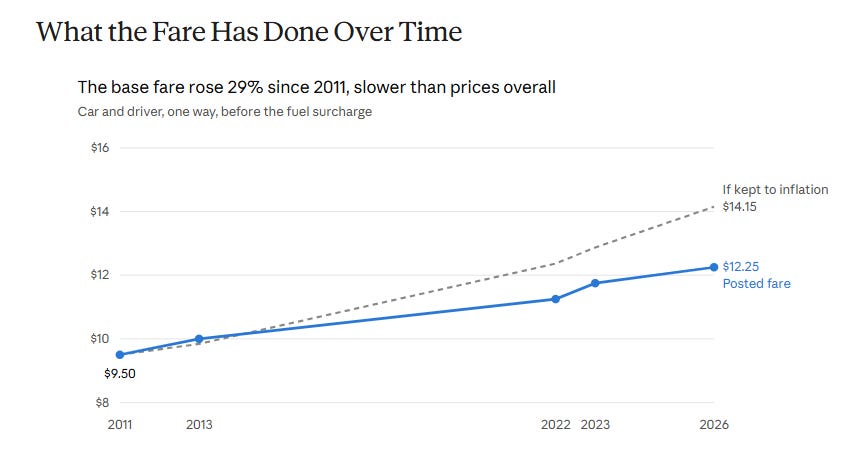
Lake Champlain Transportation Co., the private company that runs the ferries, posts a fare of $12.25 each way for a car and driver. At the booth this week the price was $13.25. The difference is an 8 percent fuel surcharge, rounded up to the nickel, that the company adds on top and does not list on its website.
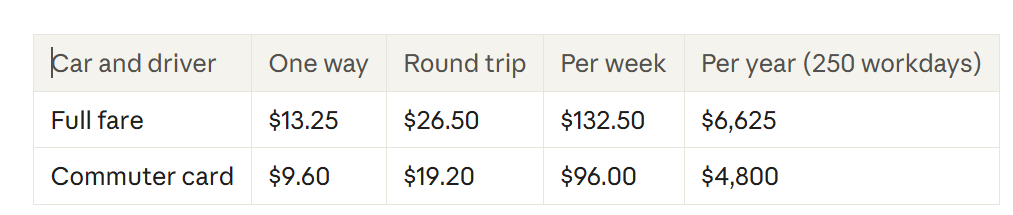
The commuter card takes 30 percent off the base fare but not off the fuel surcharge, so a card holder actually saves about 28 percent. Every reload has to be at least $200, which covers about two weeks of round trips.
The crossing is about 2 miles of water. That works out to roughly $6.60 a mile at full fare and $4.80 a mile with the card. For comparison, the IRS puts the full cost of driving a car, gas, wear and insurance included, at 76 cents a mile.
Who Pays It
Up to about 1,300 people commute across the lake where the ferries run, according to the Census Bureau’s most recent county-to-county commuting estimates, which cover 2016 to 2020. Not all of them ride the ferry; some drive around by the Rouses Point or Crown Point bridges.
About 800 people from the Plattsburgh area (Clinton County) work in Chittenden or Grand Isle counties, roughly 2 of every 100 working Clinton County residents.
About 290 people from Essex County, N.Y., work in Chittenden or Grand Isle.
About 250 Vermonters go the other way, mostly from Chittenden and Grand Isle to Plattsburgh.
These are survey estimates, not a count. The Census Bureau’s own margin puts the total anywhere from about 1,050 to about 1,600.
Why It Works Like a Toll Road
Vermont has no toll roads. The ferry is the closest thing to one: a fee you pay to stay on a state highway.
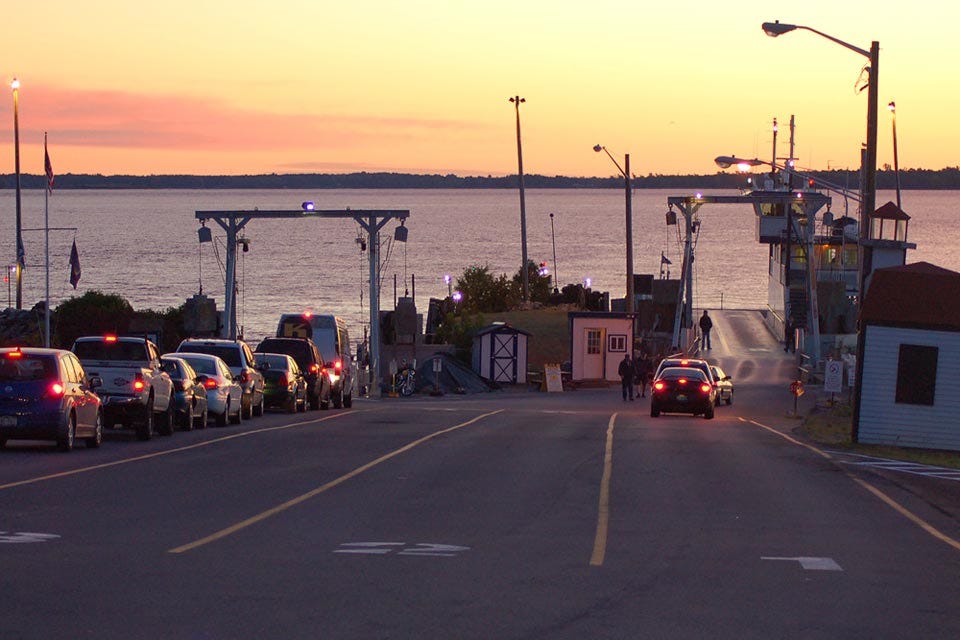
Two state highways end at the water. Vermont Route 314 in Grand Isle and New York Route 314 in Plattsburgh both run to the ferry slips. The Vermont side was once signed VT F-3, one of a set of state routes Vermont created in the 1920s to lead to the lake ferries. The last of them, Vermont Route F-5, is the Ferry Road in Charlotte.
No public body reviews the price. Vermont’s Public Utility Commission regulates electric, gas, water, dams, telephone, sewer and EV charging, but not ferries. When the Burlington–Port Kent route shut down, the Burlington mayor’s office told WCAX that neither the city nor the state has regulatory oversight of the ferry routes. The same statement noted the company gets no subsidy from the city.
The surcharge moves without notice. It was 30 cents a crossing in 2011, 70 cents in September 2023, according to Seven Days, and about $1 this week.
The states have paid for a crossing before. From 2009 to 2011, while the Crown Point bridge was being replaced, New York and Vermont paid the same company about $10 a car to run a free ferry. The replacement bridge, which cost $78 million, charges no toll. Neither does the Rouses Point bridge to the north.
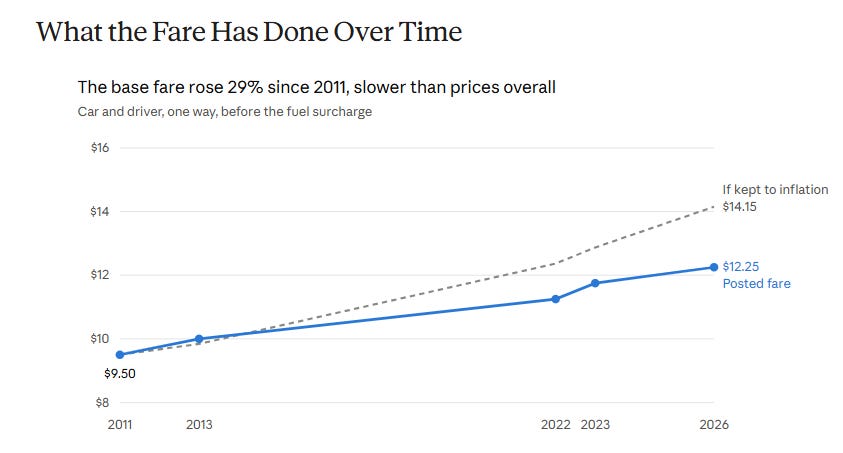
Even with the surcharge, today’s $13.25 booth price is below where the 2011 price would be had it kept pace with inflation: about $14.60, counting the 30-cent surcharge back then.
The company has tied its increases to costs. In 2013, its operations manager said the first increase since 2008 came from steel, paint and health care. In 2018 it pointed to keeping the boats running and wages competitive. The Grand Isle boats run 24 hours a day, year-round, breaking ice in winter.
If You Cross the Lake
Here’s what you need to work out your own cost and decide which way across makes sense for you.
Fares: Posted base fares are on the Lake Champlain Transportation rates page. The fuel surcharge isn’t posted; call 802-864-9804 to ask what it is today.
Commuter card: Apply online and the card arrives by mail with no balance. You load it at a ticket booth, $200 minimum each time. It’s good on both the Grand Isle–Plattsburgh and Charlotte–Essex crossings.
What the card saves: about $3.65 a crossing for a car and driver. The 30 percent discount applies to the base fare only, not the fuel surcharge.
The free bridges: The Rouses Point bridge carries U.S. Route 2 between Rouses Point, N.Y., and Alburgh. The Lake Champlain Bridge at Crown Point carries Vermont Route 17 to Crown Point, N.Y. Neither charges a toll.