


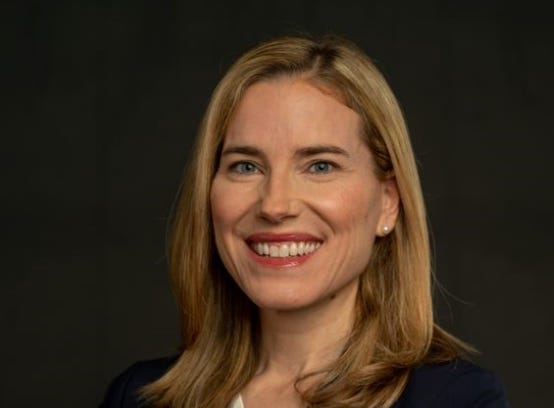
The year 2025 marked a definitive shift in how the Vermont Attorney General’s Office operates. Under the leadership of Attorney General Charity Clark, the state’s chief law enforcement agency engaged in a historic volume of federal litigation, joining or leading no fewer than 39 lawsuits against the second Trump administration in less than twelve months.
For many observers, this aggressive posture raises a valid question: Is this a prudent defense of the state’s interests, or is it a performative exercise in resume building for a future gubernatorial run?
The answer, based on an exhaustive analysis of the 2025 docket, appears complex. While the Attorney General’s press office displays a tendency to overstate her role in these national coalitions—often implying leadership in cases where Vermont is merely a signatory—a sweeping change in federal law in June 2025 has made these lawsuits legally necessary to protect state funding. However, this outward-facing focus has come with a domestic cost, leaving critical local issues in Chittenden County to fester until the Governor was forced to intervene.
The “Coalition” Model vs. The Press Release
To understand the 2025 docket, one must look past the headlines. Modern attorneys general often function as “regulators of last resort,” banding together to check federal power. Vermont typically operates within a coalition model, partnering with larger states like New York, California, and Massachusetts that possess the resources to draft complex briefs.
While Attorney General Clark frames these actions as a personal “battle” against “federal overreach,” the reality is often more bureaucratic. In many of these 39 cases, Vermont joined litigation led by other states. Critics point out that the AGO’s communications frequently blur this distinction, announcing that “49 other states joined AG Clark” when, in fact, Clark joined a coalition led by a larger office.
This rhetorical framing supports the theory of political ambition. By positioning herself as a primary antagonist to the White House, Clark is building a “resistance” brand that aligns with the well-worn path from Attorney General to Governor. Yet, dismissing these suits as pure political theater ignores a critical legal shift that occurred mid-year.
The Turning Point: Why “Freeriding” is Over
For years, small states like Vermont could “freeride” on federal lawsuits. If California sued to stop a federal policy and won a nationwide injunction, Vermont benefited without lifting a finger or spending a dime.
That strategy is now dead. In June 2025, the Supreme Court’s ruling in Trump v. CASA effectively ended the era of universal injunctions. The Court ruled that federal judges generally lack the authority to issue relief to anyone other than the specific plaintiffs in the courtroom.
This created a “pay to play” legal landscape. If the federal government illegally freezes education funds, and Vermont is not a signatory to the lawsuit challenging it, the administration can legally continue to withhold Vermont’s money while releasing it to states that sued.
This dynamic played out in July 2025 regarding Department of Education funding. When the court issued an injunction to stop a funding freeze, it explicitly limited relief to the “Plaintiff States only.” Because Clark had joined that suit, approximately $26 million for Vermont schools was unlocked. Had she sat it out, Vermont would likely have been left empty-handed.
The Fiscal Scorecard: A High Return on Investment
When viewed through a strictly fiscal lens, the federal docket has been a resounding success for Vermont taxpayers. The cost of joining these suits—primarily the salary time of staff attorneys reviewing briefs drafted by other states—is negligible compared to the funds preserved.
Solar for All: In October, Clark joined a suit to stop the termination of a grant program. At stake was $62.4 million explicitly awarded to Vermont to lower energy costs for low-income households. This was a breach of contract dispute; if Vermont didn’t sue, that money was gone.
Disaster Mitigation: With Vermont still recovering from floods, Clark joined a suit to prevent the shutdown of FEMA’s “Building Resilient Infrastructure and Communities” (BRIC) program. The court victory preserved millions in future flood-proofing funds.
Settlement Revenue: The office also generates revenue through these coalitions, such as the $49.1 million multistate settlement regarding generic drug price-fixing.
The Domestic Opportunity Cost
While the Attorney General was successful in federal court, the domestic front showed signs of neglect. The most glaring “overlooked” work in 2025 was the deterioration of public safety in Chittenden County.
By October 2025, the backlog of criminal cases and the rise of “catch and release” incidents had eroded public trust in Burlington. The crisis became so acute that Governor Phil Scott—a Republican—had to intervene in the jurisdiction of the state’s chief law enforcement officer. On October 10, the Governor announced the establishment of a Special Chittenden County Community Accountability Court and the appointment of a Special Prosecutor.
The need for a Special Prosecutor is an implicit indictment of the standard prosecutorial system. While the Attorney General shares jurisdiction with State’s Attorneys, the optics were stark: While Clark was issuing press releases about suing over H-1B visa fees or the renaming of the Gulf of Mexico, the Governor was left to clean up a breakdown in local justice.
Furthermore, the state’s reliance on the federal Consumer Financial Protection Bureau (CFPB) highlights a vulnerability. Clark sued to defend the CFPB from defunding, correctly noting that Vermont relies on federal data to track predatory lending. However, this dependency suggests a failure to build independent, resilient state-level consumer protection capacity that can function regardless of who sits in the White House.
Conclusion: What Happens Next?
As the state moves toward the 2026 election cycle, Vermonters can expect the volume of federal lawsuits to remain high. The legal precedent set by Trump v. CASA dictates that if Vermont wants federal funds, the Attorney General must sign her name to the complaint.
However, the political challenge for Charity Clark will be balancing this “Sovereign Shield” role with domestic obligations. The successful preservation of federal grants may not be enough to counter the narrative that the “Lawyer for the Resistance” allowed the “Prosecutor for Vermont” role to wither.
To secure a political future beyond the Attorney General’s office, Clark will likely need to pivot, demonstrating that her zeal for battling constitutional crises in Washington is matched by an equal commitment to solving the practical safety crises on the streets of Vermont.
I wIting for you to do equally critical review of Gov. Scott's performance. Eight years is enough of his blame game. We need a change.