


A mother of two young children was found dead in her White River Junction home in 2018. She had bought heroin from a local woman. The seller was sentenced seven years later — to 135 days, most of it time already served.
A psychiatrist was shot and killed in his office by a patient who had been deemed dangerous but was living in the community because the state had nowhere else to put him.
Both of these are Vermont stories. Both involve preventable death. Both raise urgent questions about how the state protects its people. But this legislative session, only one of them is getting a bill.
Two crises, side by side
Vermont is losing residents to two overlapping emergencies, and the Department of Health tracks both.
Drug overdoses are the state’s leading cause of injury death. In 2023, 259 Vermonters died — the worst year on record. Preliminary numbers for 2024 show a drop to 214, the first decline since 2019, but still staggering for a state of 650,000. Fentanyl was involved in 93 out of every 100 opioid deaths. Vermont’s overdose rate runs roughly 35% above the national average.
Firearms kill approximately 80 to 85 Vermonters per year. The vast majority — 82% — are suicides. Gun homicides in Vermont typically range from 8 to 15 per year. The state’s firearm death rate sits about 12% below the national average.
Put plainly: drug overdoses kill about three times as many Vermonters as all gun deaths combined. Compared to gun homicides alone, the ratio is closer to 17 to 1.
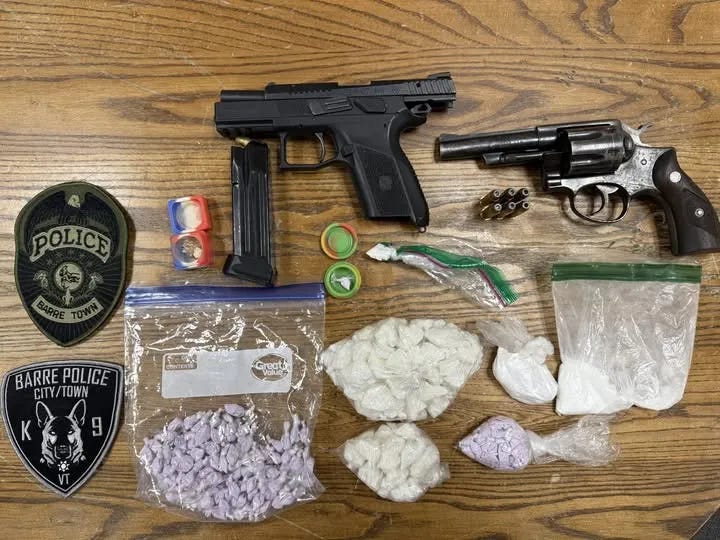
And the two problems feed each other. The Vermont Intelligence Center told legislators in 2024 that drug-related homicides had risen 450% in just three years, and that half of all shootings with victims were connected to the drug trade. Many of the guns seized by police had been stolen and traded for opioids.
What the gun bill does
Last week, the House Judiciary Committee voted 6-5, along party lines, to advance the session’s major firearms package. In the Vermont legislature, bills must pass out of committee by a mid-March deadline — known at the Statehouse as “crossover” — or they’re effectively dead for the year. This bill made it through. Here’s what’s in it.
Stealing a gun becomes a felony regardless of the weapon’s value. Currently, a theft has to exceed $900 to qualify as a serious offense. The committee added an exception for non-functional antiques.
Repeat illegal possession gets tougher penalties. People already barred from owning firearms because of prior violent crimes would face stiffer sentences — reportedly a three-year minimum — for a second offense.
People under certain mental health court orders can’t possess firearms while the order is in effect. This is the provision that drew the most debate. It targets individuals a court has found to be mentally ill and dangerous but who are living in the community under outpatient treatment orders — often because the state doesn’t have a hospital bed for them. Supporters say it closes a dangerous gap. Opponents say it strips a constitutional right from people who haven’t been committed and haven’t committed a crime.
Illegal machine gun conversion devices are banned under state law. These are small parts — sometimes called “Glock switches” — that convert a standard handgun into a fully automatic weapon. The committee narrowed this section significantly from its original version, which opponents argued was so broad it could have covered common trigger modifications.
One major provision was quietly dropped. The original bill included a section that would have allowed the state to sue gun manufacturers and dealers under a legal theory called “public nuisance” — essentially holding the industry financially responsible when its products are used to cause harm. That provision was removed before the committee voted. Most of the news coverage of the vote didn’t mention it.
What Vermont law already says about drugs that kill people
Vermont has a law for exactly the situation that killed Nikki Martin in White River Junction. If you sell someone drugs and that person dies, you face 2 to 20 years in prison, with a two-year minimum. For trafficking in fentanyl, the penalties go up to 30 years and a million-dollar fine. If federal prosecutors take the case, a drug distribution death carries 20 years to life.
Those are the laws on the books. What happens in courtrooms is different.
Victoria Thompson, the woman who sold Martin the heroin, wasn’t sentenced until November 2025. She received 1 to 5 years, all suspended except the 135 days she’d already served, plus six years of probation. Martin’s children found their mother’s body.
In 2024, the legislature quietly amended the mandatory minimum provision for drug-induced death cases, giving judges the discretion to go below the two-year floor when they believe it serves the “interests of justice.” The change was framed as addressing over-incarceration.
Washington County’s top prosecutor has acknowledged publicly that despite record overdose deaths, very few cases result in criminal charges against the seller.
The industry accountability gap nobody’s talking about
Here’s where the story gets harder to ignore.
The provision stripped from the gun bill — the one that would have allowed lawsuits against firearms manufacturers — was built on the same legal theory Vermont has already used against the drug industry. Successfully.
Vermont has recovered more than $100 million from pharmaceutical companies and drug distributors over the opioid crisis. The state has collected settlement money from Purdue Pharma and the Sackler family, McKesson, Cardinal Health, Johnson & Johnson, Walgreens, Walmart, CVS, and others. Four Vermont municipalities filed their own lawsuits on top of that. Attorney General Charity Clark announced Vermont’s share of the $7.4 billion Purdue Pharma/Sackler family settlement in June 2025, with approximately $21.85 million allocated to the state. The Vermont League of Cities and Towns estimates municipalities will receive roughly $65 million over 18 years from the combined settlements.
The legal argument in those cases was straightforward: these companies knew their products were being misused, they marketed them recklessly, and the public suffered. That argument won.
The gun bill tried to apply the same logic to firearms manufacturers and dealers who fail to prevent illegal sales. It was removed before the committee even voted on the bill. Federal law — the Protection of Lawful Commerce in Arms Act — generally shields the gun industry from this kind of lawsuit. There is no equivalent shield for the pharmaceutical industry.
The result, in practical terms: Vermont has used the courts to hold the drug supply chain accountable for a crisis killing 200-plus residents a year. The one attempt to do the same for the firearms supply chain didn’t survive committee.
A mental health system under both crises
Both of these emergencies land on the same broken system.
The gun bill’s mental health provision exists because Vermont doesn’t have enough psychiatric beds. The state has roughly 46 acute beds for involuntary patients — a number that shrank further when UVM Health Network cut 12 beds in January 2025 to save money. Vermont never fully replaced the capacity destroyed when Hurricane Irene took out the state hospital in 2011.
People in mental health crisis routinely wait in emergency rooms for days, sometimes weeks, for a bed that doesn’t open. The state’s Mental Health Care Ombudsman reported 83 deaths among those in the system in the most recent fiscal year. Fewer than one in three received documented follow-up.
The drug crisis strains the same system. Treatment waitlists, workforce shortages, and the reality of accessing behavioral health services in rural Vermont affect people struggling with addiction and mental illness alike. The Department of Health has reported that only 32% of Vermonters who died by suicide were in active treatment at the time — a number that complicates the argument that barring outpatient mental health patients from owning guns will meaningfully reduce the state’s suicide toll.
What the deadline decided — and what it didn’t
The gun bill is alive for the rest of the 2026 session. It will be debated by the full House and, if it passes, by the Senate.
No comparable legislation addressing drug trafficking penalties, prosecution gaps, or dealer accountability cleared the same deadline. Drug policy work this session has focused on harm reduction and treatment funding — important, but different in kind from the criminal enforcement approach the legislature chose for firearms.
Every session, the legislature has a limited number of days and a limited amount of political energy. What moves forward by mid-March reflects choices about what matters most.
Vermont lost 259 people to drug overdoses in 2023. It lost approximately 15 to gun homicides. One crisis got an omnibus bill. Readers can consider what the other one got.
There's a old saying......"it ain't the Gun,it's the Gunner"......I believe that's true. It's called "Mental Health" that's the problem, same with Drugs.....And the huge draw that brings Drugs to Vermont is UVM, College town, and Vermont is not alone....