


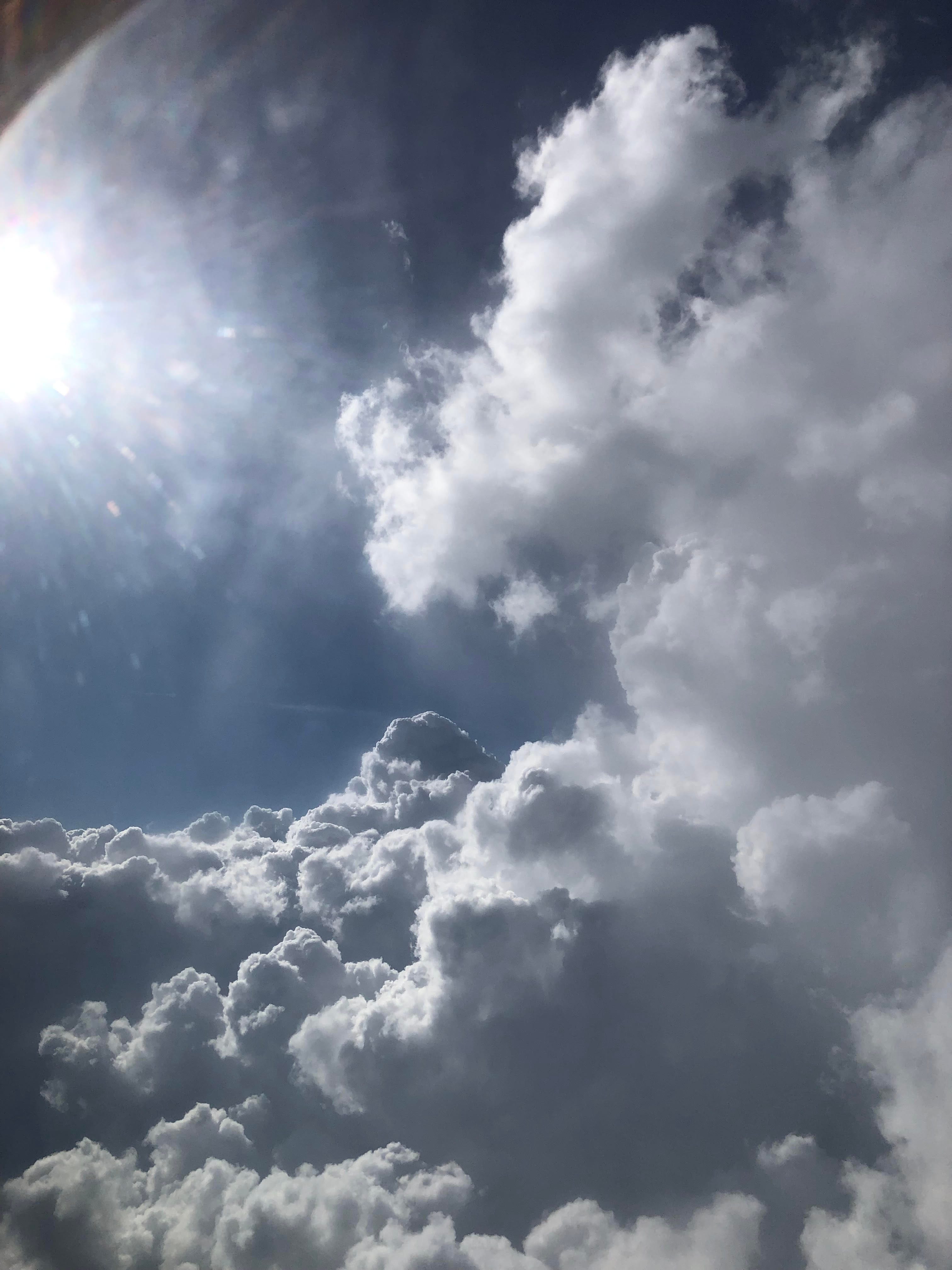
You are about to be buried in El Niño content.
Over the past week, headlines have escalated from cautious to cinematic. CNN is warning of a “Super El Niño.” The Washington Post says it could bring “extreme heat, droughts, strong floods.” University at Albany Professor of Atmospheric Science Paul Roundy says there is “real potential for the strongest El Niño event in 140 years.” The European forecast models are producing projections that, according to Yale Climate Connections, literally went off the high end of the scale.
Some of this is real. Some of it is weather media doing what weather media does — turning probability into panic. And for Vermonters, the truth is more nuanced than either the alarm or the dismissal.
Here is what is actually happening, what it means for Vermont, and — because this story deserves honesty, not hype — the range of outcomes from worst to best in every category that matters to your life.
What’s Happening in the Pacific
NOAA issued an El Niño Watch in March, giving a 62% chance that El Niño conditions will emerge by summer 2026 and persist through at least the end of the year. That alone is notable but not unusual.
What is unusual is the intensity the models are projecting. Roughly half of the European Centre for Medium-Range Weather Forecasts (ECMWF) ensemble is calling for sea surface temperatures in the main El Niño monitoring region — known as Niño 3.4 — to exceed 2.5°C above the seasonal average by October. A “Super El Niño” is an informal designation, but it generally refers to events where that anomaly exceeds 2.0°C. Since 1950, only a handful of El Niño events have crossed that threshold — four or five, depending on the index used. Only one — in 2015-16 — pushed past 2.5°C.
If the current projections hold, the ECMWF ensemble suggests this event could surpass them all.
There is an important caveat. Forecasters acknowledge what they call the “spring prediction barrier” — a well-documented phenomenon in which ENSO projections made during the spring tend to have lower accuracy than those made at other times of the year. In other words, the signal is strong, but it is early. We will know much more by mid-summer.
Vermont’s Awkward Position
Here is where the national coverage will fail you.
El Niño’s strongest and most predictable impacts hit the West Coast (particularly California, which gets hammered with storms), the southern tier of the United States (more precipitation, flooding risk), and the tropics (suppressed Atlantic hurricane season, drought in parts of Southeast Asia and Australia).
Vermont sits in what climate scientists call ENSO’s “gray zone.”
UVM State Climatologist Lesley-Ann Dupigny-Giroux has explained it simply: when El Niño occurs, California feels a “very, very direct influence.” Vermont, removed both in latitude and longitude from the Pacific’s influence zone, feels the effects less strongly. NOAA’s own analysis says the relationship between El Niño and Northeast weather “is not very strong.”
That does not mean there is no impact. It means the impact is probabilistic, not deterministic — and it means other atmospheric factors, particularly the North Atlantic Oscillation (NAO) and the behavior of the Polar Vortex, often matter more to Vermont’s actual winter weather than what the tropical Pacific is doing.
With that honest framing established, here is the range of outcomes across the categories that matter most.
Skiing and the Winter Economy
Why it matters: Snow activities contributed $220 million to Vermont’s GDP in 2023 — the single largest contributor to the state’s $2.1 billion outdoor recreation economy. Vermont’s alpine ski areas reported 4.16 million skier visits in 2024-25, making it the top ski state in the East and fourth-largest in the nation. Skiing is a critical employer in rural communities where few other economic engines exist.
The worst case: A repeat of 2015-16, the last Super El Niño winter. That season left New England warm and dry. Vermont SKI+RIDE Magazine described it bluntly: El Niño “cursed us.” The snow base at resorts like Mount Snow was minimal heading into the critical Christmas-to-New Year’s week — which can represent 20% of a resort’s annual revenue. Temperatures stayed stubbornly above freezing, limiting even snowmaking windows. Cross-country ski areas, which largely depend on natural snow, were devastated. Statewide skier visits cratered to 3.2 million that season — a 32% drop from the 4.7 million visits recorded the previous winter. A super event in 2026-27 that mimics 2015-16 would mean a warm, low-snow winter with shorter seasons, reduced skier visits, and a painful ripple through the lodging, restaurant, and retail businesses that depend on ski traffic — particularly in the northern mountains where Canadian visitors (up to 50% of traffic at some resorts) are already suppressed by trade tensions.
The best case: El Niño winters are not uniformly bad for New England. During the moderate El Niño winters of 2006-07 and 2009-10, the season started slowly but major storms delivered significant snowfall — including a January 2010 event that dumped more than 33 inches on Burlington, one of the city’s largest single-storm totals on record. Historically, even during El Niño years, the Northeast has seen above-average snowfall when individual Nor’easters break through. Vermont’s ski areas have also invested heavily in snowmaking efficiency over the past two decades, making them far more resilient to marginal temperature swings than they were during past El Niño cycles. If the NAO cooperates and the Polar Vortex weakens (sending cold air south), Vermont could still string together enough cold, snowy stretches to deliver a respectable season — particularly at higher-elevation resorts like Jay Peak, Stowe, and Sugarbush.
Bottom line: Elevated risk of a poor ski season. Not a certainty. Mountains will fare better than valleys. Snowmaking is the insurance policy. Watch the NAO more than El Niño for week-to-week forecasts.
Flooding and Extreme Precipitation
Why it matters: Vermont is among the most flood-vulnerable states in the country. The state has endured two catastrophic flooding events in the past three years — the Great Vermont Flood of July 2023, which devastated Montpelier, Barre, and Ludlow, and the July 2024 storms that hammered the Northeast Kingdom with up to eight inches of rain in 24 hours. Washington County is now tied for the second-most disaster-prone county in America by federal disaster declarations from 2011 through 2023. As of mid-2025, 264 FEMA home buyout applications were pending from the 2023 and 2024 floods, with only eight homeowners having received payouts.
The worst case: A Super El Niño does not directly cause flooding in Vermont the way it drives storms into California. But it does something more insidious: it accelerates global warming, which supercharges the atmosphere’s ability to hold moisture. The Northeast has already seen a 55% increase in the heaviest precipitation events since the late 1950s, according to NOAA research. One recent study projects that extreme precipitation events will increase by 52% across the Northeast by 2100. In the near term, a warmer winter means more rain events and rain-on-snow events — exactly the combination that causes Vermont’s rivers to jump their banks. If an El Niño-amplified warm pattern delivers heavy rain onto a marginal snowpack in the Green Mountains in late winter or early spring, Vermont’s narrow river valleys — where most of the state’s 650,000 residents live — face serious flood risk. Towns still recovering from 2023 and 2024 would be hit again before they have finished rebuilding.
The best case: El Niño winters in the Northeast tend to bring slightly below-average total precipitation, according to NOAA’s composites. If the pattern holds, Vermont could actually see a drier-than-normal winter with fewer total storm events. The state’s flood preparedness infrastructure has also improved significantly since 2023, with updated hazard mitigation plans, river corridor mapping, and the Flood Ready Vermont program expanding its reach. If the El Niño delivers warm but relatively dry conditions, the flooding risk is manageable — and the state gets more time to complete culvert replacements, buyout programs, and floodplain management upgrades before the next major event.
Bottom line: The direct El Niño-to-Vermont-flooding connection is weak. The indirect connection — through a warmer, wetter atmosphere and more rain-versus-snow events — is real and growing. Vermont’s flood vulnerability is structural, regardless of ENSO phase.
Agriculture and the Growing Season
Why it matters: Vermont’s agricultural sector has been battered by back-to-back flood disasters. The July 2023 flooding and the July 2024 storms caused extensive damage to farmland, roads, and farm infrastructure. One organic vegetable farmer in the Winooski watershed reported losing 75% of his harvest in a single flash flood event. The Vermont Agency of Agriculture is still processing flood loss and damage surveys from both years.
The worst case: A strong El Niño typically means a warmer spring, which sounds beneficial — but it can also mean an erratic growing season. Early warmth followed by late frosts can damage fruit crops (Vermont’s apple orchards and maple syrup operations are particularly sensitive to temperature volatility). A warm, wet pattern increases disease pressure on crops. And if the El Niño intensifies summer heat events — Vermont already averages about 35 extremely hot days by 2050 projections, but a strong El Niño year could pull some of that forward — heat stress on dairy herds and field crops becomes a factor. Dairy farming, already under economic pressure, does not need a summer of heat records on top of everything else.
The best case: A longer, warmer growing season with adequate but not excessive rainfall would actually benefit many Vermont crops. Warmer winters mean lower heating costs for greenhouses and livestock operations. If the El Niño pattern delivers warmth without the extreme precipitation events that have devastated farms in 2023 and 2024, it could be a productive agricultural year. Maple syrup season could shift earlier but still deliver, as long as the freeze-thaw cycles that drive sap flow remain intact through March.
Bottom line: Agriculture is a wild card. The risk is less about El Niño specifically and more about whether the warming pattern delivers its heat in manageable doses or in destructive spikes.
The Bigger Picture: Two Years of Whipsaw
The models are not just projecting a single El Niño event. Climate Impact Company’s constructed analog forecast projects El Niño development through mid-2026, a potentially strong peak in the third quarter, then dissipation in early 2027 — followed by a compensating La Niña returning by mid-to-late 2027 and lasting into early 2028.
That means two consecutive years of ENSO disruption, with opposing effects. An El Niño winter in 2026-27 (warm, less snow) could be followed by a La Niña winter in 2027-28 (historically, La Niña mildly favors snowfall at Vermont’s highest-elevation resorts like Jay, Smuggler’s Notch, and Stowe).
New research published in Nature Communications last December adds another dimension: super El Niño events can reset the global climate for decades afterward, exerting far stronger and more spatially extensive influence on long-term temperature, soil moisture, and sea surface temperature patterns than weaker events.
If the models are right, this is not a one-season weather story. It is a multi-year climate event with global consequences.
And if either 2026 or 2027 — or both — set records for the warmest year in modern instrument history, as CNN and others are projecting, the conversation about Vermont’s long-term climate trajectory will sharpen considerably. Vermont’s winter temperatures have already increased 2.5 times faster than the state’s average annual temperatures. The Vermont Climate Assessment projects that alpine skiing could remain viable until approximately 2050 with the help of snowmaking, but by 2080, the ski season could be shortened by up to a month under high-emissions scenarios. A super El Niño in 2026 would not end Vermont skiing. But it would be a vivid preview of the future the state is already heading toward.
What to Watch
For Vermonters trying to separate signal from noise, here are the dates and indicators that matter:
Mid-summer 2026: NOAA’s updated ENSO forecast will have crossed the spring prediction barrier and carry much more confidence. If El Niño has officially formed by July, the winter outlook becomes serious.
Fall 2026: Watch the NAO and Polar Vortex forecasts. These will tell you more about Vermont’s actual winter weather than the El Niño intensity. A disrupted Polar Vortex sending cold air south could deliver cold snaps and snow even during a strong El Niño.
Ski Vermont’s early-season reporting: Operating days, snowmaking windows, and early-December base depths will be the first real-world signal of how the winter is shaping up.
Municipal flood preparedness: Towns should be using the Flood Ready Vermont Atlas and updating their Local Hazard Mitigation Plans now — not waiting for a crisis. The next major rain event will not care whether it arrives during an El Niño year or not.
The weather fear-casters are warming up. The signal in the Pacific is real. But for Vermont, the honest answer is that we sit in the uncertainty zone — where the outcome depends less on what the tropical ocean does and more on whether the atmospheric wildcards break our way.
That is not the answer that drives clicks. But it is the one that respects your intelligence.
Compass Vermont delivers independent, data-driven journalism that treats you like an adult. If you value reporting that separates signal from noise, subscribe today.
LOL! Just call Jim Cantore! He'll let you know. :) On a more serious note, this Planet we call Home has been around for Billions of years. The "Climate" changes that have taken place over this time is quite astonishing, if we have the Science right. And what is happening today is just the continuation of that Evolution. The warming and cooling of the Oceans is just one of many aspects that "Creates" our Climate. The "Evolution" continues...