


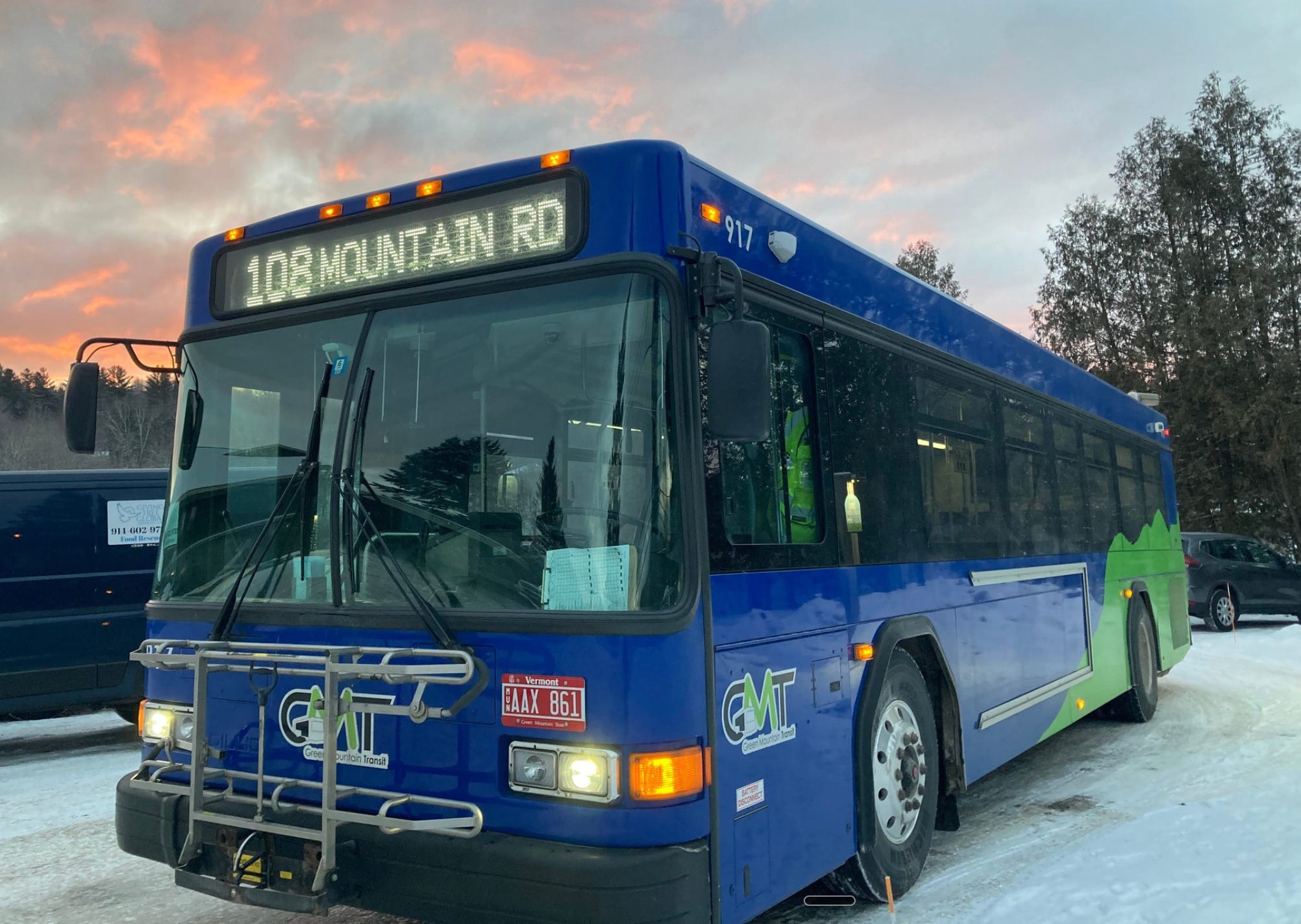
After months of advocacy and state review, Stowe finally succeeded in getting the speed limit lowered on Mountain Road—but the victory came with a compromise. The town requested a reduction from 50 mph to 40 mph on the busy resort corridor, but the state agreed to 45 mph instead. A separate section through Smugglers’ Notch will drop to 35 mph.
The outcome highlights a reality that surprises many Vermonters: towns don’t control speed limits on state highways running through their communities. The process of changing those limits involves state engineers, traffic studies, and a committee that meets quarterly in Barre. For municipalities hoping to slow traffic on their main streets, Stowe’s experience offers a roadmap—and a warning that getting what you ask for isn’t guaranteed.
What Stowe Wanted and What It Got
The Stowe Selectboard’s request was straightforward. In August 2025, they asked the state to lower the speed limit on the Upper Mountain Road section of Route 108, citing concerns about pedestrians, cyclists, buses, and the road’s winding character. The town sought a 40 mph limit for the stretch from mile marker 5.1 to 7.6, which runs through the resort area.
The Vermont Traffic Committee’s December decision split the difference. The main resort corridor will be 45 mph—a 5 mph reduction instead of the requested 10 mph drop. The Smugglers’ Notch section, where new traffic-calming chicanes have been installed, will become a 35 mph zone.
The request was also driven by wildlife concerns. The advocacy group Protect Our Wildlife VT contacted town officials about high speeds and animal collisions, noting that drivers were observed traveling 65 mph in the 50 mph zones.
Why Towns Can’t Just Change the Speed Limit Themselves
Vermont Route 108 is a state highway, which means the Town of Stowe has no authority to set its speed limit. That power belongs exclusively to the Vermont Traffic Committee under state law.
This limitation applies to all state highways, no matter how much they feel like local roads. Even when a state route serves as a town’s main street, with shops, schools, and sidewalks, the municipality can only ask the state to make changes—not mandate them.
Towns function as petitioners in this system. According to VTrans operational guidelines, a town’s governing body may request a speed limit review by writing to the state traffic engineer, but the final decision rests with the state committee.
The Vermont Traffic Committee: Who Decides
The Vermont Traffic Committee consists of three state officials who meet quarterly at the Dill Building in Barre. The committee’s composition includes:
The Secretary of Transportation, who focuses on engineering standards and traffic flow.
The Commissioner of Motor Vehicles, who considers licensing and driver compliance issues.
The Commissioner of Public Safety, who evaluates enforcement feasibility and emergency response needs.
This structure ensures that speed limit decisions balance engineering data, enforcement practicality, and public safety. A limit that looks good on paper might be opposed if police say it’s unenforceable or if engineers determine it doesn’t match how the road actually functions.
The Request Process: What Towns Must Do
When a Vermont municipality wants to change a speed limit on a state highway, the process follows a specific sequence.
Step One: Formal Request
The town’s governing body—typically a selectboard—must vote to submit a formal request to VTrans. The request should explain why the change is needed, citing factors like development patterns, pedestrian activity, crash history, or road geometry. Stowe’s selectboard voted on August 27, 2025 to forward their request to the state.
Step Two: Engineering Review
VTrans assigns a traffic operations engineer to conduct a speed study. This involves measuring actual vehicle speeds over multiple days under normal conditions. The engineer calculates what’s called the “85th percentile speed”—the speed at or below which 85 percent of drivers travel.
Step Three: Staff Recommendation
The traffic operations engineer prepares a recommendation for the Traffic Committee. This recommendation is based on the speed study data, crash history, road characteristics, and whether the current limit aligns with how drivers naturally use the road.
Step Four: Committee Decision
The Traffic Committee reviews the request and the engineer’s recommendation, then votes on whether to approve the change. In Stowe’s case, this happened on December 10, 2025—more than three months after the initial request.
The Engineering Standard: The 85th Percentile Rule
The most important factor in speed limit decisions is the 85th percentile rule, a national traffic engineering standard that Vermont follows.
The principle is straightforward: the safest speed limit is the speed at which 85 percent of drivers naturally travel under free-flowing conditions. Traffic engineers believe that most drivers instinctively choose safe speeds based on road conditions, visibility, and curves, regardless of posted signs.
When VTrans conducts a speed study, they measure actual traffic over several days and calculate this 85th percentile speed. If it’s 48 mph, they typically set the limit at 45 mph (rounding to the nearest 5 mph increment). If it’s 52 mph, the limit would likely be 50 mph.
This explains why Stowe got 45 mph instead of 40 mph. The speed study likely found that 85 percent of drivers were traveling around 48 mph, making 45 mph the appropriate limit under state standards. Setting the limit at 40 mph would have created too large a gap between the posted speed and natural driving speeds.
When speed limits are set significantly below the 85th percentile, traffic engineers worry about “speed variance”—some drivers follow the lower limit while others drive at the speed that feels natural. This mixing of speeds can increase collision risks, particularly rear-end crashes.
Why Some Requests Succeed and Others Fail
Not all speed limit requests result in changes. Comparing Stowe’s outcome with other Vermont towns reveals the factors that influence decisions.
East Middlebury (Denied)
In 2019, Middlebury requested speed limit reductions on Routes 125 and 116. VTrans traffic operations engineer Ian Degutis recommended no change, finding that 85th percentile speeds were within 5 mph of existing limits. When drivers are already complying with the current limit, VTrans typically denies reduction requests.
Weathersfield (Denied)
Weathersfield requested a review of Route 131 in 2023, citing blind driveways and 31 crashes over five years. VTrans found the section didn’t meet “High Crash Location” criteria and that speeds showed moderate compliance, leading to denial.
Stowe (Partially Approved)
Stowe succeeded in getting a reduction, though not to the level requested. This suggests their speed study found a legitimate discrepancy between posted limits and actual road conditions, or that the combination of tourism, development, and infrastructure changes (like the new chicanes) justified the state’s compromise.
The Special Case of Smugglers’ Notch
The 35 mph limit for the Smugglers’ Notch section tells a different story. This part of the approval is linked to physical road changes—specifically, new chicanes at the approach to the pass.
Chicanes are traffic-calming devices that force vehicles to steer back and forth through deliberate horizontal deflections. They physically prevent high speeds rather than just prohibiting them with signs. This represents the state’s preferred approach: when the road itself is changed to naturally slow drivers, the speed limit can be lowered to match.
The Notch section is currently closed for winter, as Route 108 through the pass is gated seasonally due to snow accumulation. The new 35 mph limit won’t take effect until the gates reopen in spring 2026.
Timeline Expectations
Towns should expect the speed limit review process to take several months. Stowe’s timeline illustrates typical pacing:
August 8: Advocacy group contacts town
August 27: Selectboard votes to submit request
September-November: VTrans conducts engineering review and speed study
December 10: Traffic Committee makes decision (3.5 months after request)
Implementation: Signs installed after committee approval
The Vermont Traffic Committee meets quarterly, so timing of a request relative to meeting dates can affect how long the process takes.
What Happens Next in Stowe
New speed limit signs will be installed on Mountain Road in the coming weeks. The 45 mph limit for the Upper Mountain Road section takes effect immediately upon posting. The 35 mph limit for Smugglers’ Notch will become enforceable when the seasonal gates open in late spring.
Enforcement will be critical during the transition period. When speed limits are lowered on roads where drivers have established habits, police presence typically increases to establish the new norm. Stowe drivers should expect closer attention to speeds on Mountain Road as the community adjusts.
The wildlife collision concern that partially motivated the request remains a factor. While 45 mph is slower than 50 mph, it still represents a significant impact speed for animals crossing the road. The speed limit change should remind drivers that the corridor is active wildlife habitat, particularly at dawn and dusk.
Lessons for Other Vermont Towns
Stowe’s experience offers guidance for other municipalities considering speed limit requests:
Document the Issues: Compile crash data, resident complaints, development changes, and specific safety concerns. Quantitative data strengthens requests.
Consider Physical Changes: Requests paired with infrastructure modifications (like Stowe’s chicanes) are more likely to succeed than sign-only requests.
Understand the Standard: The 85th percentile rule means you’re unlikely to get a limit much below the speed most drivers naturally choose. Significant reductions typically require road redesign.
Be Ready to Compromise: The state committee often approves partial reductions rather than full requests, as Stowe experienced.
Allow Time: The process takes months from initial request to implementation. Towns with urgent safety concerns should submit requests well in advance of peak traffic seasons.
For towns frustrated by state control over local highways, an alternative exists: reclassification to Class 1 town highway status, which transfers some regulatory authority to the municipality. However, this also transfers maintenance costs, including plowing and paving—a significant financial consideration.
The Mountain Road speed limit change represents one town’s successful navigation of Vermont’s speed limit process, even if the outcome didn’t match the original goal. For Stowe, a 5 mph reduction may not be the 10 mph drop they sought, but it’s a measurable change on one of the state’s busiest tourist corridors. Whether that change meaningfully improves safety will become clear in the months ahead.