


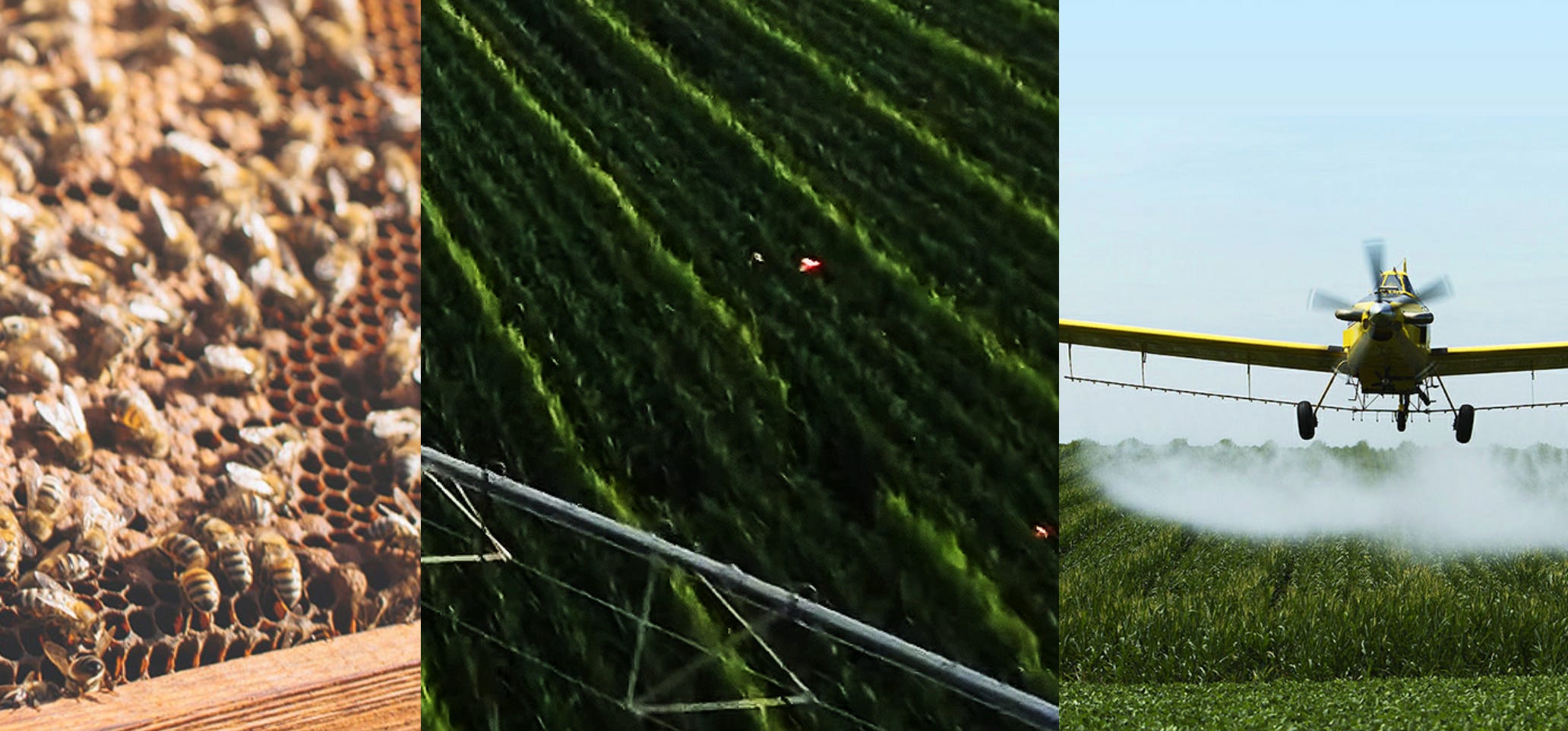
Vermont became the 32nd state to join the FieldWatch registry on February 17, 2026, adding another layer to the Green Mountain State’s already comprehensive pesticide management system.
What Is FieldWatch?
FieldWatch is a digital mapping platform that allows farmers, beekeepers, and pesticide applicators to see each other’s locations and communicate before chemicals are applied. The system includes BeeCheck for apiaries and DriftWatch for specialty crops, using a Google Earth-style interface where registered locations appear as color-coded pins.
The platform originated at Purdue University and is now operated by FieldWatch Inc., a nonprofit headquartered at Purdue Research Park in West Lafayette, Indiana. The organization has expanded across North America through partnerships with state agriculture departments.
Who Governs FieldWatch?
The FieldWatch board of directors includes representatives from four stakeholder groups: producers, applicators, manufacturers, and at-large members. The manufacturing group includes representatives from Bayer Crop Science, BASF, Corteva, and Syngenta—four of the world’s largest agrochemical companies.
This structure reflects what the industry calls “product stewardship,” where manufacturers participate directly in developing tools designed to reduce drift incidents and demonstrate that their products can be used responsibly. For these companies, drift-reduction programs help maintain the viability of their products amid increasing regulatory scrutiny.
Who Pays for “Free”?
While FieldWatch is free for individual users, the system runs on a combination of public and private funding. Vermont joined the registry using a $9,203 federal Specialty Crop Block Grant, part of a program administered by the U.S. Department of Agriculture.
The FieldWatch membership structure shows how the platform sustains itself: states pay an initial $24,500 implementation fee plus $6,500 in annual maintenance. Corporate sponsors pay according to their annual revenues, with companies earning over $3 billion annually contributing $50,000 per year.
Vermont’s broader pesticide monitoring capacity receives additional support through Act H.484, which established a $50-per-product surcharge on pesticide registrations effective July 1, 2025. The Joint Fiscal Office estimates this surcharge will generate approximately $613,000 annually for the state’s Pesticide Monitoring Special Fund, supporting disposal programs, pollinator protection efforts, and water quality monitoring.
The Legal Framework: What FieldWatch Doesn’t Replace
Registering on FieldWatch does not fulfill Vermont’s legal requirements for pesticide applicators. The state’s Rule for Control of Pesticides, Section 5.04, establishes mandatory protections for bees that went into effect February 24, 2023.
Under these rules, applicators must provide at least 48 hours of prior notification to any beekeeper with an apiary “on the premises” before applying pesticides to flowering crops including apples, blueberries, clover, pumpkins, raspberries, and squash. The Vermont Agency of Agriculture, Food and Markets defines “premises” as the specific tract of land where the application occurs.
Additional requirements under Section 5.04 for pesticides highly toxic to bees include temporal restrictions limiting applications to early morning or late evening, a prohibition on spraying when winds exceed nine miles per hour, and mandatory 50-foot buffer zones from pollinator foraging sites unless a 20-foot vegetative barrier exists.
BeeCheck serves as a “best practice” bridge beyond these requirements—encouraging communication with beekeepers within a two-mile foraging radius—but it does not substitute for the legal duty to directly notify those on the same property.
The “Burden of Protection” Question
Some agricultural stakeholders have raised concerns about who bears responsibility for preventing drift damage under voluntary registry systems. Critics note that platforms like FieldWatch can shift the burden of protection onto sensitive-crop producers, who must proactively “pin” their locations to avoid damage from legal chemical applications.
For organic farmers, this concern carries particular weight. A single drift event can result in loss of organic certification for three years, with significant market consequences. At a February 17, 2026 webinar hosted by organic farming organizations, participants discussed challenges including difficulty identifying which neighbor is spraying and what chemicals are being used, the administrative burden of documenting drift incidents, and the perception that organic farmers shouldn’t be responsible for marking their fields to avoid being harmed by a neighbor’s legal activities.
System Limitations
FieldWatch’s effectiveness depends entirely on participation rates. In states with established registries, data suggests beekeepers register at higher rates than pesticide applicators, creating potential gaps in the communication system.
The platform also focuses primarily on managed pollinators rather than the broader ecosystem. During the public comment period for Vermont’s pesticide rules, advocates suggested changing “Protection of Bees” to “Protection of Pollinators.” The Agency declined, noting that Section 5.04 specifically addresses the interests of beekeepers rather than comprehensive pollinator conservation.
Additionally, in areas with high concentrations of specialty crops and apiaries, applicators may face “location overload” when the map displays numerous pins, making it difficult to establish effective buffers for each site.
Vermont’s Four Classes of Applicators
The success of FieldWatch depends significantly on adoption by Vermont’s licensed pesticide applicators. The state recognizes four categories with distinct training and certification requirements: private applicators (farmers applying to their own crops), commercial applicators (those applying for hire), non-commercial applicators (employees applying on employer property), and government applicators (federal, state, or municipal employees).
The Vermont Agency of Agriculture maintains a public database of certified applicators, and the integration of FieldWatch data into training programs represents a move toward digital competency as part of modern pesticide stewardship.
What Happens Next
Vermont farmers and beekeepers can now register their locations through the FieldWatch website. Registration is free and voluntary.
For applicators, checking the FieldWatch map before spraying represents an additional best practice beyond Vermont’s mandatory notification requirements. The Agency of Agriculture and UVM Extension are expected to promote the registry through existing outreach channels.
The registry’s long-term impact will depend on adoption rates across all user groups. State officials and agricultural organizations will likely monitor participation and drift incident reports to assess whether the digital communication layer achieves its intended purpose of reducing conflicts between different farming operations sharing Vermont’s working landscape.
Vermont residents with questions about pesticide regulations can contact the Agency of Agriculture, Food and Markets or access resources through UVM Extension.