


In 2005, Phil Scott had tires he no longer needed. Most mornings, the Republican state senator from Washington County listened to “The Trading Post,” WDEV’s buy-and-sell show. What struck him was how many other Vermonters had tires to sell, according to a 2007 account by Michelle Hughes.
Scott took an idea to Hal Cohen, who ran the Central Vermont Community Action Council, now called Capstone. What if people donated those tires and the money from selling them paid someone else’s heating bill?
Cohen liked the idea. He doubted anyone could pull it off. Then he walked into the first planning meeting and saw who Scott had already lined up.
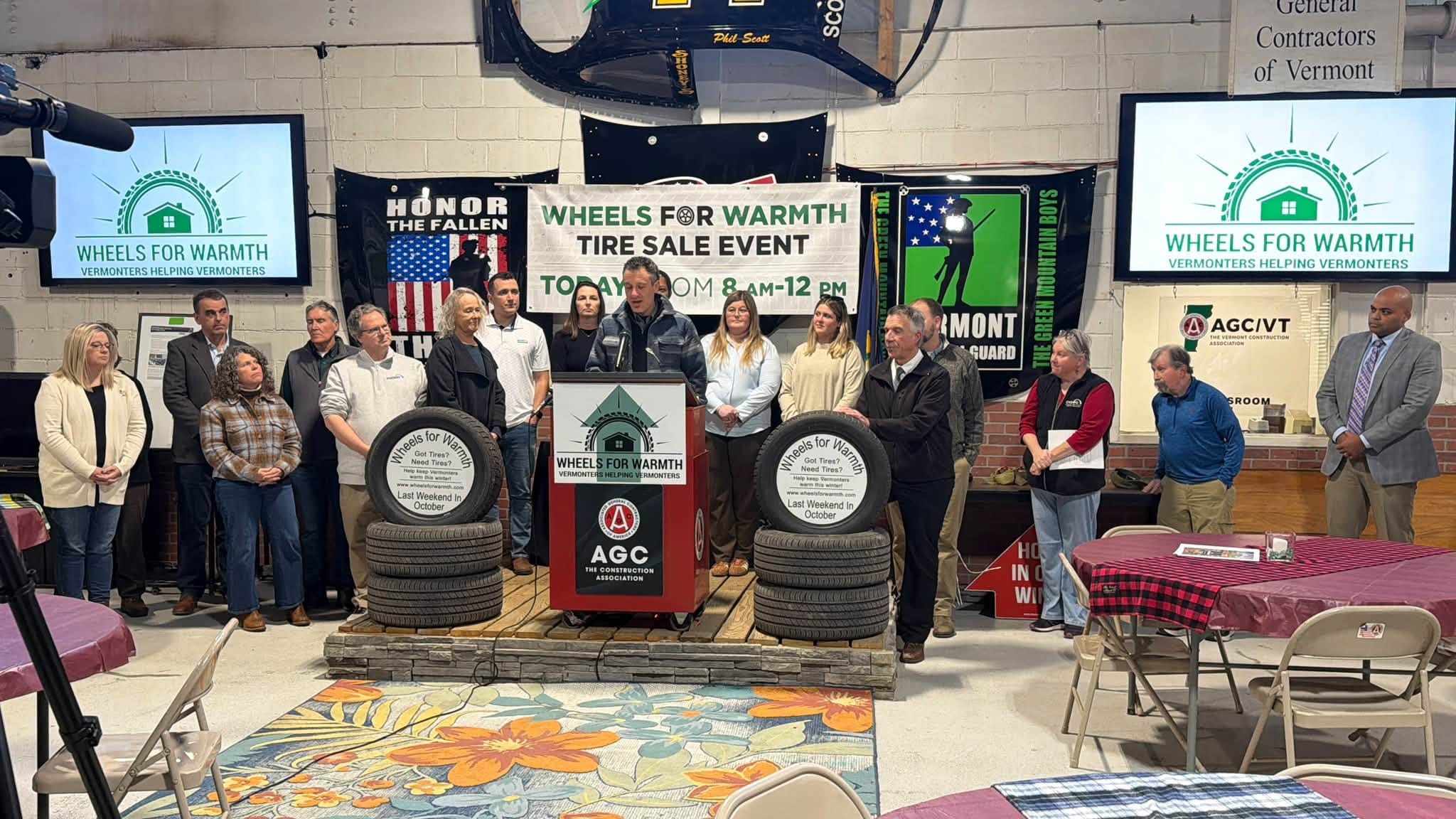
Twenty-one years later, Wheels for Warmth has raised more than $1 million for emergency heating help. On Thursday, organizers announced a record $124,000 from this year’s event.
To make the sale work, Scott had lined up:
Department of Motor Vehicles inspectors to check that donated tires were safe to drive on
WDEV to promote the sale and broadcast live the day of it
DuBois Construction, the company he co-owned, to donate its yard for the sale, plus trailers, staff time and traffic cones
Casella, which agreed to take worn-out tires for recycling at a reduced fee and give half of the recycling fees back to the cause
Even a bald tire could buy someone heat.
Richard Wobby, who grew up in Barre with Scott and now runs the sale as executive vice president of the Associated General Contractors of Vermont, credits two men with getting it off the ground: the late Ken Squier of WDEV and the late Sen. Dick Mazza, a Grand Isle Democrat. Wobby told photographer Paul Rogers last year that without the two of them at the start, the sale would have stumbled. Wobby recalled Squier telling them, “You’ve got to create a circus of this.”
Scott called Mazza his “good friend and mentor” and often said Mazza mentored him when Scott joined the Senate in 2001. When Scott became lieutenant governor on Jan. 6, 2011, Mazza administered his oath of office.
In the speech that followed, Scott held up Wheels for Warmth as an example of what Vermonters can do on their own. Old tires get recycled, good ones go to neighbors, and the proceeds go to heating fuel funds. “So right there, we have solutions to three problems, without a single grant or piece of legislation,” he told the Senate.
Wheels for Warmth has grown from a single sale in DuBois Construction’s yard to a statewide effort. This year, volunteers collected tires around the state and held sales in Barre and Pittsford.
Wheels for Warmth also gives Vermonters somewhere to take old tires. Vermont is one of 14 states with no dedicated scrap-tire program, and a bill to make tire makers pay for disposal died in committee this year, Compass reported in September.
This year’s record comes as heating oil prices have jumped. Vermont heating oil averaged $5.62 a gallon the week of Nov. 16, up from $3.68 the same week last year, according to the U.S. Energy Information Administration. At those prices, this year’s $124,000 could buy about 22,000 gallons. The $115,000 the governor’s office reported last year could have bought about 31,300. That’s about 30% fewer gallons despite the record haul. Heating oil is one of several fuels the agencies help people buy.
The state is adding money too. In October, Scott and Democratic legislative leaders approved $15.3 million in extra heating help, including $2.6 million for Crisis Fuel Assistance, the program that pays for an emergency delivery when a household is about to run out.
In 2007, Hughes wrote about a woman she identified as Earline. A fall and shoulder surgery had left her unable to work. Her husband’s pension put them over the income limit for crisis fuel assistance. Sue Rossi, a worker at Cohen’s agency, found another way to get her fuel. She used the tire money.
Where This Year’s $124,000 Went
Wheels for Warmth split this year’s money among five community action agencies, the regional nonprofits that help low-income Vermonters with heat, food and housing. Each puts its share into its emergency fuel fund:
BROC Community Action: $42,000
Capstone Community Action: $37,000
Champlain Valley Office of Economic Opportunity: $20,000
Northeast Kingdom Community Action: $15,000
Southeastern Vermont Community Action: $10,000