


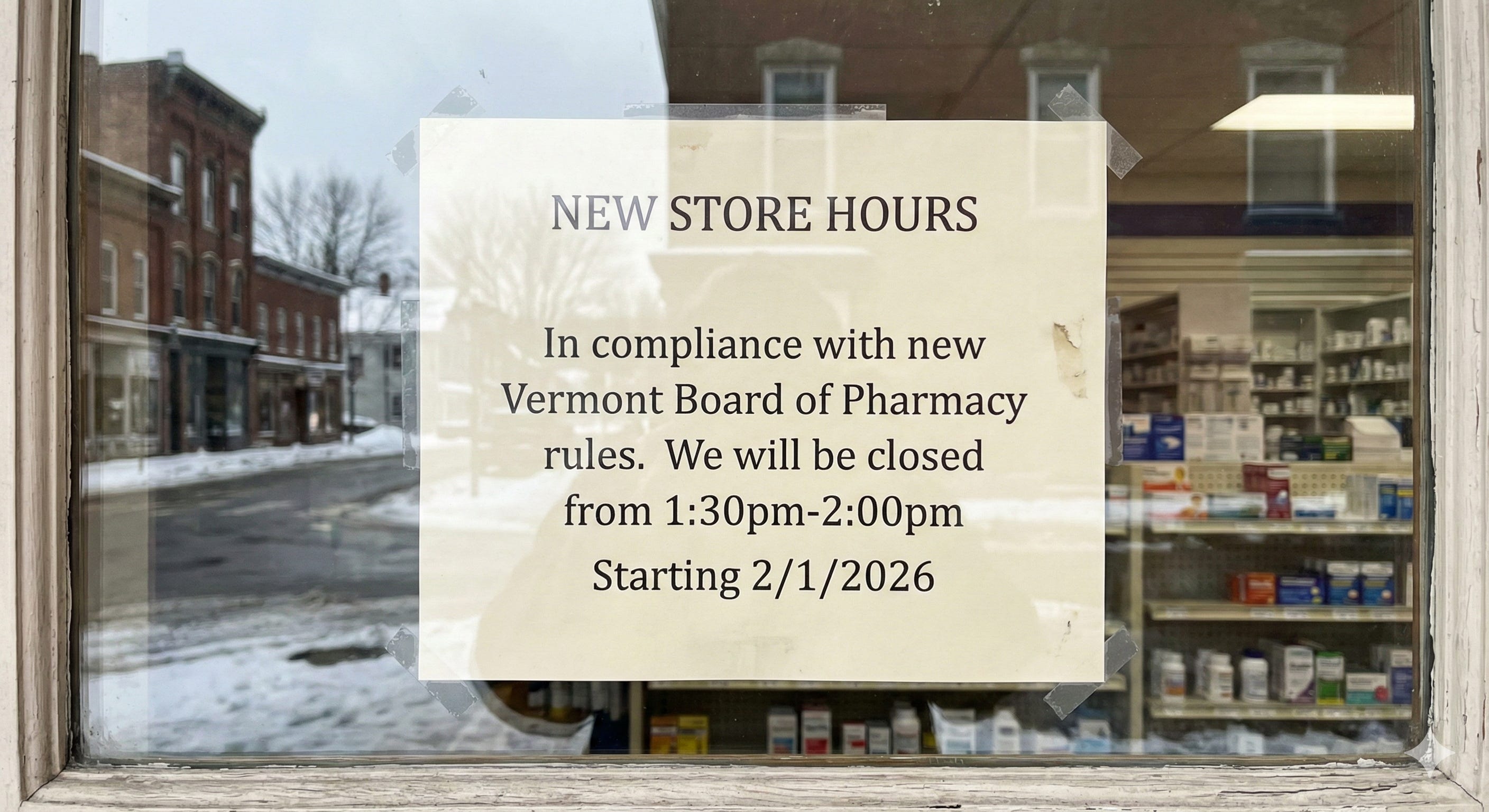
Vermont pharmacy customers may notice a new pattern in their local drugstore hours beginning this month: mid-day closures of 30 minutes or more at pharmacies staffed by a single pharmacist. The change stems from comprehensive revisions to the Vermont Board of Pharmacy’s administrative rules that took effect February 1, 2026—the first major regulatory overhaul since 2015.
The new requirements mandate that pharmacy professionals working shifts of eight hours or longer receive at least one 30-minute break and one 15-minute break during which they cease all pharmacy-related activities. For pharmacies operating with only one pharmacist on duty, compliance means temporary closure of pharmacy services during break periods.
The Regulatory Framework
The Vermont Office of Professional Regulation and the Board of Pharmacy developed the 2026 rules through a multi-year process involving duly-warned public meetings and stakeholder collaboration. The Board operates under statutory authority granted by 26 V.S.A. § 2032, which requires it to establish rules necessary to carry out Vermont’s pharmacy laws.
The final proposed filing submitted to the Legislative Committee on Administrative Rules on October 29, 2025, outlined updates including regulation of outsourcing facilities, third-party logistics providers, pharmacy technician licensing changes, and the new workplace condition standards.
How the Break Rule Works
Under Rule 9(a) of the 2026 administrative rules, pharmacies must ensure any pharmacy professional—including pharmacists, pharmacy technicians, and interns—working an eight-hour or longer shift receives at least one 30-minute break and one 15-minute break. The rules define a “break” as an uninterrupted period during which the professional ceases all activities related to pharmacy practice.
This definition prohibits the “working lunch” model previously common in retail pharmacy settings. During a pharmacist’s 30-minute break at a single-pharmacist location, the pharmacy counter must close because no licensed pharmacist remains available to provide clinical oversight or dispense medications.
Pharmacies employing multiple pharmacists on overlapping shifts can stagger breaks to maintain continuous service. However, Vermont’s many independent and rural pharmacies operating with single-pharmacist staffing must implement temporary closures to comply with the law.
What Can Happen During Closures
The 2026 rules do provide flexibility for certain activities during a pharmacist’s temporary absence. According to Rule 8, pharmacy technicians and interns may continue specific tasks under the pharmacist’s previous authorization:
Non-discretionary tasks not requiring professional judgment
Prescription pickup when the pharmacist has completed final clinical review and the patient declines counseling
Receiving, processing, and preparing prescription orders for the pharmacist’s review upon return
Final drug verification in pharmacies with approved Technician Product Verification programs
Despite these allowances, many pharmacies implement complete closure windows to ensure clear compliance with the “uninterrupted” break requirement and to manage customer expectations.
Background: The Walgreens Investigation
The workplace standards emerged from documented safety failures in Vermont pharmacies. In June 2022, the Office of Professional Regulation filed charges against all 32 Walgreens locations in Vermont based on 70 complaints from employees and customers alleging medication errors, vaccination mistakes, staffing violations, and unplanned store closures.
The 40-page charging document attributed these errors to working conditions regulators described as “untenable,” with pharmacists reporting 12-hour shifts without breaks while managing high volumes of COVID-19 and influenza vaccinations alongside traditional dispensing duties.
Walgreens reached a $275,000 settlement with state regulators in January 2024. The Board of Pharmacy subsequently prioritized codifying workplace standards to prevent recurrence of such conditions at any licensed facility.
Vermont’s Pharmacy Infrastructure Crisis
The regulatory changes occur against a backdrop of significant pharmacy closures statewide. According to VTDigger reporting, 28 pharmacies closed permanently over a five-year period through late 2024, leaving only 126 in operation.
The staffing shortage was compounded by closure of the University of Vermont’s pharmacy school approximately three years before 2024, eliminating the state’s pipeline for new pharmacists. Combined with nationwide professional burnout, Vermont pharmacies face increasing difficulty recruiting licensed staff.
Economic Pressures: PBM Regulation
Independent pharmacies also confront economic challenges from Pharmacy Benefit Managers—intermediaries that control drug pricing and reimbursement. Pharmacists and legislators have identified PBMs as a primary factor in independent pharmacy closures, citing reimbursement rates that sometimes fall below drug acquisition costs.
Vermont responded with H.233 and S.98, legislation requiring PBM licensing by the Department of Financial Regulation and banning practices such as “spread pricing.” The Green Mountain Care Board was required to submit a final drug price regulation plan by January 2026.
Hospital Drug Pricing Reform
Parallel legislation targets hospital pharmaceutical markups. Act 126 established a ceiling for hospital drug charges, capping costs at 130% of average sales price starting July 2025, then dropping to 120% as of January 2026. Analysis found Vermont hospitals previously charged markups exceeding five times the average sales price—the highest rate in the nation.
The law prohibits cost-shifting to offset lost pharmaceutical revenue through higher charges for other services.
Expanded Clinical Roles
The break requirements take on added significance given pharmacists’ expanding clinical responsibilities. Under protocols effective in 2026, Vermont pharmacists may prescribe:
Opioid antagonists including naloxone for overdose prevention
Self-administered hormonal contraceptives
Tobacco cessation products and nicotine replacement therapies
Emergency medications including albuterol and glucagon
Tuberculin testing products
Vermont pharmacists also retain authority to administer COVID-19 and influenza vaccines to individuals as young as five years old. The workload increase during vaccination seasons—particularly evident during the pandemic response—contributed to the burnout and errors documented in the Walgreens investigation.
Regional Implementation Patterns
Kinney Drugs locations across Vermont demonstrate varied approaches to implementing break closures. Multiple Kinney locations utilize 1:00 PM to 1:30 PM closure windows on weekdays, while other pharmacies have selected different 30-minute periods based on local traffic patterns and operational needs.
The rules mandate that breaks be provided but leave specific timing to pharmacy managers’ professional judgment.
Telepharmacy Provisions
The 2026 rules include provisions for out-of-state telepharmacist licensing, allowing pharmacists located outside Vermont to provide clinical services and verify prescriptions for Vermont residents via audiovisual links. This framework could provide relief for rural pharmacies struggling with on-site staffing by enabling central pharmacists to cover multiple locations.
The rules require that if telecommunication links between a satellite pharmacy and coordinating pharmacist are interrupted, the remote site must immediately cease operations.
What Happens Next
Vermont pharmacies have begun implementing the February 1 requirements, with single-pharmacist locations incorporating 30-minute closure periods into daily schedules. The Board of Pharmacy maintains a waiver process for its rules, though waivers are granted at the Board’s sole discretion and are considered unlikely for rest period requirements given their role in addressing documented safety violations.
The Green Mountain Care Board’s drug price regulation program implementation continues under the January 2026 deadline established by S.98. Hospital drug pricing caps at 120% of average sales price are now in effect as of this month.
Pharmacy customers can expect mid-day closure windows to become standard practice at single-pharmacist locations statewide, with specific timing varying by location. Pharmacies with multiple pharmacists on duty will continue providing uninterrupted service through staggered break schedules.
The Vermont Pharmacists Association provides resources on workplace conditions and professional wellbeing for licensed pharmacy professionals navigating the new requirements.