

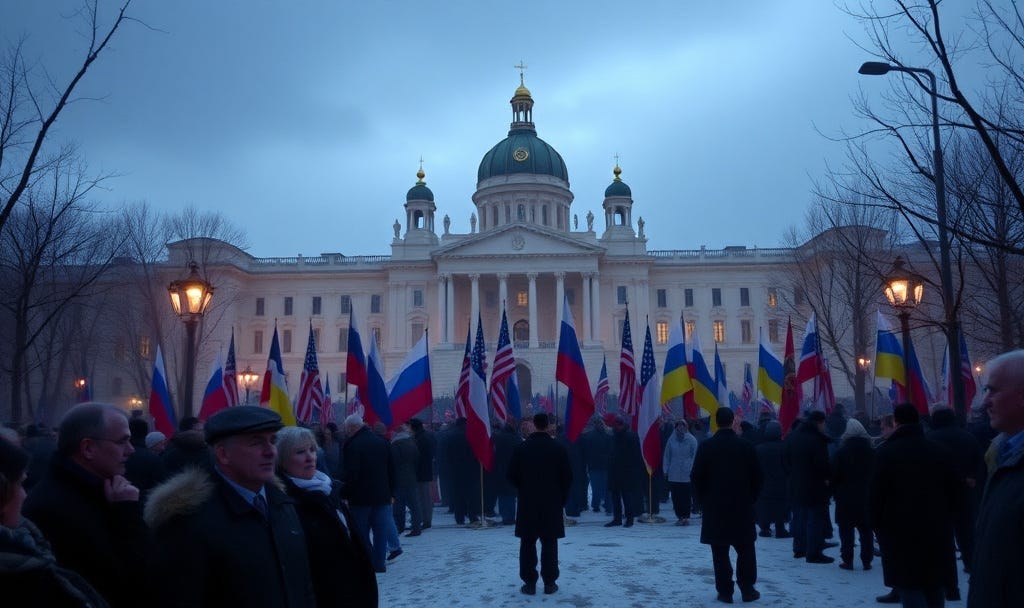
The conflict in Ukraine is often viewed as a series of sudden escalations, but a deeper analysis reveals it is the result of a decade-long “signaling system” between Washington and Moscow.
This article, authored by Dr. James M. Deitch, argues that Russian strategic gains were not merely the result of Kremlin ambition, but were actively shaped by the shifting policies of four successive U.S. administrations. By treating American policy as a sequence of signals rather than isolated events, Deitch illustrates how variations in U.S. resolve—ranging from restraint and inconsistency to calibrated escalation and eventual accommodation—created the strategic environment Moscow exploited to advance its territorial goals.
Summary of Findings
Policy as a Signaling System: U.S. actions (and inactions) served as a communication tool that Russia used to map American “red lines” and risk tolerance.
Cumulative Effect: Rather than individual administrations acting in a vacuum, the continuity of strategic effects across partisan divides informed Russian expectations over time.
Deterrence Gaps: The transition from Obama’s restraint to Trump’s volatility, followed by Biden’s calibrated support, signaled a lack of long-term U.S. commitment, emboldening Russian persistence.
Leverage Recalibration: The current shift toward ceasefire diplomacy in 2025 is interpreted by the Kremlin as “Western fatigue,” granting Moscow significant leverage in negotiating a settlement that favors Russian territorial annexations.
The Voices on Peace and War Forum
Voices on Peace and War (VPW) is an intellectual forum sponsored by the John and Mary Frances Patton Peace & War Center at Norwich University. The forum features subject matter experts, faculty, and students who present evidence-based opinions on critical global issues. Co-edited by Dr. Yangmo Ku and Dr. Dan Morris, VPW seeks to provide a platform for “a chorus of small voices” to help navigate and illuminate the complex challenges of the international community, focusing specifically on the intersection of political science, philosophy, and military history.
Summary of the Story
The article traces a decade of geopolitical maneuvering through the lens of four U.S. presidencies:
The Obama Administration: Following the 2014 annexation of Crimea, the U.S. opted for sanctions but withheld lethal aid. This “restraint” signaled to Putin that the U.S. was unwilling to risk direct confrontation, establishing a strategic baseline for Russian expansion in the Donbas.
The First Trump Administration: Policy was defined by contradiction. While the U.S. finally provided Javelin missiles, the 2019 hold on military aid for political leverage introduced volatility that weakened the credibility of U.S. deterrence.
The Biden Administration: In response to the 2022 full-scale invasion, the U.S. moved to “industrialized support,” providing over $66 billion in aid. However, the calibrated nature of this support—balancing aid with a fear of escalation—allowed the war to become a protracted conflict of attrition.
The Current Trump Administration (2025-2026): The return to office brought a pivot toward “ceasefire diplomacy.” A proposed 28-point settlement plan includes Ukrainian neutrality and recognition of Russian territorial gains. This shift has reinforced Moscow’s maximalist negotiating posture, as the Kremlin perceives a fraying of Western unity and resolve.
The piece concludes that the primary lesson of the last ten years is that deterrence requires coherent, sustained signaling. Without institutional mechanisms to ensure policy continuity across administrations, adversaries like Russia will continue to exploit the “gaps” created by the American political cycle.
Link to Article
Read the full analysis here: Signals and Consequences: How U.S. Policy Shaped Russian Strategy and Negotiation Leverage in Ukraine, 2014-2025
Excellent summary of an excellent essay. For me, it reinforces the point that a key tenet of our government structure must be continuity of policy. Americans in general do not understand history, our own or world history, but it is very significant in the way that the rest of the world looks at relationships between nations. We need to maintain and support highly knowledgeable experts who can develop and maintain a coherent US policy across successive administrations rather than allowing political hacks to replace them with people who are not qualified and whose loyalties are not to good policy but to the political issue of the moment.