


At the bottom: how to apply for Killington’s employee housing, what it takes to rent your own place near Killington or Burlington, and three questions to ask before you take a job that comes with a bed.
A winter worker approved for housing at Killington Resort needs $550 to move in. That covers two weeks in a shared double room and a $300 refundable deposit. The worker also agrees to move out when the seasonal job ends.
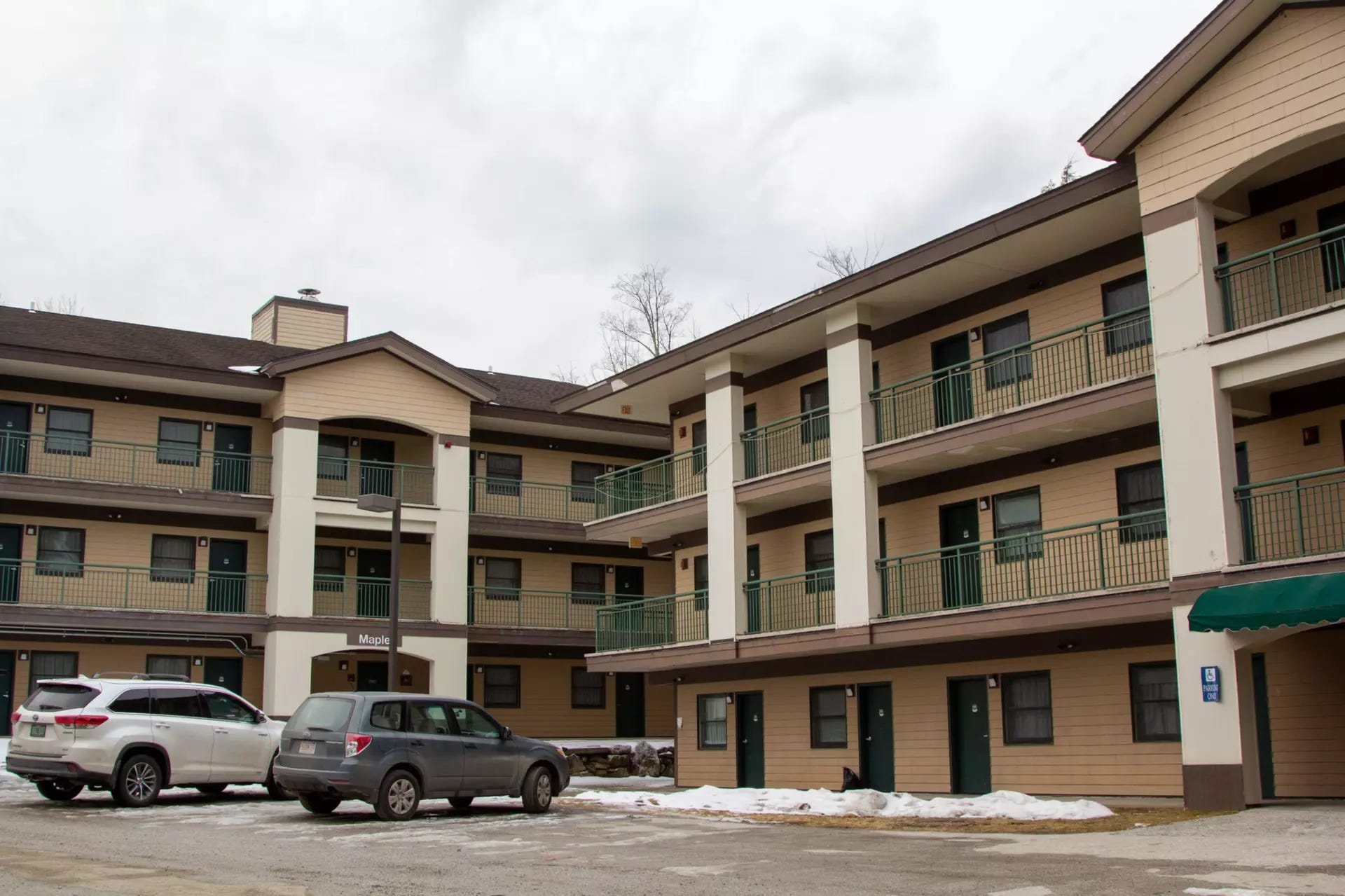
A decade ago, seasonal workers, including employees from overseas, could find affordable rentals in nearby communities such as Rutland, Killington CEO Mike Solimano told Susan Collins, president of the Federal Reserve Bank of Boston. As those rentals grew scarce and expensive, the resort began buying buildings and subsidizing the rent.
During Collins’ Nov. 9 visit to Vermont, Solimano put the resort’s investment at around $7 million over about seven years for four buildings with roughly 350 beds, according to the Boston Fed. That works out to about $20,000 per bed.
“So, this is something we’ve invested in that 10 years ago we didn’t even have to do,” Solimano said.
Under its previous owner, Powdr, the resort bought the Mendon Mountain View Lodge in 2018 and the Hillside Inn in 2022.
Chris Karr, whose company, The Karr Group, runs restaurants, nightlife and retail venues around Killington, said it invests in employee lodging too.
“That’s not investing (directly into) our business, but it’s just more to keep staff in place, or to attract them, and that’s tough,” he said.
What $125 a Week Buys
The resort’s housing page lists four properties. Along with the Hillside and the Mendon lodge, employees live at the Chalet and the Killington Motel. A double room comes with a twin or queen bed, a full bath, a shared closet, a small fridge and a microwave. Cooking appliances are in common areas. Laundry is coin-operated, a linen package costs $35 and pets are not allowed.
The resort accepts applications from full-time Killington/Pico employees who are at least 18 and have accepted a job offer. Applicants agree to leave at the end of their seasonal employment. The resort also lists limited private transitional housing for new year-round staff.
What a Place of Your Own Costs Near Killington
The resort bed averages about $542 a month. For a worker who wants to stay in the area and live alone, the federal rent benchmark for a one-bedroom in Rutland County is $1,178 a month this winter. That benchmark, known as the fair market rent, is HUD’s estimate of what a modest apartment costs, including basic utilities. Going from a shared room to a one-bedroom apartment at that rent would add about $636 a month.
To spend 30% of gross income on that one-bedroom, a household would need $47,120 a year. For one person working 40 hours a week year-round, that comes to $22.65 an hour. For context, the National Low Income Housing Coalition estimated Vermont’s average renter wage at $19.31 an hour in its 2026 report.
Six to Nine Months to Find a Home
BETA Technologies uses housing to help people move to Vermont for year-round work. The South Burlington electric aircraft maker owns housing that it rents to new hires for six to nine months while they look for a home, chief information officer Blain Newton told the Waitsfield roundtable. The Fed’s account adds: if they can.
The Boston Fed put the company’s workforce at about 1,500, including 650 added this year. Newton said BETA plans to add thousands more jobs in the coming years. On housing, he said, “We found enough ways to make it work, but we see a wall coming, probably sooner than later, where we just struggle.”
The current federal rent benchmark for the Burlington area is $1,719 a month for a one-bedroom apartment and $2,165 for a two-bedroom. For the two-bedroom, a household would need $86,600 a year to keep housing costs at 30% of gross income.
What Happens When the Housing Ends
The Fed’s published account gives no figures for how many Killington or BETA workers moved from company housing into homes of their own, or how many left a job because they couldn’t find a place.
At the University of Vermont Health Network, the difficulty finding long-term housing has cost the employer staff. According to a 2024 Vermont Housing Finance Agency case study, some new employees resigned within months because they couldn’t find long-term housing. Some prospective hires turned down job offers because they couldn’t find housing or child care.
For employers that own housing, the agency’s guide recommends giving workers who lose their jobs time to find work and move. It also recommends leases workers can renew if they change jobs. Killington’s published seasonal terms tie the stay to the end of the job.
Before You Take a Job That Comes With Housing
Here’s what you need to weigh the offer and decide for yourself.
Applying at Killington
Once you’ve accepted a job offer, you can apply for winter housing. The application isn’t a guarantee. A separate confirmation email tells you whether you have a bed.
Due at move-in: $550, which is the first two weeks’ rent ($250) plus a $300 refundable deposit, paid in full.
Year-round hires: for private transitional housing, email kpemployeehousing@killington.com.
Summer 2027: applications open April 1. The resort says it deletes early summer applications.
What a place of your own costs
Rutland County one-bedroom: $1,178 a month, or $22.65 an hour full time to keep rent at 30% of income.
Burlington-area two-bedroom: $2,165 a month, or $86,600 a year.
Statewide: the coalition’s July 2026 report put the Vermont one-bedroom rent benchmark at $1,331 a month and the two-bedroom at $1,684. That translated to $25.60 and $32.38 an hour for a person working full time year-round. HUD’s newer local figures above took effect Oct. 1.
Your own town: compare rents where you plan to live with your community’s profile at housingdata.org.
Before committing, ask for the lease and check three things
Can you renew the lease if you change jobs?
How long do you have to move if your job ends early?
What will a place nearby cost on the pay and hours you’ve been offered?