


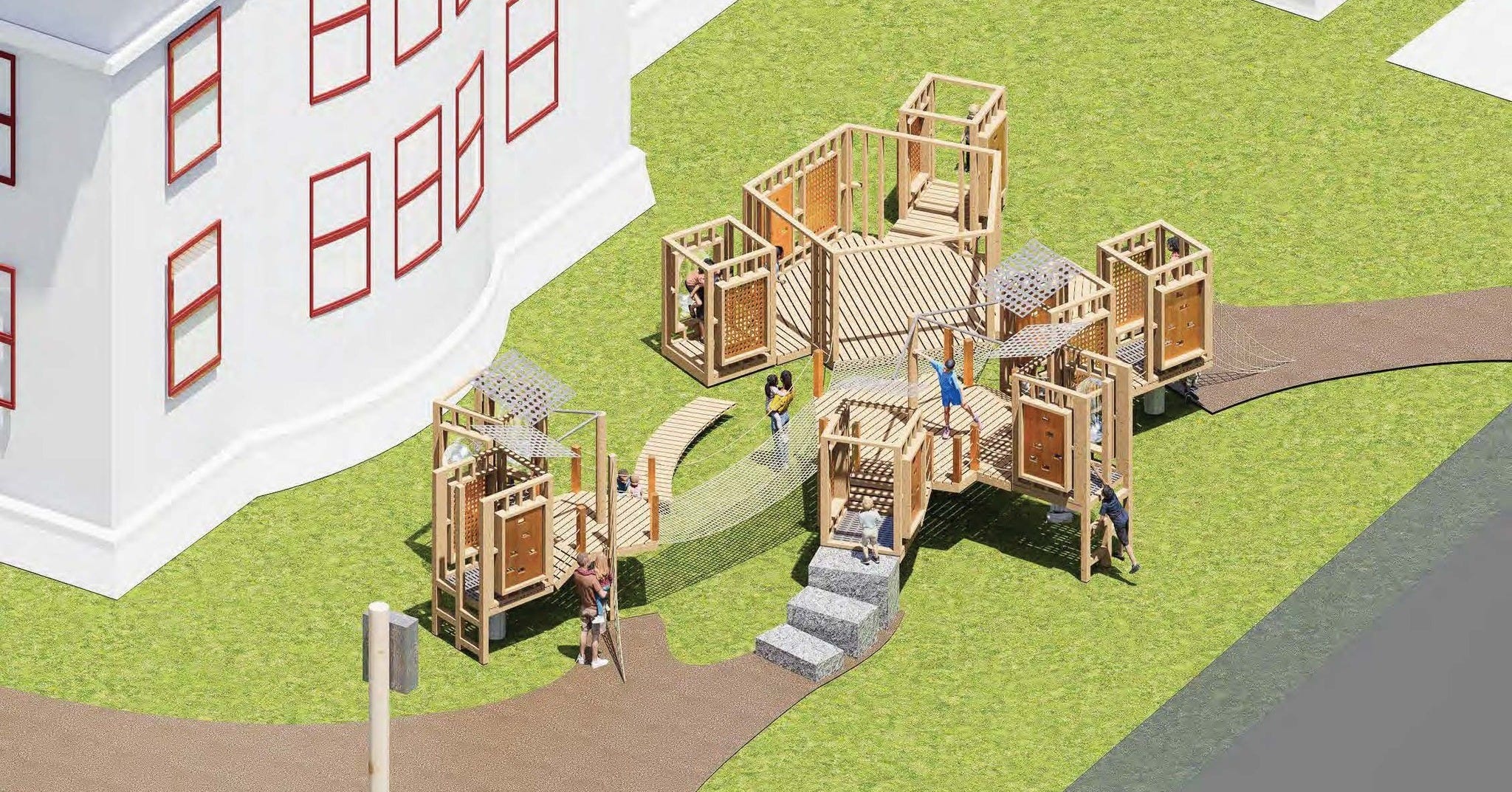
The Kellogg-Hubbard Library in Montpelier is moving forward with an ambitious project to create an interactive play structure on its School Street lawn, partnering with Norwich University’s Design+Build Collaborative for the “Time to Play” initiative.
The project represents a significant milestone in the library’s recovery from the 2023 flooding that damaged many of its mechanical systems, marking a transition from emergency repairs to strategic community improvements. Executive Director Dan Groberg and his team are positioning the play structure as both a practical addition to children’s programming and a symbol of institutional resilience.
Understanding the Kellogg-Hubbard Library’s Unique Structure
Unlike typical municipal libraries, Kellogg-Hubbard operates as a 501(c)(3) non-profit organization, established in 1895. The library derives approximately 50% of its funding from private donors, with the remainder coming from municipal assessments from Montpelier, Middlesex, and East Montpelier.
The library serves as Vermont’s busiest public library, with the highest circulation in the state and approximately 150,000 annual visits. The 19th-century granite building houses over 60,000 volumes and includes a 5,500-square-foot addition that houses the Children’s Library.
The Norwich University Partnership and Academic Framework
The project is led by Tolya Stonorov, Associate Professor of Architecture and Associate Director of Norwich University’s School of Architecture + Art. Stonorov’s work focuses on sustainable materials and methods to address social needs, with her program emphasizing the concept of the “Citizen Architect” where students tackle real-world community projects.
The Design+Build Collaborative has received significant recognition, including AIA Vermont Design Awards and current inclusion in the 2025 Venice Biennale Time Space Existence exhibition. The Venice installation, titled “Architecture as an Agent of Environmental and Social Repair,” showcases projects addressing affordable housing and community needs.
Students in the program follow a rigorous process that includes studying architectural precedents, exploring material connections, and engaging directly with the community. For this project, the class attended the library’s “Builders” afternoon program to gather input from young patrons about their play preferences.
Two Design Concepts Under Community Review
The library is seeking public feedback on two primary design proposals developed by the Norwich students: “The Bridge” and “Over Under Through”.
“The Bridge” Concept This design focuses on connectivity and passage, encouraging children to move from one play state to another across an elevated or defined path. The concept aligns with themes of transition and community connection, potentially referencing Montpelier’s community newspaper of the same name.
“Over Under Through” Concept This approach emphasizes kinetic exploration and spatial relationships, challenging children to navigate the structure through varied physical movements across multiple levels. The design incorporates contemporary theories of “risky play” that build confidence through managed physical challenges.
Community members can view models of both designs in the Children’s Library and provide feedback to help inform the final selection.
Complex Municipal Review Process Ahead
The project must navigate an extensive regulatory approval process through multiple city boards and commissions. Montpelier’s Zoning and Subdivision Regulations govern developments in the historic downtown area, with specific requirements for lot coverage, setbacks, and safety considerations.
The scheduled municipal review timeline includes:
February 9, 2026: Recreation Advisory Board review of community impact
February 10, 2026: Historic Preservation Commission assessment of visual impact on the historic district
February 17, 2026: Design Review Committee for architectural compliance and Development Review Board formal permit hearing
February 23, 2026: Planning Commission review for alignment with the 2025 City Plan
March 2, 2026: Follow-up Design Review Committee and potential final Development Review Board decision
Each board applies different criteria, from historic preservation standards to zoning compliance and recreational asset management.
Funding Strategy and Community Philanthropy
The library’s Fund Development Committee is pursuing a strategic fundraising approach that leverages the library’s unique 50/50 funding model. The plan involves identifying major donors interested specifically in children’s library projects before launching a broader community campaign.
This “quiet phase” fundraising approach is designed to build momentum and demonstrate project feasibility to the general public. The project aligns with the library’s 2026-2028 strategic plan, which incorporated feedback from 184 community survey responses to determine future service priorities.
Accessibility and Design Considerations
The project emphasizes accessibility, though this presents unique challenges for an outdoor structure on a natural grass lawn. True universal accessibility typically requires specialized surfacing and rigid pathways, considerations that must be balanced with the historic character of the downtown setting.
The Norwich students’ research into materials and surface connections aims to create sensory-rich elements that appeal to children with different cognitive and sensory needs. The team’s previous work includes the “NEST” play structure at Union Elementary School, which serves as a local precedent for inclusive design approaches.
Recovery and Community Resilience Context
The “Time to Play” project represents a significant milestone in the library’s recovery from the July 2023 flooding that rendered many mechanical systems inoperable. The library staff operated systems manually for months while coordinating closely with FEMA on recovery efforts.
The completion of flood recovery work has allowed the library to shift from defensive maintenance to strategic growth initiatives. The play structure serves as both a practical enhancement to children’s programming and a visible symbol of institutional resilience and community investment in the future.
What Happens Next
The community feedback period continues through February, with physical models available for viewing in the Children’s Library and online input opportunities. The Norwich University students will incorporate community preferences into their final design selection.
The project must successfully navigate the February and March municipal review process, with at least four different boards applying their respective criteria for approval. Simultaneously, the library’s fundraising efforts must secure the necessary financial commitments to move forward with construction.
If approvals and funding align, installation is planned for spring 2026, coinciding with the completion of the one-semester Design+Build studio course. The structure would then become a permanent addition to downtown Montpelier’s landscape, serving families while demonstrating the potential for academic-community partnerships in addressing local needs.
The success of “Time to Play” will depend on balancing community desires for active play space with historic preservation requirements, accessibility standards, and the practical realities of maintaining a student-built structure through Vermont’s challenging seasonal conditions.