


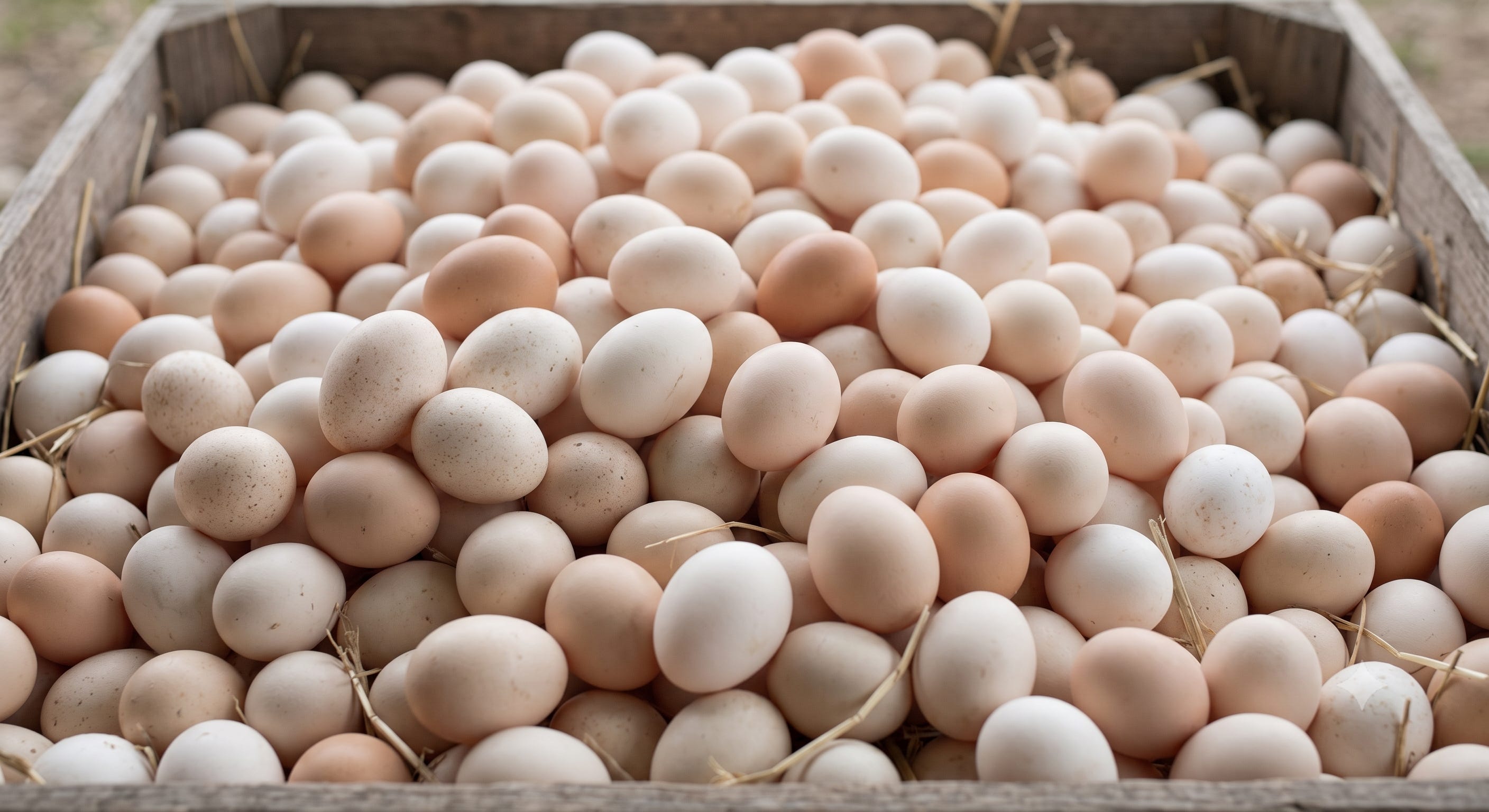
There is an old Vermont way of settling a debt that doesn’t require much cash to change hands. A cord of firewood squares the account for a patched roof. A side of beef covers the vet bill. A few dozen eggs settle a favor between neighbors.
Vermont is about to close out a considerably larger account the same way — in eggs.
Attorney General Charity Clark announced June 30 that three of the country’s largest egg producers will deliver roughly 915,000 eggs to the Vermont Foodbank and community organizations, along with $56,000 in cash, to resolve allegations that they spent years coordinating to drive up the price of eggs across the country. Nationally, the deal runs to 53 million eggs and $3.3 million across 17 states.
So: caught rigging the price of eggs, the egg companies are settling up in eggs. There is a certain Vermont logic to it.
How the price got rigged
The mechanics are worth a plain-English minute, because this is not the bird-flu story most people remember.
From roughly June 2022 to March 2025, investigators say, Cal-Maine Foods, Versova/Centrum, and Hickman’s Egg Ranch secretly coordinated to influence the daily egg price quotes published by Urner Barry, a benchmark service whose numbers are written into egg supply contracts nationwide. Nudge that benchmark up, and the higher price flows automatically to grocery shelves — no company ever has to be seen raising a price itself.
The release quotes a December 2022 email in which the CEO of Hickman’s urged executives at the other two companies to submit “strong bids, early and often” to push the number higher. The companies then submitted dozens of bids at higher prices, the quotes rose, and so did the cost of a dozen eggs.
Avian flu was real and did thin the national flock. What the settlement alleges is that, on top of a genuine shortage, the biggest producers were quietly leaning on the scale.
In the food bank world, eggs are gold
Here is where the barter is a tidy fit.
Eggs are not surplus being dumped on people who can’t use them. They are one of the items food shelves most struggle to keep on hand. “Eggs are one of the most high-demand items from our neighbors, and it has become increasingly difficult to purchase enough to meet the demand,” said John Sayles, CEO of the Vermont Foodbank, who noted that both prices and demand for fresh protein are rising. As barter goes, this is good trade: the Foodbank moves food through more than 200 partner sites statewide, and fresh protein is exactly what it can’t get enough of.
For a sense of scale — strictly as a comparison, not a baseline — a single 2021 summer partnership with Food Connects and Dreamwalker Farm brought the Foodbank more than 14,000 dozen eggs. Vermont’s settlement share is roughly 76,000 dozen, several times that one season’s haul. (The Foodbank doesn’t publish an annual egg figure, so the comparison is the cleanest yardstick available.)
Credit where it’s due: Clark’s office, working with the U.S. Justice Department and 16 other states, turned a multistate price-fixing case into close to a million eggs for Vermont food shelves — and the companies are now required to stop coordinating, install antitrust compliance officers, and cooperate with oversight.
Trade does have two sides, though, and there’s one account this deal doesn’t settle. The state gets eggs and a little cash. The Foodbank gets eggs. The shoppers who actually paid the inflated prices, for the better part of three years, get the eggs only if they happen to visit a food shelf. As in most cases like this, the settlement returns no money to consumers. It’s the one debt left paid in satisfaction rather than trade.
And in keeping with the spirit of the thing, nobody is admitting much. According to Reuters, Cal-Maine Foods has denied any wrongdoing and says it faced no fines or penalties in the deal; its share — $1.5 million and 30 million eggs of the national totals — reflects an agreement to put compliance measures in place, not a penalty.
None of which changes what shows up at the food shelf. The eggs are real, Vermont’s share runs close to a million, and they’ll land where fresh protein is hardest to come by. In a state that has always understood that a debt is a debt — whether it’s paid in cash or in eggs — that’s a trade most Vermonters would take.
Mark, you misread the article. The food bank is quoted saying they have a real need for the eggs as they're becoming increasingly hard to get.
If my online search was correct, the national wholesale value (what stores pay) of the eggs is a little less than $40,000. For that little money, giving them to food banks sounds like a really good idea, rather than wasting most of the money on figuring out how to give that back to 500,000+ Vermonters or developing a marketing campaign to let them know about rebates.
So the people in the state of Vermont paid too much for eggs, and then the state gets the eggs, and they're going to hand them out to food banks that can't handle the influx of eggs. That plan is rotten and stinks or will. Yet it sounds like a perfect failed Vermont government plan, poorly executed. And we let them manage a health care plan. Why don't they drop the eggs down to a dollar a dozen until they sell 915,000 eggs, or give everybody in the state coupons for $2 off their eggs for the next two years? No we're just going to give it to a food bank that only uses 14,000 eggs.
Great story I really appreciate it keep shining light on the antics of the Vermont government.