

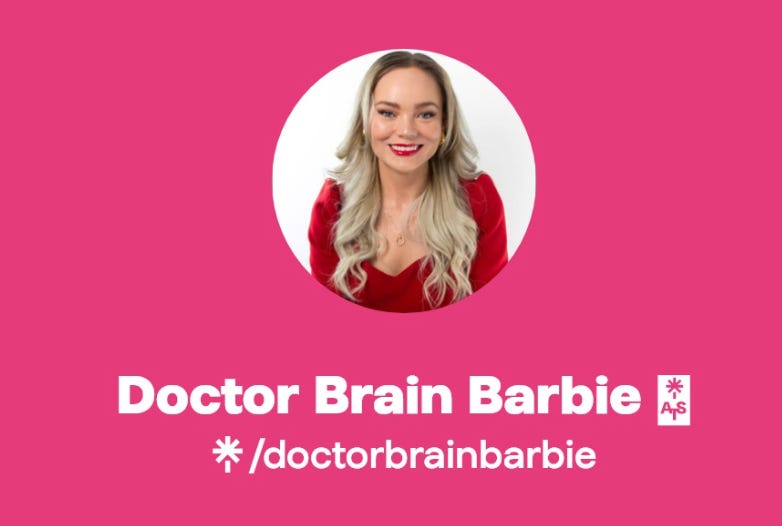
A University of Vermont graduate who became a board-certified neurologist and social media sensation has joined a national telemedicine company, bringing both clinical expertise and a massive online following to her new role.
Dr. Jessica Lowe, known to more than 230,000 followers as “Doctor Brain Barbie,” recently announced she is joining TeleSpecialists, a physician-owned teleneurology company based in Florida.
Vermont Roots and Academic Excellence
Dr. Lowe’s path to becoming a nationally recognized neurologist began at the University of Vermont, where she earned her undergraduate degree in biology with a concentration in neurobiology. According to her professional biography, she graduated Magna Cum Laude from UVM, establishing a strong foundation in the neurosciences that would shape her career.
After completing her undergraduate studies in Vermont, Dr. Lowe attended Ross University School of Medicine in the Caribbean, where she earned her medical degree with highest honors. She then completed her neurology residency and an epilepsy fellowship at Spectrum Health (now Corewell Health) in Grand Rapids, Michigan. Spectrum Health records confirm she graduated from the neurology residency program in 2020 and continued for specialized fellowship training in epilepsy.
The ‘Doctor Brain Barbie’ Phenomenon
What sets Dr. Lowe apart in the medical field is her unconventional approach to patient education and advocacy. Using the persona “Doctor Brain Barbie,” she has built a substantial following across Instagram and TikTok, where she creates short educational videos about neurological conditions including stroke, migraines, and epilepsy. Her content translates complex neuroscience concepts into accessible, engaging formats for general audiences.
The impact of her digital presence extends beyond social media metrics. In 2025, Dr. Lowe was named the American Heart Association’s Go Red for Women Delaware Woman of Impact Winner. In just nine weeks, she raised over $88,000 for the organization, ranking fifth in the entire Eastern States Region spanning 11 states. She accomplished this through stroke and neurological health lectures, community events including goat yoga, and leveraging her social media platform to mobilize supporters.
Clinical Experience and Expertise
Before joining TeleSpecialists, Dr. Lowe served as a neurohospitalist and lead epileptologist at Bayhealth Hospital in Dover, Delaware. In this role, she focused on inpatient neurological care, managing acute strokes, status epilepticus, and other neurological emergencies. Her clinical profile shows she is board-certified by the American Board of Psychiatry and Neurology, the gold standard for specialist competency in the United States.
During her training at Spectrum Health, Dr. Lowe engaged in research on advanced treatments for difficult-to-control epilepsy. She contributed to studies on Deep Brain Stimulation of the brain’s thalamus for treating generalized and multifocal epilepsy, work presented to the American Epilepsy Society. Her professional focus has consistently emphasized serving underserved populations, which led her to practice in Delaware’s community health system.
Joining TeleSpecialists
TeleSpecialists is a nationwide physician-owned management services organization specializing in teleneurology, particularly emergency stroke consultations for hospitals. According to the company, it is led by neurologists including Managing Partner Dr. Amanda Avila, a movement disorders specialist who also trained at the University of Vermont before completing her fellowship at the University of Florida.
In the announcement of her hiring, Dr. Lowe emphasized how telemedicine allows her to reach patients in underserved areas who might otherwise travel hours for specialized neurological care. “The voice I share online is the one I wish I had as a resident,” she stated, suggesting her digital presence reflects a desire to make neurology more accessible and less intimidating to patients.
Dr. Avila noted that Dr. Lowe’s appointment represents a blend of clinical excellence and modern patient engagement. “Dr. Lowe is paving the way for the next generation of neurologists by showing that medical expertise and authenticity can coexist,” she said in the announcement.
The Telemedicine Model
TeleSpecialists operates on a hub-and-spoke model, with a network of remote neurologists consulting for partner hospitals across the country. When a patient arrives at a hospital emergency room with potential stroke symptoms, a TeleSpecialists physician connects via video to assess the patient and recommend treatment, including whether to administer clot-busting drugs or transfer the patient to a comprehensive stroke center.
This model addresses a critical shortage of neurologists, particularly in rural areas. Time is essential in stroke care—treatment must often be administered within hours of symptom onset—and many community hospitals lack on-site neurologists available around the clock. Teleneurology allows these facilities to provide specialist consultations immediately, regardless of the hour.
The company reports a 97% positive employee sentiment rating and holds Great Place to Work certification. It distinguishes itself as physician-owned rather than backed by private equity, a structure its leaders say allows for more clinician-focused decision-making.
Breaking Stereotypes in Medicine
Dr. Lowe’s “Doctor Brain Barbie” brand represents an unconventional approach in the traditionally conservative field of medicine. The pink aesthetic and fashion doll reference could risk trivializing her clinical expertise, yet her fundraising success and professional credentials demonstrate the effectiveness of her strategy. By creating approachable, visually engaging content, she has built trust with audiences who might otherwise find neurology intimidating or inaccessible.
Her social media presence focuses on patient education and early recognition of neurological symptoms—particularly important for conditions like stroke where rapid treatment dramatically improves outcomes. Through short videos, she teaches followers how to recognize warning signs, understand treatment options, and advocate for their neurological health.
What Happens Next
Dr. Lowe will begin providing teleneurology consultations for TeleSpecialists’ network of partner hospitals nationwide. Given her subspecialty training in epilepsy and her existing digital platform, she may also expand the company’s services beyond emergency stroke care into outpatient epilepsy management, where patients often select their own specialists and her brand recognition could drive patient acquisition.
Her appointment signals a broader trend in healthcare: the integration of digital influence with traditional medical practice. As physician shortages continue, particularly in specialties like neurology, telemedicine companies are increasingly competing for talent. Physicians with strong personal brands and demonstrated community engagement—like Dr. Lowe’s fundraising success—offer both clinical skills and the ability to humanize remote medical services.
For Vermont, Dr. Lowe represents a success story of a state university graduate who combined rigorous scientific training with innovative communication to reach national prominence. Her trajectory from UVM biology student to board-certified neurologist with hundreds of thousands of followers illustrates how medical professionals are adapting to meet patients where they are—not just geographically through telemedicine, but culturally through social media platforms.
As she continues her work with TeleSpecialists, Dr. Lowe’s dual role as practicing neurologist and public health educator will test whether the “medfluencer” model can scale effectively within corporate healthcare structures while maintaining the authenticity that built her following. Her success or challenges in this role may influence how other healthcare organizations approach physician recruitment and patient engagement in an increasingly digital age.