


The landscape of the American grocery store underwent a significant shift in 2025. Data recently released shows that store brand sales reaching $282.8 billion last year, a new high for the industry. While these products—often called “private labels”—were once seen as budget alternatives, they have grown into a powerhouse sector that now accounts for nearly 22% of all grocery dollar sales.
For Vermont residents, this national trend is more than just a change in shopping habits; it is a local economic engine. Behind the labels of major retailers like Costco, Whole Foods, and Hannaford sits a sophisticated network of Vermont manufacturers who have become the silent architects of this multi-billion dollar market.
The Reality Behind the Record Numbers
While the headline figure of $282.8 billion suggests a massive boom, a closer look at the data reveals a more nuanced story. The 3.3% increase in dollar sales was driven largely by rising costs. During the same period, U.S. food inflation stood at 3.1%, meaning much of the “growth” reflects higher prices at the register rather than a massive surge in the amount of food being sold.
In fact, actual unit volume for store brands grew by only 0.6%. However, this still outperformed national brands, which saw their sales volume drop by 0.6%. As shoppers looked to stretch their budgets, many “traded down” from name brands to store brands to offset inflation. This shift was most visible in pet care, which saw a 5.4% jump in volume, and the liquor aisle, which grew by 4.4%.
Vermont’s Role as a Manufacturing Hub
Vermont has carved out a specialized niche in this economy. Rather than competing with the massive industrial farms of the Midwest, Vermont focuses on “premium” store brands—the organic, clean-label, and high-quality products that retailers use to compete with top-tier national names.
Estimates suggest that Vermont’s contribution to the national private label market is worth between $1.6 billion and $2 billion annually. This impact is felt across several key sectors, particularly in dairy, maple, and beverages.
The Dairy Engine in Brattleboro and Beyond
Dairy remains the backbone of this local production. Ehrmann Commonwealth Dairy in Brattleboro is a primary example. The facility was specifically built to handle large-scale private label and co-packing contracts, producing high volumes of Greek and strained yogurt that end up on the shelves of major grocery chains under various store names.
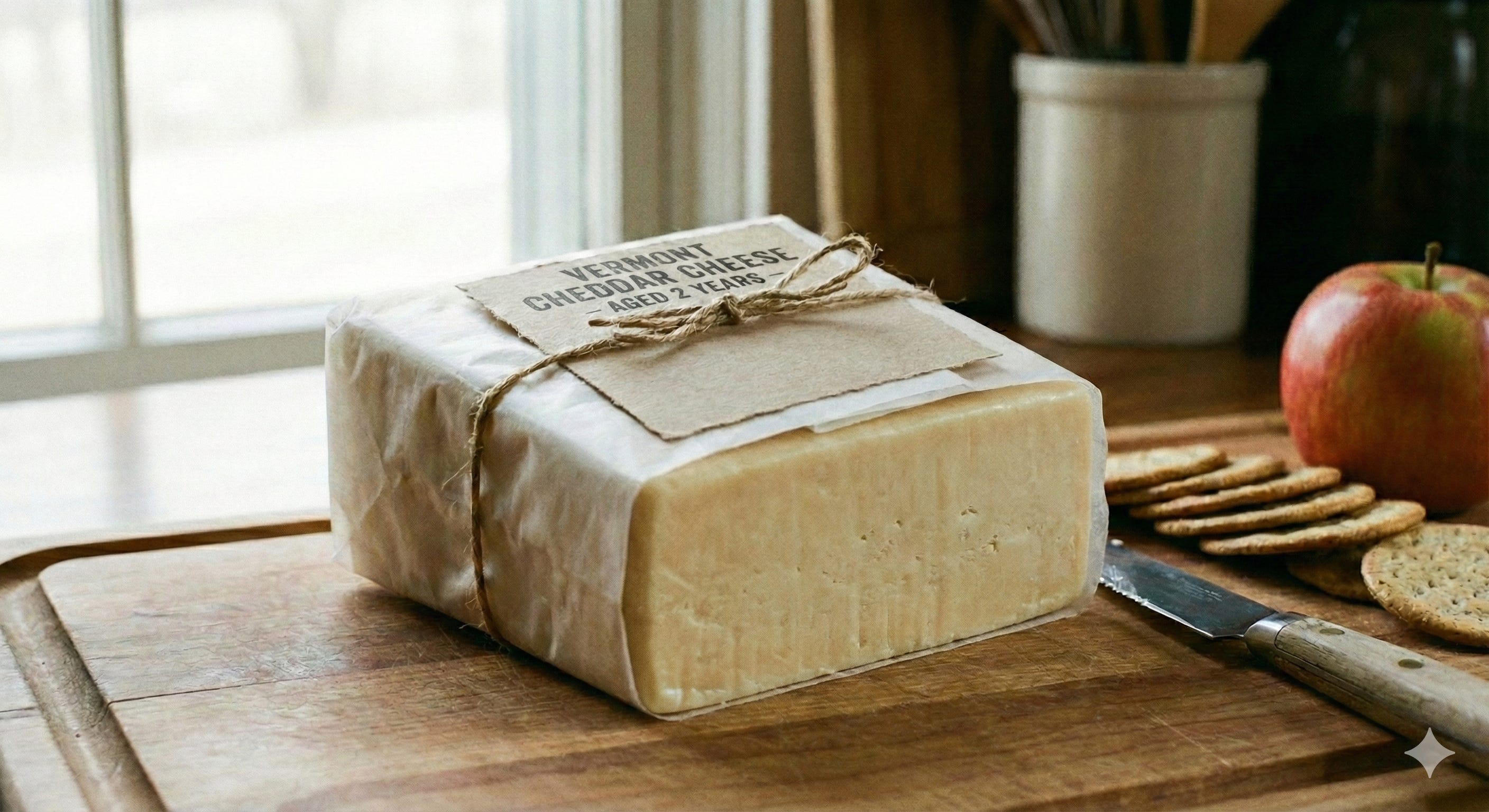
Similarly, the Agri-Mark cooperative, which owns the Cabot brand, uses its massive processing plants in Cabot and Middlebury to supply the store-brand market. By investing in automation for products like “cracker-cut” cheddar, the cooperative can meet the high-volume needs of national retailers while ensuring a steady market for Vermont dairy farmers. In Enosburg Falls, Franklin Foods utilizes high-level safety certifications to secure contracts for store-brand cream cheese with some of the largest retailers in the world.
Liquid Gold and the Coffee Connection
Maple syrup is another sector where Vermont dominates the “hidden” market. Because “Vermont Maple Syrup” is a protected geographic term, any store-brand bottle carrying that label must flow through the state’s supply chain. Companies like Butternut Mountain Farm in Morrisville act as vital links, aggregating syrup from hundreds of small farms to supply national organic brands for retailers like Target and Costco.
In the beverage aisle, Vermont’s influence is equally strong. Much of the manufacturing for Costco’s Kirkland Signature K-Cups has historically been linked to Green Mountain Coffee Roasters, a subsidiary of Keurig Dr Pepper. With major production and R&D facilities in Essex, Waterbury, and Williston, Vermont remains a central hub for the single-serve coffee market.
Innovation in Snacking
Vermont’s agile, smaller manufacturers are also capturing the “specialty” snack market.
Freedom Foods in Randolph recently expanded its facility to 16,000 square feet to handle increased orders for “free-from” (gluten-free and allergen-free) products.
Rhino Foods in Burlington, famous for its cookie dough, has expanded into snackable “pouching” for various retail partners.
Vermont Smoke & Cure in Hinesburg provides the high-spec, antibiotic-free processing required for premium meat snacks sold under health-focused store labels.
What Happens Next
As the industry moves into 2026, the primary challenge for store brands will be a potential “price saturation point.” With unit growth slowing to 0.6%, there is a risk that if prices continue to rise, consumers may shift from Vermont’s “premium” organic store brands back to lower-cost, basic generic options.
However, industry analysts expect Vermont to remain resilient due to its focus on “essential luxuries”—products like high-quality coffee, protein-rich dairy, and pure maple syrup—that consumers are historically less likely to give up, even during economic shifts. The state’s manufacturers are also pivoting toward sustainable packaging innovations, such as plastic-free coffee pods, to maintain their competitive edge in the national market.