


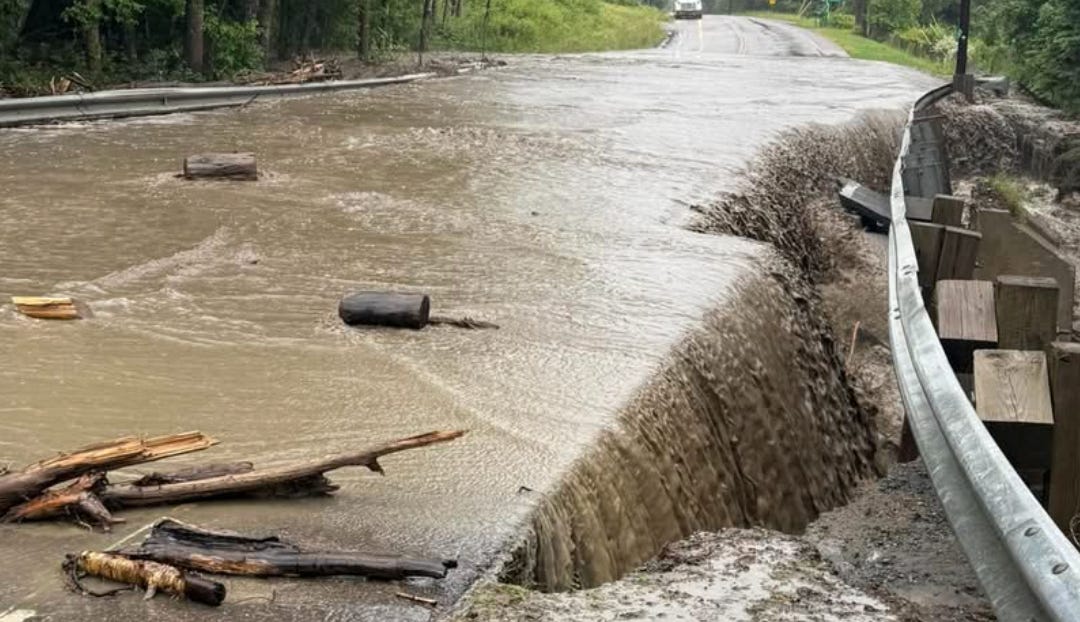
Vermont Attorney General Charity Clark joined a coalition of 23 states, governors, and jurisdictions who won a major legal victory on December 11, 2025, when a federal judge ordered the restoration of billions in disaster preparedness funding that the Trump Administration had attempted to eliminate. For Vermont, the ruling protects over $5 million designated for 36 flood prevention and infrastructure projects across the state.
U.S. District Judge Indira Talwani of Massachusetts issued a permanent injunction preventing the Federal Emergency Management Agency (FEMA) from terminating the Building Resilient Infrastructure and Communities (BRIC) program, finding that the administration’s actions violated federal law and the constitutional separation of powers.
Understanding the BRIC Program
The BRIC program was created in 2018 during the first Trump Administration as part of the Disaster Recovery Reform Act. Unlike traditional disaster relief that provides money after catastrophes occur, BRIC funds projects designed to prevent disaster damage before it happens—upgrading culverts to handle heavier storms, restoring floodplains, and hardening infrastructure against climate-related threats.
Research presented in the lawsuit showed that every dollar spent on pre-disaster mitigation saves approximately $6 in post-disaster recovery costs. For Vermont, which experienced devastating floods in 2023 and 2024, these prevention dollars are critical to protecting communities from future damage.
Nationally, FEMA had selected nearly 2,000 projects to receive roughly $4.5 billion in BRIC funding when the administration moved to cancel the program.
Why the Administration Wanted to Cut the Program
In April 2025, the Trump Administration abruptly announced it was terminating the BRIC program as part of a broader effort to reduce federal spending. The cuts were driven by the Department of Government Efficiency (DOGE), an advisory body tasked with identifying programs to eliminate or reduce.
Administration officials characterized BRIC funding as duplicative spending and argued that disaster mitigation should primarily be a state and local responsibility rather than a federal one. The administration invoked a federal regulation allowing agencies to terminate grants that “no longer effectuate program goals or agency priorities,” contending that the new administration’s efficiency priorities justified ending the program.
FEMA announced it would cancel the pending Fiscal Year 2024 grant cycle and retroactively terminate projects from previous years that had been selected but not yet fully funded, redirecting the money back to the U.S. Treasury.
The Legal Battle
Vermont joined a coalition led by Washington, Massachusetts, and Connecticut that included 20 state attorneys general, two governors, and the District of Columbia. The coalition sued in federal court, arguing the administration’s actions were illegal on multiple grounds.
The states contended that once Congress appropriates money for a specific purpose, the executive branch must spend it as directed—a principle rooted in the Constitution’s Appropriations Clause. They invoked the Impoundment Control Act of 1974, which was passed after President Nixon withheld funding for programs he opposed. Under that law, presidents who want to rescind appropriated funds must request Congressional approval; they cannot simply refuse to spend the money.
The coalition also argued that FEMA’s actions violated the Administrative Procedure Act by failing to provide adequate justification for reversing course and by ignoring the substantial evidence showing BRIC’s cost-effectiveness. States had already invested significant resources planning these projects based on the promised federal funding, creating what lawyers call “reliance interests.”
The Trump Administration defended its position by arguing that the regulatory language about “agency priorities” gave it discretion to redirect funding when executive priorities changed. Government lawyers contended this was a legitimate exercise of executive authority to set policy direction for federal agencies.
Vermont’s Stake in the Outcome
For Vermont, 36 projects totaling over $5 million were at risk. While the specific project list wasn’t detailed in court documents, Vermont’s applications typically focus on upgrading undersized culverts that failed during recent floods, restoring floodplains to safely absorb overflow, and funding engineering studies for future large-scale resilience projects.
The $5 million represents the federal share of project costs—typically 75% of the total—meaning Vermont towns had already committed local matching funds based on the expectation of federal support. Losing the federal money would have left municipalities financially exposed and unable to complete critical infrastructure improvements.
Vermont also faced timing pressures. The state’s construction season runs roughly from May through October, meaning delays in funding could push projects back an entire year, leaving communities vulnerable through another flood season.
Attorney General Clark characterized the administration’s termination as leaving “Vermont communities particularly vulnerable to disasters.” This marks Clark’s 23rd legal action against the Trump Administration in 2025.
The Court’s Decision
Judge Talwani ruled decisively in favor of the states, finding that the administration violated three core legal principles.
First, the court held that the termination violated the constitutional separation of powers. The Constitution gives Congress the “power of the purse,” and once funds are appropriated for a specific purpose, the executive branch has a duty to spend them as directed.
Second, the court found the administration’s actions “arbitrary and capricious” under the Administrative Procedure Act. FEMA had not provided a reasoned explanation for the reversal and had disregarded both the economic evidence about mitigation savings and the states’ reliance on the promised funding.
Third, Judge Talwani rejected the administration’s interpretation of the “agency priorities” regulation, ruling that generic language about priorities cannot be used to override specific Congressional mandates. To allow otherwise would effectively grant the president a line-item veto power that the Supreme Court has declared unconstitutional.
The judge issued a permanent injunction ordering FEMA to process applications for all 2,000 paused projects nationwide, reopen the Fiscal Year 2024 grant cycle, and disburse the $4.5 billion as Congress originally intended.
What Happens Next
FEMA must now move forward with processing Vermont’s 36 projects and resuming the national BRIC program. The administration could appeal Judge Talwani’s ruling to the First Circuit Court of Appeals, though the legal analysis in the decision appears grounded in well-established precedent that may be difficult to overturn.
For Vermont communities, the restoration of funding means resilience projects can proceed as planned. Towns that have been waiting for federal approvals can now move forward with engineering work and construction, potentially completing projects before the 2026 flood season.
The ruling also has broader implications beyond Vermont. It establishes clear limits on executive branch authority to unilaterally cancel Congressionally-mandated programs, even when a new administration disagrees with those programs’ priorities. Any future attempts to withhold appropriated funds would face immediate legal challenges citing this precedent.
The case demonstrates the growing role of state attorneys general in checking federal executive power through litigation. For Vermont, it represents a successful defense of federal resources that the state considers essential to protecting communities still recovering from recent flood disasters.
Vermont’s 36 projects will now advance through the standard FEMA review process, with funding decisions expected on a project-by-project basis as applications are evaluated and approved.