


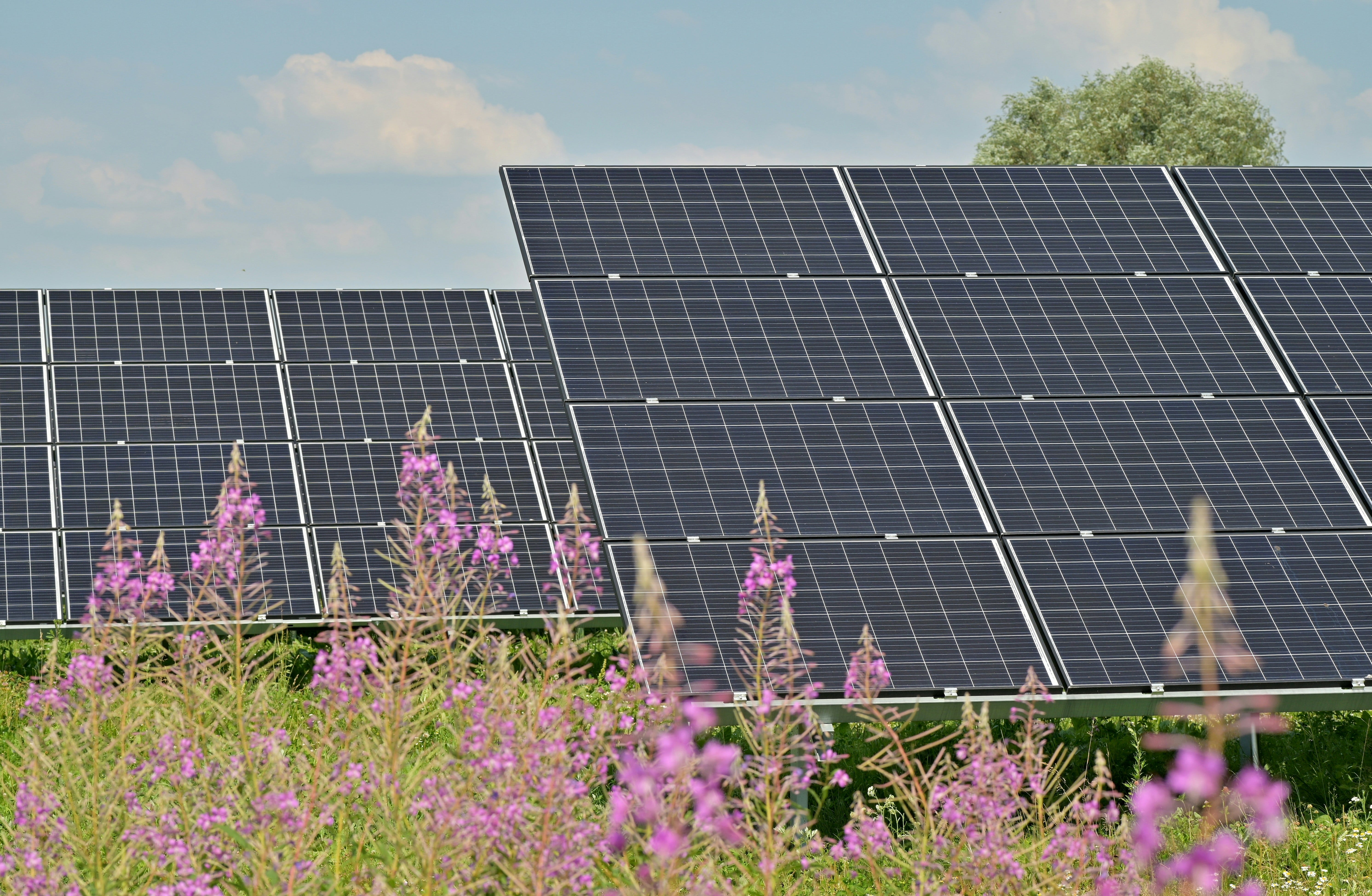
The Vermont Legislature is considering a bill that would fundamentally change how the state approves renewable energy projects by removing the requirement that regulators consider whether developments are visually appealing.
House Bill 651, introduced by Representative Christopher Morrow of the Windham-Windsor-Bennington district, would delete the word “aesthetics” from the criteria the Public Utility Commission must evaluate before approving energy facilities.
How the Current System Works
Under current law, utility projects like solar farms and wind turbines bypass local zoning and are instead reviewed by the state Public Utility Commission under a law known as Section 248. Before issuing a Certificate of Public Good allowing construction, the commission must find that projects “will not have an undue adverse effect on aesthetics, historic sites, air and water purity, the natural environment, the use of natural resources, and the public health and safety.”
To evaluate visual impacts, regulators use what’s called the “Quechee Test”, a two-step legal standard borrowed from Vermont’s Act 250 land use law. First, reviewers determine if a project has an adverse visual impact. If so, they assess whether that impact is “undue” by examining whether it violates clear written community standards, offends the sensibilities of the average person, or could be reasonably mitigated through design changes like landscaping or screening.
Towns often try to use their municipal plans to establish these “clear written community standards,” though Vermont courts have ruled that vague language about “preserving rural character” typically doesn’t meet the legal threshold.
The Bennington Controversy
The push for H.651 comes after years of contentious battles over solar projects in Bennington County that illustrate the tensions in the current system.
Two small solar proposals—the Chelsea Solar and Apple Hill projects, each 2 megawatts—have been tied up in legal disputes for more than a decade. Developer Allco Renewable Energy sought to build the facilities on land off Willow Road near Route 7, visible from the Bennington Welcome Center.
The projects faced fierce opposition from the Apple Hill Homeowners Association and town officials concerned about visual impacts at a gateway entrance to Vermont. The Public Utility Commission denied the projects, finding they would have an undue adverse effect on aesthetics. The cases went through multiple appeals to the Vermont Supreme Court over issues including whether the two 2-megawatt projects should be treated as a single 4-megawatt facility.
During the litigation, Bennington amended its town plan to specifically prohibit solar development in prominently visible locations. The 4 megawatts of renewable energy remain unbuilt.
The Shaftsbury Contrast
Just miles north in Shaftsbury, a much larger project recently won approval, highlighting what some see as inconsistency in how aesthetic reviews work.
The Holy Smoke Road solar project, developed by Connecticut-based Freepoint Solar, will generate 20 megawatts—ten times larger than the individual Bennington proposals. The project required clearing 42 acres of mature forest and covers about 80 acres total with fencing.
Despite local opposition and significant visual impact from the hillside clearing visible from Route 7, the Public Utility Commission approved the project in late 2025. Commissioners Edward McNamara and Riley Allen wrote that while the decision was difficult, the project’s contribution to Vermont’s renewable energy goals under the Global Warming Solutions Act outweighed aesthetic and environmental concerns.
Commissioner Margaret Cheney dissented, arguing the project was “huge” and “will have impacts,” particularly noting the loss of carbon-sequestering forest.
Who’s Behind the Bill
Representative Morrow brings an unusual background to the legislation. He’s the former owner of Northshire Bookstore in Manchester who managed the business for over 20 years, and holds degrees in environmental studies from Oberlin College and environmental policy from the University of Michigan.
Morrow has described himself as seeking to bring “common sense, middle of the road” approaches and has said “Montpelier needs more people who can approach environmental issues from a scientific perspective, not an emotional one.”
The bill falls under the jurisdiction of legislative committees where Representative Scott Campbell serves as vice chair. Campbell has extensive experience in energy efficiency work, having directed weatherization programs and energy upgrade initiatives. During debates over Vermont’s Affordable Heat Act, Campbell emphasized that the transition away from fossil fuels “will not be, it cannot be, entirely cost free.”
The Arguments For Removing Aesthetic Review
Supporters of H.651 argue the current aesthetic review process has become obstructionist, delaying critical climate infrastructure through subjective judgments about visual appeal. They point to the Bennington projects as evidence that small renewable energy facilities can be stalled for years over concerns about views, while the state faces urgent mandates under the Global Warming Solutions Act to expand clean energy.
Proponents contend that aesthetic considerations are inherently subjective—”beauty is in the eye of the beholder”—making them an unreliable basis for regulatory decisions on projects essential to meeting climate goals.
The bill would theoretically streamline approvals and reduce litigation costs, potentially accelerating the buildout of solar and wind capacity Vermont needs to meet its 2030 and 2050 emissions reduction targets.
Concerns About the Change
Critics argue that removing aesthetic review strips Vermont communities of their primary tool for shaping how energy development affects their towns. Because Section 248 already preempts local zoning for utility projects, aesthetic review has been one of the few ways municipalities can influence project design.
Without the aesthetic criterion, there would be no legal requirement for developers to invest in visual mitigation measures like landscaping, screening, or careful siting. Projects could be built with the most cost-effective industrial design regardless of visual impact, as long as they don’t harm endangered species or destroy historic sites.
Vermont’s tourism economy depends heavily on scenic landscapes. Some question whether industrializing rural viewsheds could undermine a key economic asset, though the legislative analysis notes no evidence that economic impacts on tourism have been formally studied in committee proceedings.
The bill would also create a regulatory split: commercial developments like stores and ski resorts would still face strict aesthetic review under Act 250, while energy projects would be exempt from visual standards.
What’s Still Protected
H.651 would still require the Public Utility Commission to evaluate impacts on “historic sites, air and water purity, the natural environment, the use of natural resources, and the public health and safety.”
This means project opponents could shift their focus to historic preservation arguments. In Bennington, for example, projects near the Battle of Bennington monument viewshed might still face challenges based on impacts to historic landscapes rather than general aesthetic concerns.
The bill also doesn’t affect Section 248a, which governs telecommunications facilities like cell towers, though testimony from Vermonters for a Clean Environment has raised concerns that removing aesthetic review for energy could create pressure for similar exemptions for 5G infrastructure.
What Happens Next
H.651 has been introduced and will be reviewed by the House Committee on Energy and Digital Infrastructure. The committee will likely hold hearings to take testimony from developers, environmental groups, municipal officials, and concerned residents.
If the bill advances through committee, it would need approval from the full House, then the Senate, before going to the governor. Given the contentious nature of the issue—balancing climate urgency against local control and landscape preservation—the bill is likely to generate significant debate and could be amended substantially during the legislative process.
The outcome will help define whether Vermont prioritizes rapid renewable energy deployment or maintains community influence over how that development shapes the state’s visual character.