


A Century of Shared Community
For more than 120 years, Derby Line, Vermont and Stanstead, Quebec have functioned as a single community separated only by an invisible line. Neighbors have freely crossed back and forth for library books, opera performances, shopping, worship, and Sunday dinners. Children from both countries have played together in streets where the international boundary runs down the middle of the pavement.
The Haskell, built deliberately on the border in 1904 by the Haskell family, became the physical embodiment of that integration—a building where Americans and Canadians could sit side-by-side in the reading room, the border literally running between their chairs.
The Border Problem
That 120-year tradition nearly came to an abrupt end when heightened border enforcement created a legal predicament: Canadian patrons entering from the Quebec side would technically cross into the United States when walking through certain parts of the building, potentially violating immigration law.
But the community that had shared a library, an opera house, streets, schools, and generations of friendships wasn’t about to let bureaucracy end that relationship without a fight.
The Clever Workaround
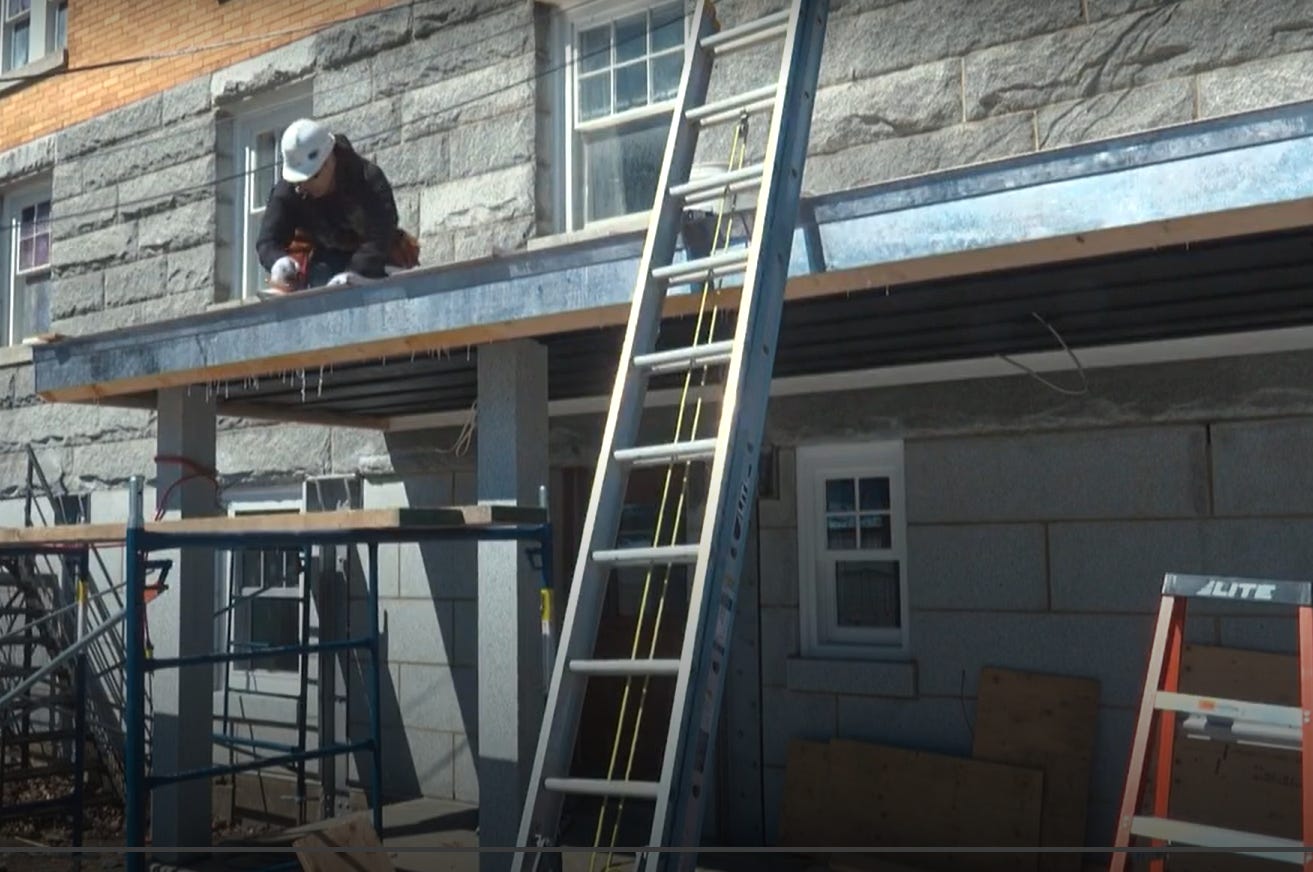
According to CTV News Montreal, the library has installed a new door on the Canadian side of the building that allows patrons to enter and exit without crossing into U.S. territory—solving a problem created when the Trump administration began enforcing stricter border controls.
The new door creates a Canadian-side entrance and circulation path that keeps visitors on their respective sides of the border while still allowing access to the library’s collections and the opera house.
“It’s a creative solution to a modern problem for a building that predates these kinds of border concerns,” library officials told CTV.
What It Means
The library’s unique architecture has long made it a curiosity: the building sits directly on the international boundary, with the border literally running through the middle of the reading room.
As Compass Vermont has previously reported, the library inspired Canadian novelist Jess Kidd and has become a focal point for discussions about border policy and community relations.
The door installation represents a small but significant victory for preserving cross-border access to a shared cultural landmark—and for a community that refused to let a border turn neighbors into strangers.