


The Vermont Department of Environmental Conservation released data on December 12 revealing that 17 industrial facilities were in “significant non-compliance” with wastewater pretreatment permits during 2024.
The announcement, required annually by the U.S. Environmental Protection Agency, presents stark numbers that raise questions about regulatory oversight and enforcement priorities.
Ben & Jerry’s Homemade facility in Waterbury led the list with 130 violations of permit limits and seven missing monthly monitoring reports. New England Precision in Randolph accumulated 68 violations. St. Albans Creamery recorded 23 violations, while Agri-Mark (producer of Cabot cheese) in Middlebury had 14.
The Vermont DEC provided this clarification after this article was published, which is provided at the bottom.
These facilities join a list that includes other Vermont brands: Butternut Mountain Farm, Commonwealth Dairy, and several craft breweries including Lost Nation, Rock Art, and Four Quarters.
Understanding Industrial Wastewater
Industrial facilities listed in the report don’t discharge waste directly into Vermont’s rivers and lakes. Instead, they send wastewater to municipal treatment plants—the same facilities that handle household sewage. These industrial users must obtain “pretreatment permits“ that limit what and how much they can discharge.
The system exists to prevent two specific problems: “interference,” where industrial waste damages or disrupts the municipal plant’s treatment processes, and “pass-through,” where pollutants the municipal plant isn’t designed to remove flow directly into waterways.
According to federal regulations under 40 CFR Part 403, facilities enter “significant non-compliance” status when they meet specific mathematical thresholds—such as exceeding permit limits in 66 percent or more of measurements over six months, missing reports by 30 days or more, or discharging pollutants that cause immediate environmental or health risks.
The Dairy and Food Processing Challenge
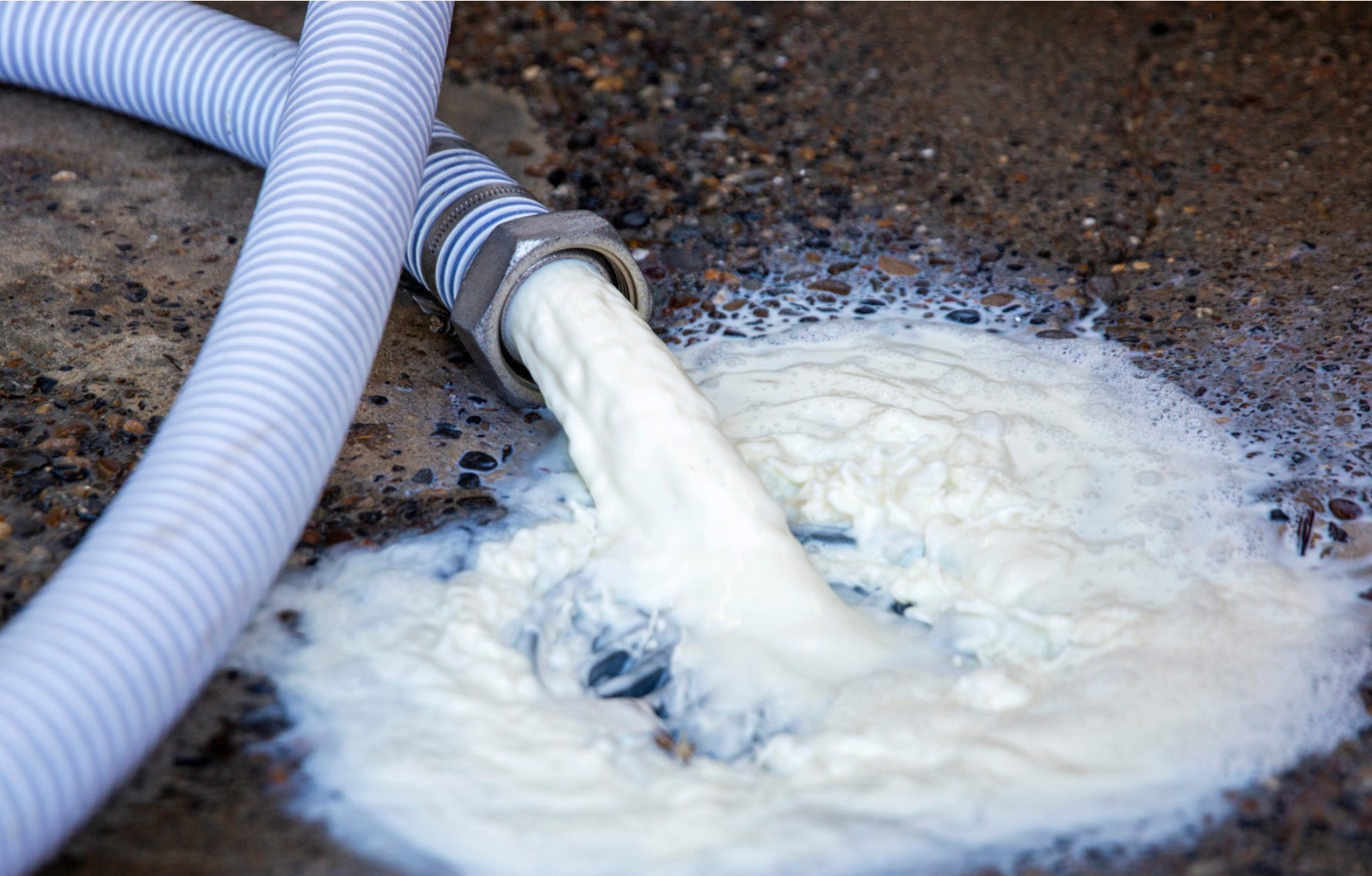
Vermont’s signature agricultural and food processing industries generate wastewater with extremely high levels of organic material. Ice cream manufacturing waste can contain biochemical oxygen demand (BOD) 10 to 25 times higher than typical household sewage. Raw milk spills present similar challenges—whole milk has a BOD approximately 500 times that of domestic wastewater.
Ben & Jerry’s operates what it calls a “biodigester“ or “Chunkinator” on site to treat waste before it enters Waterbury’s municipal system. The 130 violations suggest this pretreatment system experienced significant operational challenges throughout 2024.
Agri-Mark’s Middlebury facility uses a dissolved air flotation unit to remove fats and solids from cheese production wastewater. Municipal records indicate past concerns about this equipment’s capacity during peak production periods.
St. Albans Creamery’s 23 violations carry additional significance. The facility has a documented history of discharging raw milk and cream into the wastewater system, settled through a 2023 agreement with the Vermont Attorney General’s Office. St. Albans Bay in Lake Champlain suffers from severe phosphorus pollution and toxic algae blooms—problems directly worsened by dairy waste.
Heavy Metals and Taxpayer Funding
New England Precision’s 68 violations involve a different category of pollutant. The metal finishing operation discharges heavy metals including lead and copper, which don’t degrade in the environment and can accumulate in river sediments and municipal wastewater sludge.
According to state records, New England Precision and the Town of Randolph received American Rescue Plan Act (ARPA) funding specifically to design and install pretreatment systems for metals removal. The high violation count in 2024 likely occurred before these publicly funded upgrades became fully operational.
When municipalities must landfill contaminated sludge rather than using it as fertilizer, local taxpayers bear those costs. The same applies when industrial discharges damage treatment plant infrastructure or require additional chemicals and electricity to process.
The Craft Brewery Pattern
Multiple breweries appear in the “reporting violations” category for missing monthly monitoring reports rather than exceeding discharge limits. Four Quarters Brewing, Lost Nation Brewery, Rock Art Brewery, and Zero Gravity all failed to submit required documentation on time.
Breweries create challenging wastewater due to their use of caustic cleaning chemicals (high pH) and acidic sanitizers (low pH). These pH swings can corrode municipal sewer infrastructure and kill the beneficial bacteria that treatment plants rely on.
The pattern of missing reports among small breweries suggests an administrative capacity issue. Unlike large food processors, craft breweries typically lack dedicated environmental compliance staff, with head brewers often handling regulatory paperwork alongside production duties.
The Language of Regulation
DEC Commissioner Misty Sinsigalli’s statement in the press release describes industrial facilities as “key partners in environmental stewardship,” emphasizing the department’s commitment to helping permittees “navigate their requirements successfully.”
This cooperative language contrasts with the mathematical reality of “significant non-compliance”—a federal designation that indicates chronic or severe violations. A facility with 130 violations accumulated permit breaches during most of its operating days in 2024, assuming standard monitoring schedules.
The press release notes that the list “represents a historical snapshot of the 2024 timeframe; and may not be representative of the permittees’ current compliance status,” standard legal language that applies to all retrospective reports.
Notably absent from the announcement: information about fines, enforcement actions, or administrative orders issued in response to these violations. The DEC describes providing “clear, actionable guidance” to help facilities “correct the course immediately and avoid the need for further enforcement.”
Environmental and Economic Consequences
Vermont operates under a federal mandate (Total Maximum Daily Load) to reduce phosphorus pollution in Lake Champlain. When dairy facilities exceed their discharge limits, they often send excess phosphorus to municipal plants. If those plants cannot remove all the phosphorus, it flows into the lake, fueling the toxic cyanobacteria blooms that close beaches and impair water quality.
The EPA’s Lake Champlain phosphorus plan specifically identifies wastewater treatment plants as major point sources requiring strict control.
For Vermont communities, industrial non-compliance represents a cost transfer. When companies discharge waste exceeding permit limits or proper pH ranges, municipal treatment systems require more electricity, chemicals, and maintenance. Without adequate fines or surcharges, residential ratepayers effectively subsidize the extra treatment costs.
The Capacity Question
The DEC’s wastewater pretreatment enforcement responsibilities exist alongside the department’s broader environmental regulatory workload. While the DEC oversees industrial discharge permits, the Land Use Review Board administers Vermont’s Act 250 land use law—though both entities operate within the same Agency of Natural Resources umbrella.
The Land Use Review Board’s 2024 annual report highlights significant resource constraints. ARPA-funded staff positions supporting Act 250 permitting are scheduled to expire December 31, 2025, unless the legislature approves additional funding. These positions have been “critical to the Board’s operations,” according to the report, which notes the board is tracking over 500 projects in various stages of review.
The report also mentions that one Act 250 district technician with 30 years of experience retired in 2024, and delays in processing applications remain a concern voiced by applicants.
Act 250 underwent major reforms in 2024 through Act 181, creating a new tiered jurisdiction system and requiring extensive rulemaking processes. The Land Use Review Board must develop and adopt future land use maps, define Tier 3 natural resource protection areas, and implement new review procedures—all with an uncertain funding future beyond 2025.
The convergence of 17 facilities in significant wastewater non-compliance, hundreds of pending Act 250 applications, major Act 250 reforms requiring extensive stakeholder engagement and rulemaking, and expiring funding for critical positions raises questions about the state’s regulatory capacity across multiple environmental programs.
What Happens Next
The DEC’s published procedure for handling significant non-compliance emphasizes working with permittees to achieve compliance rather than immediate punitive action. The department typically issues notices of violation and compliance schedules before pursuing formal enforcement.
For the facilities on the 2024 list, current compliance status remains undisclosed. Ben & Jerry’s biodigester upgrades, New England Precision’s ARPA-funded metals treatment system, and other remediation efforts may be underway or completed.
The legislature will face decisions in the 2026 session about funding for Land Use Review Board positions supporting Act 250 administration. Without action, positions expire December 31, 2025.
Vermont ratepayers in communities hosting these industrial facilities may see impacts in sewer rate adjustments if municipalities must recover costs from increased treatment demands or infrastructure damage. The DEC does not publicly report the financial penalties, if any, assessed against violating facilities.
For Lake Champlain water quality, the persistence of phosphorus violations at dairy processors in the St. Albans Bay watershed directly undermines the state’s efforts to meet its federal clean water obligations and reduce toxic algae blooms.
The 2025 reporting cycle begins January 1, 2026. Whether the list of significant non-compliance permittees grows, shrinks, or includes repeat offenders will indicate the effectiveness of the DEC’s “partnership” approach to industrial wastewater enforcement.
Response from the DEC:
Ben & Jerry’s facility in Waterbury had 130 violations of not meeting their monitoring requirements due to missed sample collections and seven missing monthly monitoring reports. The Ben & Jerry’s Waterbury facility operates a dissolved air floatation (DAF) unit, and a three-cell aerated lagoon system to pretreat process wastewater on site to treat waste before it enters Waterbury’s municipal system. Ben and Jerry’s St. Albans and Waterbury facilities are separate permitted facilities. The biodigester – referenced in this story – The Saint, is owned and operated by PurposeEnergy – and is a separate permitted facility. The Ben & Jerry’s St. Albans facility and The Saint facility were not subject to 2024 significant non-compliance. The Waterbury treatment system was not suspected of experiencing significant operational challenges, but rather the permittee faced monitoring and reporting requirements challenges. DEC publicly posts Final Actions of enforcement orders with applicable financial penalties if assessed against the violating facilities in accordance with 10 V.S.A. § 8020. Note that Significant Non-Compliance does not automatically equate to enforcement actions but can demonstrate ongoing non-compliance to support enforcement actions