


Windsor County Sheriff Ryan Palmer was arrested on January 27 at his office in Woodstock and charged with multiple counts of lewd and lascivious conduct, solicitation of prostitution, aggravated stalking with a weapon, and obstruction of justice. An affidavit filed in Rutland County Superior Court alleges Palmer paid three women to watch him perform sex acts, stalked two of them, and tried to cover it up. At his arraignment on January 28, a judge dismissed four of the original twelve counts for insufficient evidence. Seven charges remain.
Palmer pleaded not guilty and told reporters he would step back from day-to-day operations but had no intention of resigning. “This is my personal life,” he said outside the courtroom.
Here is the problem: there is essentially nothing the State of Vermont can do about it.
Why an Accused Sheriff Can’t Be Fired
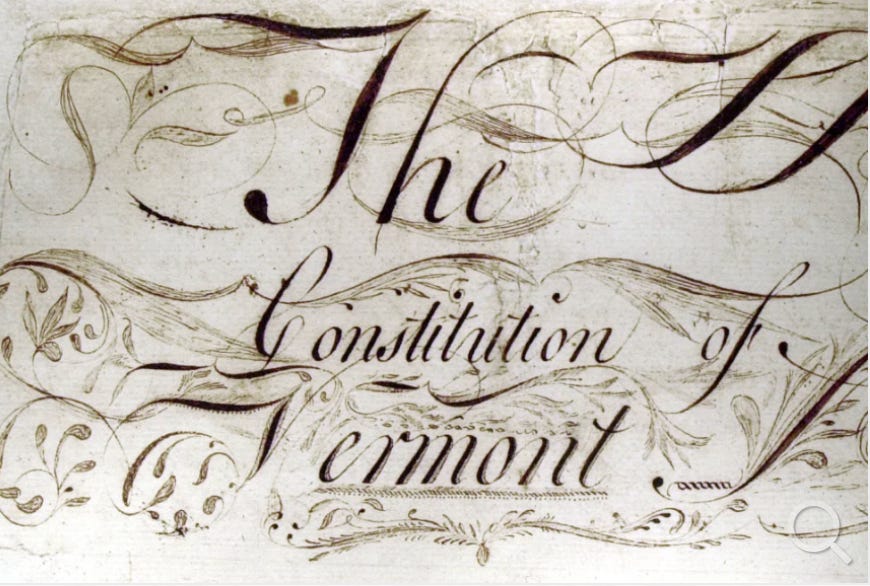
The reason Palmer still holds office comes down to a single line in the Vermont Constitution. Under Chapter II, Section 50, sheriffs are independent constitutional officers elected directly by county voters. Unlike a municipal police chief — who can be terminated by a selectboard under 24 V.S.A. § 1932 — a sheriff doesn’t report to anyone. Not a mayor. Not the governor. Not the legislature.
That leaves exactly two paths to removal.
The first is impeachment. The Vermont House must find grounds for it, then the Senate must convict. The process has been used exactly once in modern history: in 1976, when Washington County Sheriff Malcolm “Mike” Mayo was accused of abusing his office and threatening people. The House impeached him. The Senate acquitted him on all three articles. No Vermont official has been successfully removed through impeachment since the 18th century.
The second is the ballot box. Palmer — a Democrat elected in 2022 — is up for reelection in November 2026. That is the next scheduled opportunity for voters to weigh in.
A recall election is not an option. Vermont law does not provide for the recall of county or state officials. The often-cited 17 V.S.A. § 2603 is limited to contesting election results within 15 days of a vote, based on fraud or counting errors — not removal for conduct during a term.
What the State Has Done — and What It Hasn’t
On February 4, the Vermont Criminal Justice Council voted unanimously to suspend Palmer’s law enforcement certification. The council’s written order stated that the allegations, if true, would constitute a danger to public safety, and that “as the elected sheriff, there is no other mechanism available that can restrain or limit the law enforcement actions of Ryan Palmer.”
That suspension strips Palmer of police powers — he cannot make arrests, conduct patrols, or carry a firearm. But it does not remove him from office. He remains the elected sheriff, continues to collect his state-mandated salary, and retains administrative authority over his department. Captain Claude Weyant, a 20-year veteran of the agency, is running day-to-day operations.
Governor Phil Scott called for Palmer’s resignation on the same day the certification was suspended. Palmer has not responded to that call, nor to a formal letter from the entire Windsor County legislative delegation asking him to step aside and formally delegate authority.
Palmer is not the first Vermont sheriff to remain in office despite criminal charges or decertification. Franklin County Sheriff John Grismore has operated without law enforcement credentials since 2023, after the VCJC revoked his certification for kicking a handcuffed and shackled man. He refused to resign. The House launched an impeachment investigation, but the committee ultimately declined to recommend impeachment because the misconduct occurred before Grismore took office. Addison County Sheriff Peter Newton faced sexual assault charges in 2022, pleaded guilty to lesser charges, and served probation — but he too refused to step down until choosing not to run for reelection.
The Senate Floor Fight
On February 27, the Vermont Senate passed S.255, a bill establishing a five-year regional policing pilot in Windham County. The bill had been in the works since 2023, driven by Windham County Sheriff Mark Anderson’s regional policing initiative to address gaps in rural law enforcement coverage. It was a narrowly focused, single-county proposal.
But during third reading, Senator Ruth Hardy (D-Addison) — who chairs the Senate Government Operations Committee and has spent years pushing for sheriff accountability — moved to amend S.255 with sweeping statewide provisions. Her amendment would have required sheriffs to maintain and publicly post work schedules, mandated that a sheriff’s salary be suspended during any period of incarceration, strengthened financial audit requirements across all 14 counties, and created a Director of Sheriffs’ Operations position at the Department of State’s Attorneys and Sheriffs.
It was, in effect, an attempt to attach the statewide reform that the Palmer and Grismore crises demanded onto the only policing bill moving through the chamber before crossover.
Then her own district colleague stopped her.
Senator Steven Heffernan (R-Addison) — who shares the two-seat Addison District with Hardy — raised a point of order under Section 402 of Mason’s Manual of Legislative Procedure, arguing that Hardy’s amendment was not germane to a bill focused on a single-county pilot. The Senate President sustained the objection, ruling that the amendment “changed the purpose, scope, and object of the bill” beyond its original intent.
Senator Rebecca White (D-Hartford) moved to suspend the germaneness rule to allow the amendment anyway. That motion failed.
The bill passed without the accountability language. S.255 now heads to the House.
Why “Germaneness” Matters More Than It Sounds
The procedural move looks, at first glance, like a technicality used to dodge an obvious fix. But the germaneness rule exists for a substantive reason: it prevents legislators from attaching unvetted statewide mandates to narrowly scoped bills that have not been studied in committee for their broader implications.
Hardy’s amendment had not been through committee hearings on its statewide provisions. It had not received public testimony from the sheriffs, deputies, municipal officials, or legal experts who would be directly affected. The Vermont Sheriffs’ Association — which opposed the constitutional amendment effort in 2024 and helped kill it through lobbying — had not been given the chance to argue against specific new mandates. Opponents of the amendment argued that bypassing the committee process for statewide changes would set a dangerous legislative precedent.
But supporters have a credible counter-argument: the committee process has been available for years, and reform keeps dying there anyway. The constitutional amendment that would have allowed the legislature to set qualifications and removal procedures for sheriffs — Proposal 1 — cleared Hardy’s committee in the 2023-24 session but collapsed on the Senate floor after sheriffs lobbied against it. Senate President Pro Tempore Phil Baruth acknowledged at the time that the failure would “add years to our ability to address this problem.”
The question for Vermonters is whether germaneness was used to protect legislative integrity or to avoid a politically uncomfortable vote on sheriff accountability while the Palmer scandal dominates the news.
The Local Exit: Mount Ascutney Regional Police
With statewide reform stalled, three Windsor County towns are building their own alternative. On February 3, the Weathersfield Selectboard voted unanimously to cancel its patrol contract with the Windsor County Sheriff’s Department. The town is now working with Reading and Cavendish to create the Mount Ascutney Regional Police Department.
The three towns held a joint selectboard meeting on February 26 to discuss the proposal. The concept calls for a police chief, two full-time officers, and two part-time officers covering approximately 5,000 residents. The estimated hourly cost is $68, compared to the Sheriff Department’s rate of $75, and first-year costs would fall within the budgets being voted on at today’s Town Meeting.
Rep. VL Coffin (Windsor-2), who represents Cavendish and Weathersfield, cautioned at the February 26 meeting that creating a regional police department under 24 V.S.A. Chapter 121 requires a legislative process that could take up to 18 months. In the meantime, Coffin recommended Cavendish and Reading contract for patrol services directly while the regional structure gets built.
Practical concerns remain. The selectboards need to hire a police chief within 120 days who will then hire officers. Two of the cruisers Weathersfield sold to the sheriff’s department were purchased in 2023 and no one yet knows what condition they are in. And while first-year costs fit existing budgets, community members at the joint meeting raised questions about whether expenses would escalate in subsequent years.
Worth noting: residents at the meetings have been clear that their concern is not the quality of service they have received from individual deputies. The issue is whether the department — given the financial questions that originally triggered the state police investigation and the ongoing leadership vacuum — can continue to deliver it.
The Road to a Constitutional Fix
Legislative leaders have signaled that a permanent solution — one that would allow the legislature to set qualifications for sheriffs or create removal mechanisms outside of impeachment — will require amending the Vermont Constitution.
Vermont’s amendment process is deliberately slow. A proposed amendment must pass both chambers in two successive bienniums (legislative sessions separated by a general election), then be ratified by statewide voters. Because the Senate failed to advance Proposal 1 in the 2023-24 session, the four-year cycle for constitutional proposals means the earliest a new version could be introduced is 2027. If it cleared both chambers in 2027-28 and again in 2029-30, voters would decide in November 2030.
That is four and a half years from today.
What Happens Next
S.255 moves to the House. Representatives may try to add statewide accountability language, though it would face similar procedural challenges.
Town Meeting Day. Residents in Weathersfield, Reading, and Cavendish vote today — March 3 — on budgets that would fund the first year of a transition to regional policing.
Palmer awaits trial. He remains in office, collecting a salary, with administrative authority over the department he has been barred from policing. His criminal case is pending in Windsor County Superior Court.
The constitutional clock is ticking. The germaneness ruling on S.255 means the statewide accountability conversation has been pushed back — again — to the committee process, where previous efforts have stalled or been killed by the very officials the reforms would govern.
As House Speaker Jill Krowinski said in 2024 after the Grismore impeachment inquiry ended without removal: “This process has highlighted a concerning gap in our laws, and without action by the Senate, we risk being unable to hold individuals accountable in the future.”
Two years later, with a new sheriff scandal and the same constitutional constraints, that gap remains wide open.