



Compass Points is our curation file. No reporting of our own — just the Vermont stories we read this week that we think are worth your time, a short note on why, and a link straight to the people who did the work.
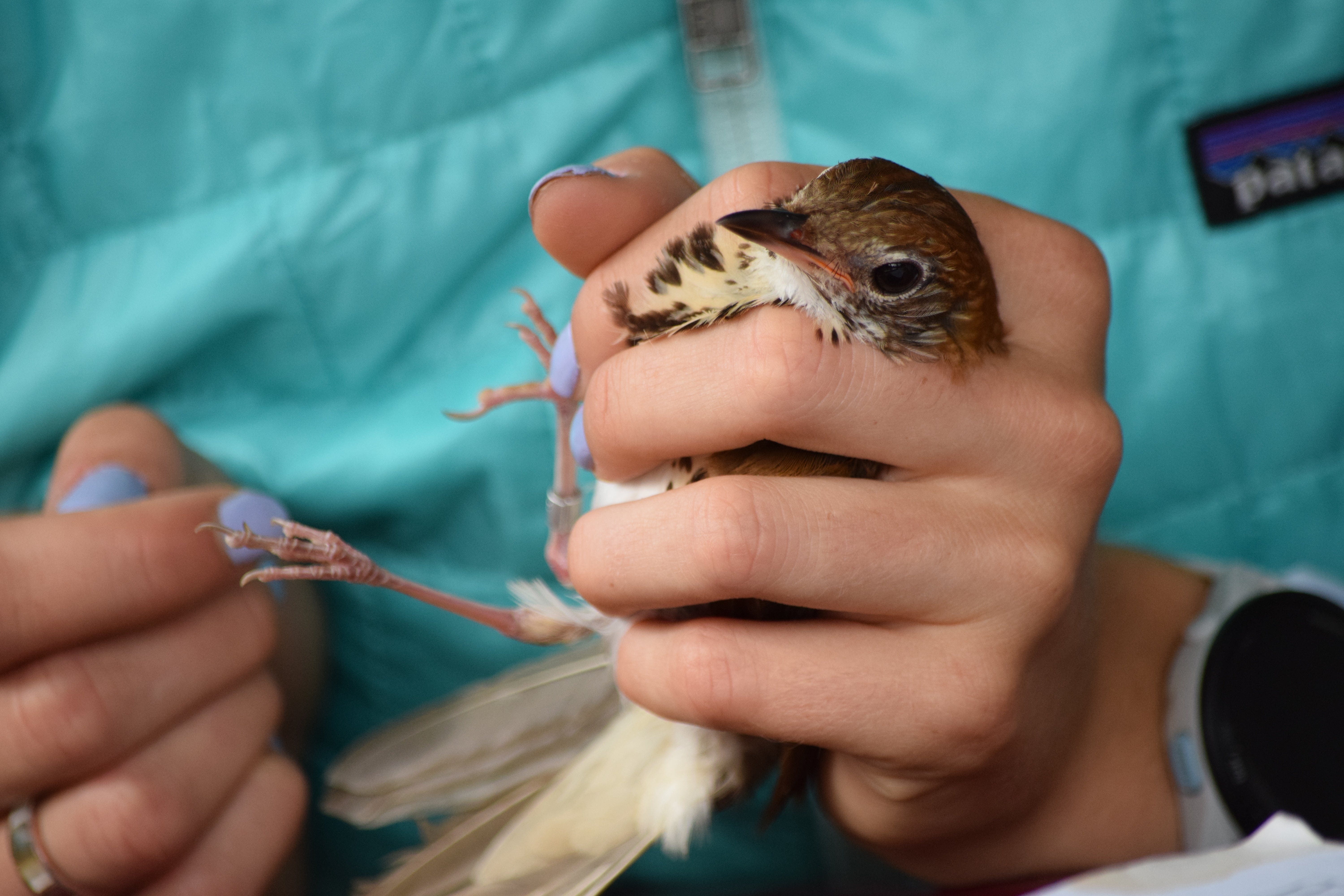
In 2024 and 2025, Audubon Vermont biologist Mark LaBarr and a crew of UVM-sponsored interns fitted 18 Wood Thrush with nanotags — small transmitters a bird can carry without noticing. A nanotag doesn’t know where it is. It just calls out, and antennas mounted on towers scattered across the hemisphere log the bird when it passes: this one, this tower, this date. Enough towers, and a route emerges. That tower network is called Motus, and Vermont’s 18 birds were a small piece of a U.S. Fish and Wildlife Service study that tagged more than a thousand of them across the species’ range.
Seven of the Vermont birds left in the fall and turned up here again the following spring. LaBarr follows two of them state by state — a male tagged at Shelburne and a female tagged at the Green Mountain Audubon Center. One of them we can place in Belize. The other’s winter address is still unknown.
Wood Thrush have declined 45% since 1966, mostly from lost habitat, and you can’t protect a route until you know where it runs. Worth the five minutes.
It's quite amazing how far these and other Species travel/Migrate every year!