


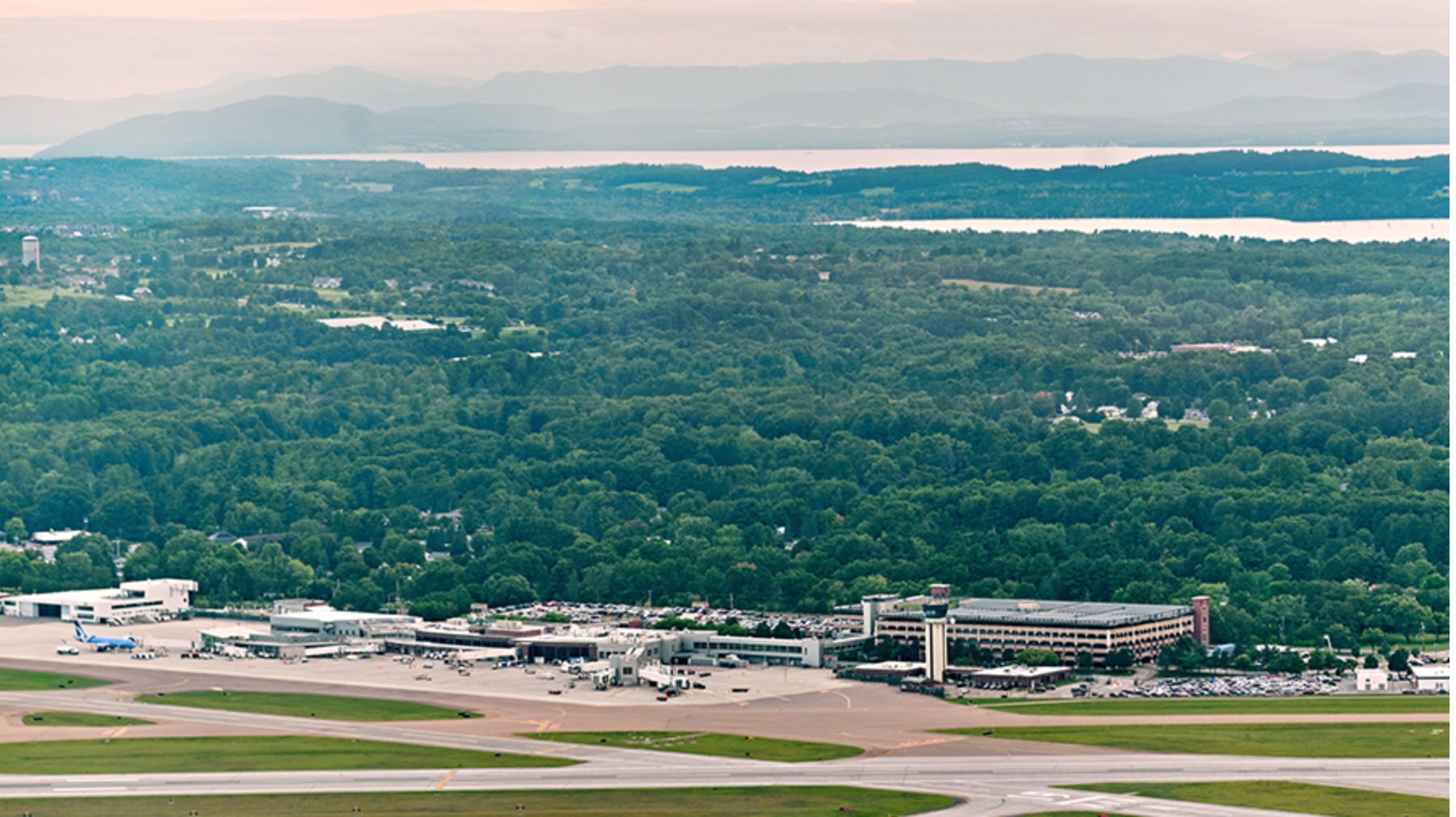
If you flew out of Leahy Burlington International Airport (BTV) this past October, you likely noticed the crowds. What you might not have noticed—because the lines kept moving—was that you were part of a historic stress test for Vermont’s aviation infrastructure.
According to verified operational data, the airport experienced an unprecedented surge in traffic in late 2025. For 18 consecutive days, from October 5 to October 22, BTV processed over 3,000 outbound passengers daily. To put that volume into perspective, the previous record for a streak of that intensity was just six days, a benchmark set nearly two decades ago.
This 300% increase in high-volume duration suggests that BTV has moved beyond simple seasonal spikes and is seeing a structural shift in demand. Even more notable is the context in which this occurred: the surge coincided with a partial federal government shutdown. Despite the administrative uncertainty affecting federal employees, TSA agents and air traffic controllers maintained operations, processing approximately 58,000 travelers during the 18-day window without significant delays.
The “Small Hub” Advantage
Travelers frequently remark that security at BTV feels faster and more modern than at major national hubs. This perception is backed by the airport’s specific technological deployment.
Unlike massive airports like JFK or O’Hare, where travelers often play “lane roulette” to find a checkpoint with modern scanners, BTV has achieved 100% deployment of Computed Tomography (CT) scanners across its lanes. This technology generates 3-D, rotatable images of carry-on luggage, allowing TSA officers to virtually inspect bags. The practical result for the average flyer is that laptops and liquids can stay inside the bag, removing the primary bottleneck at the conveyor belt.
Furthermore, the integration of Credential Authentication Technology (CAT) has streamlined the identity verification process. The newer CAT-2 units utilize facial recognition and secure flight database links to verify a traveler’s status using only their ID, often eliminating the need to scan a boarding pass at the podium.
Because the airport’s passenger volume—even during record streaks—rarely exceeds the simultaneous processing capacity of four modern lanes, the “throughput efficiency” remains high. While a hub airport might face thousands of passengers an hour, BTV’s traffic flow allows these technologies to operate at peak efficiency, creating a frictionless experience for users.
Beyond the “Leaf Peepers”
While the October timing aligns with Vermont’s peak foliage season, the sustained nature of the traffic indicates other economic drivers. Analysis suggests the rise of the “Interface Economy”—remote workers and new residents who use Vermont as a lifestyle base while commuting for business—is compounding traditional tourism traffic.
To meet this evolving demographic, the airport has shifted its amenities strategy. In late summer 2025, Kestrel Coffee Roasters opened a location post-security. By placing high-quality local amenities “airside” and opening as early as 4:00 AM, the airport encourages passengers to clear security earlier, relieving congestion at the ticket counters and smoothing the flow of foot traffic during the early morning “bank” of departures.
Building “Project NexT”
Looking toward the physical future of the terminal, work continues on “Project NexT,” a $34 million expansion designed to replace the aging North Concourse.
A key feature of this expansion is the use of mass timber, specifically Douglas Fir and Cross-Laminated Timber (CLT) panels. Supported by a $1.78 million grant from the Northern Border Regional Commission, the project aims to reduce the carbon footprint associated with traditional steel and concrete construction while showcasing regional forest products. This design choice places BTV among a small group of airports prioritizing sustainable, wood-based architecture.
What Happens Next
The official target for the opening of the Project NexT expansion is Spring 2026. However, as of late 2025, the project was still navigating schematic phases and funding applications. Given the complexities of winter construction in Vermont, travelers should anticipate that the North Concourse area will remain an active construction zone well into the new year.
As the airport moves into 2026, the focus will likely remain on balancing this physical expansion with the high operational tempo established in 2025, proving that a regional airport can handle major-hub volumes without losing its local character.